

- Key Takeaways
- Why Your Truck’s Oil Fails
- Early Truck Oil Change Signs
- The Cost of Ignoring Signals
- Beyond Mileage Intervals
- Your Engine’s Lifeline
- Proactive Oil Maintenance
- Conclusion
- Frequently Asked Questions
- What are the earliest signs my truck needs an oil change?
- Why does truck engine oil fail before the recommended interval?
- What happens if I ignore oil change warnings?
- How often should I change oil if I tow or drive in heavy traffic?
- What oil type and viscosity are best for my truck?
- How can I extend my engine’s oil life safely?
- Is the oil‑life monitor accurate, or should I rely on mileage?
Key Takeaways
- Engine oil lubricates, cools, and cleans critical components, and it degrades faster with heavy loads, frequent idling, and extreme temperature. Change your oil to protect against wear and expensive damage.
- Be on the lookout for soot overload and fuel dilution. Black, gritty oil or an intense fuel aroma means diminished lubrication and an immediate need for an oil change. Check oil color and texture during routine dipstick inspections.
- Pay attention to early warning signs such as slow acceleration, increased fuel consumption, odd engine noises, dashboard warning lights, and noticeable exhaust discoloration. Being proactive keeps you out of the shop with big repairs and downtime.
- Go beyond mileage with engine hours and operating conditions tracking like short trips, stop-and-go, towing and off-road. Add oil changes when service is severe or temperatures are extreme.
- Leverage oil analysis to identify contaminants, viscosity loss and additive depletion prior to failures. Fleet programs that trend results over time can safely extend intervals and lower maintenance costs.
- Keep a basic history of oil changes, symptoms, and operating patterns per truck. Schedule timely service to maximize engine life and reliability.
Truck oil change signs are the unmistakable indicators that a truck’s engine requires new oil to keep components cool, clean, and protected. Typical signs are engine noise on start, black or gritty oil on the dipstick, a faster than normal drop in oil level, a lit oil pressure or check engine light, and a burnt oil smell near the hood. Many trucks exhibit decreased fuel economy, rough idle, or sluggish throttle when oil degrades. On cold starts, a longer crank time can indicate thick, degraded oil. For long-haul or heavy loads, shorter service gaps make sense, often between 8,000 and 10,000 under stress. The following sections list each sign, describe causes, and demonstrate how to test and schedule service promptly.
Why Your Truck’s Oil Fails
Engine oil creates a slippery film that reduces metal-on-metal friction, transfers heat from pistons and bearings, and holds microscopic particulate in suspension for filters to catch. Heavy loads, long idles, and brutal winters accelerate the breakdown. Old or dirty oil doesn’t have the viscosity to protect your engine, and that can lead to wear, sludge, increased emissions, and even catastrophic engine failure. Routine changes keep performance steady and expenses low.
Soot Overload
Soot is a natural diesel byproduct. Excessive amounts thicken oil and clog filters. This leads to bad flow at start-up, slow lubrication to the cam and turbo, and increasing operating temperatures.
When the oil comes up jet black and gritty on the dipstick, soot is beyond safe levels. Friction rises quickly, bearings scissor, and rings wear. That’s when trucks begin to lose fuel economy and exhibit rough idle. Check color and feel at every fill. If it smells burnt or feels sandy, schedule the change now to prevent sludge that clogs oil galleries and increases repair bills.
Fuel Dilution
Diesel can blow by rings and dilute oil. This thins viscosity and compromises the film that separates fast-moving parts.
Short trips, cold starts and long idling make dilution prevalent. Symptoms are a pungent fuel smell on the dipstick, increasing oil level without additional fill, and sluggardly throttle reaction. Diluted oil increases wear, damages fuel economy, and can prematurely age the engine. If you notice any fuel odor, switch oil immediately and examine idle habits.
Additive Depletion
Additives combat acids, rust, and sludge. They keep contaminants suspended. They eventually wear out and oxidize due to heat and contamination, so that protection diminishes and deposits accumulate.
Used-up packages deposit varnish on lifters, sticky rings, and gummed-up passages. Follow the interval that fits your truck and oil. While the old rule was 4,800 kilometers, many trucks reach 8,000 to 12,000 kilometers, and some full synthetics extend to about 16,000 kilometers. Severe duty means shorter intervals to keep those additives going.
Extreme Temperatures
Alberta winters cold start thicken oil, slow flow, and starve bearings for those seconds that matter. Summer heat thins oil, reduces pressure, and accelerates oxidation, especially under tow or high loads. Harsh conditions increase the threat of sludge, wear, and unexpected breakdowns. Tailor viscosity to climate, check levels, and tighten intervals when encountering deep cold, heat waves, or heavy-duty cycles.
Early Truck Oil Change Signs
 Oil lubricates, cools, cleans, and protects fast-moving parts on each ride. Missing these early signs can turn minor problems into major engine wear and expensive repair bills. Check regularly, observe, and detect any difference in sound, sensation, or odor. Record in a plain diary the dates, mileage, and symptoms.
- Noticeable power drop or sluggish throttle response
- New engine noises (ticking/knocking) or rough idle
- Oil change or low‑pressure dashboard lights
- Dark, gritty, milky, or low oil on dipstick
- Blue/gray exhaust smoke or strong oil smell
Timely oil changes maximize fuel economy, minimize emissions, and even extend engine life. Typical ranges are most vehicles every 3,000 miles or three months, newer models about 6,000 miles or six months, conventional oil about 5,000 kilometers or 6 months, and full synthetic up to 10,000 kilometers or 12 months. Heavy loads, hot or cold climates, short trips, or long idle time may reduce these intervals. If you’ve covered a lot of miles, change it sooner.
1. Engine Performance
Sluggish pull, power loss on hills or sputters under load all indicate oil that no longer lubricates friction well. You might stomp on the pedal and receive delayed rpm acceleration, or the truck could sputter when merging. Excessive fuel consumption is typical as the engine strains to combat drag.
Dirty or low oil can be responsible for rough idle, small stalls at stops, or shake in gear. When she slows performance-wise, act fast — it’s a loud warning blast that the oil has either aged out, thinned, or got debris in it.
2. Sensory Warnings
Look for burning oil smells after a drive or fresh truck spots. Ticking at start‑up, persistent knocking, or metallic scrape usually implies oil starvation or contamination. A fuel smell in oil means fuel dilution. Change the oil and check injectors or short‑trip habits. When doing regular dipstick checks, pay attention to color and texture. Changes are significant.
3. Dashboard Alerts
Oil change lights and check engine lights indicate oil-related problems. If your oil pressure gauge starts to drop or your red pressure light comes on, you need to pull over immediately and check. The oil change light usually indicates a low level, so check the dipstick before driving farther. Pushing past warnings endangers accelerated damage and breakdown.
4. Oil Condition
Very dark, gritty, or black oil needs changing. Rub between fingers. If thick, sticky, or with specks, replace. Milky or frothy oil can indicate coolant intermingling. Get it serviced now. Maintain the level in the dipstick safe range.
5. Exhaust Changes
Blue or gray smoke indicates oil burning. Too much smoke can indicate a clogged filter or bad oil. Thin vapor that has a pungent oil odor is another tip off. Any observable discoloration calls for an oil check and probable change.
The Cost of Ignoring Signals
Oil speaks volumes about engine health. When trucks display oil change signs, warning lights, rough idle, louder valve noise, or dark or gritty oil on the dipstick, they indicate heat, friction, and wear. Overlooking these alerts compromises safety and performance and reduces vehicle lifespan. Small leaks or slow drips from the pan, filter housing, or turbo lines begin as stains under the truck. Ignore them and you’re looking at low oil pressure, bearing damage, or a seized engine. Jam-filled filters deprive moving parts of clean oil. That makes the engine run hot, lose power, and burn more fuel.
Putting off the oil changes will wear the engine out, overheat and even damage the turbocharger. Old oil decomposes, sludges up and loses its film strength. Bearings, cams and lifters run metal-on-metal. Heat soars on long hauls, ascents, or stop-start urban courses. On turbo engines, coked oil bakes into the turbo’s center housing following hot shutdowns. That sticks the shaft and burns seals, which dumps oil into the intake or exhaust. You may experience blue smoke, slow spool and whine under load. A nondescript 7,500 to 15,000 kilometer oil interval, modified for duty cycle and towing, avoids these failures.
Forgot oil change? Clogged filters, poor fuel mileage, and engine failure. A filter in bypass mode allows grit to re-circulate. You’ll experience sluggish drag, delayed acceleration, and increased consumption per 100 kilometers. Oil pressure can vary at idle. Sludge eventually blocks galleries feeding the crank and turbo. That’s when rods spin bearings, cams score lobes, or the engine locks up. The repair list grows fast: oil pump, turbo rebuild, head work, or a full long block.
Missed oil changes lead to expensive repairs and unanticipated downtime for the duty trucks. Breakdowns don’t take a holiday to a light week. A truck off the road signifies lost loads, fines, re-routing, and driver downtime. Parts and labor add up. Turbo replacement, gasket sets, sensors fouled by oil mist, and DPF cleaning from oil burn contribute to costs. Timely oil changes protect your investment and reduce long-term costs. Count hours and kilometers, apply the appropriate grade and spec, repair leaks early, and do oil sampling if you can to capture wear patterns. Routine attention ensures power remains stable, fuel consumption is minimized, and uptime remains high.
Beyond Mileage Intervals
Oil changes are about more than just mileage intervals. Engine hours, duty cycle, load, and filtration all factor into oil life. Outdated 25,000-mile standards aren’t static. Some trucks require 15,000-mile drains, while others safely stretch to 50,000 and beyond. Monitor the truck’s operation, not just its mileage.
Operating Conditions
- Duty severity: Heavy towing, high payloads, and steep grades raise sump temperatures and shear stress. Oil thins quicker, additives wear out earlier, and oxidation accelerates.
- Drive pattern: Stop-and-go, short trips, and long idle build fuel dilution and water. City driving typically requires smaller intervals than consistent highway stretches.
- Environment: Dust, mud, and off-road vibration push more grit past filters. Cold starts in sub-zero climates thicken oil and hot climates accelerate oxidation.
- Fuel and efficiency: Trucks that get 2 to 4 miles per gallon run richer and produce more soot than those that get 6 to 7.5 miles per gallon, which shortens oil life.
- Filtration quality: High-efficiency full-flow and bypass filters slow contamination rise and can support safe extensions toward 50,000 miles when verified.
For severe or off-road conditions, reduce the interval and employ superior filters. City cycles and short hops deserve the same.
Make a dummy table to record condition, notes, and target interval so patterns are obvious across seasons and routes.
Engine Hours
For duty trucks, hours often trump mileage for precision. Long idle accumulates combustion by-products without accumulating mileage, so oil ages in the shadows. For beyond mileage intervals, install an hour meter if the cluster is not equipped with one and pair with telematics when available.
High hours/low kilometers still load oil with soot and fuel. Don’t wait for the odometer to catch up. Establish two triggers: replace at X hours or Y kilometers, whichever occurs first, and fine tune with service records. This dual metric captures snow plows, refuse trucks, yard tractors and any rig that idles in queues.
Oil Analysis
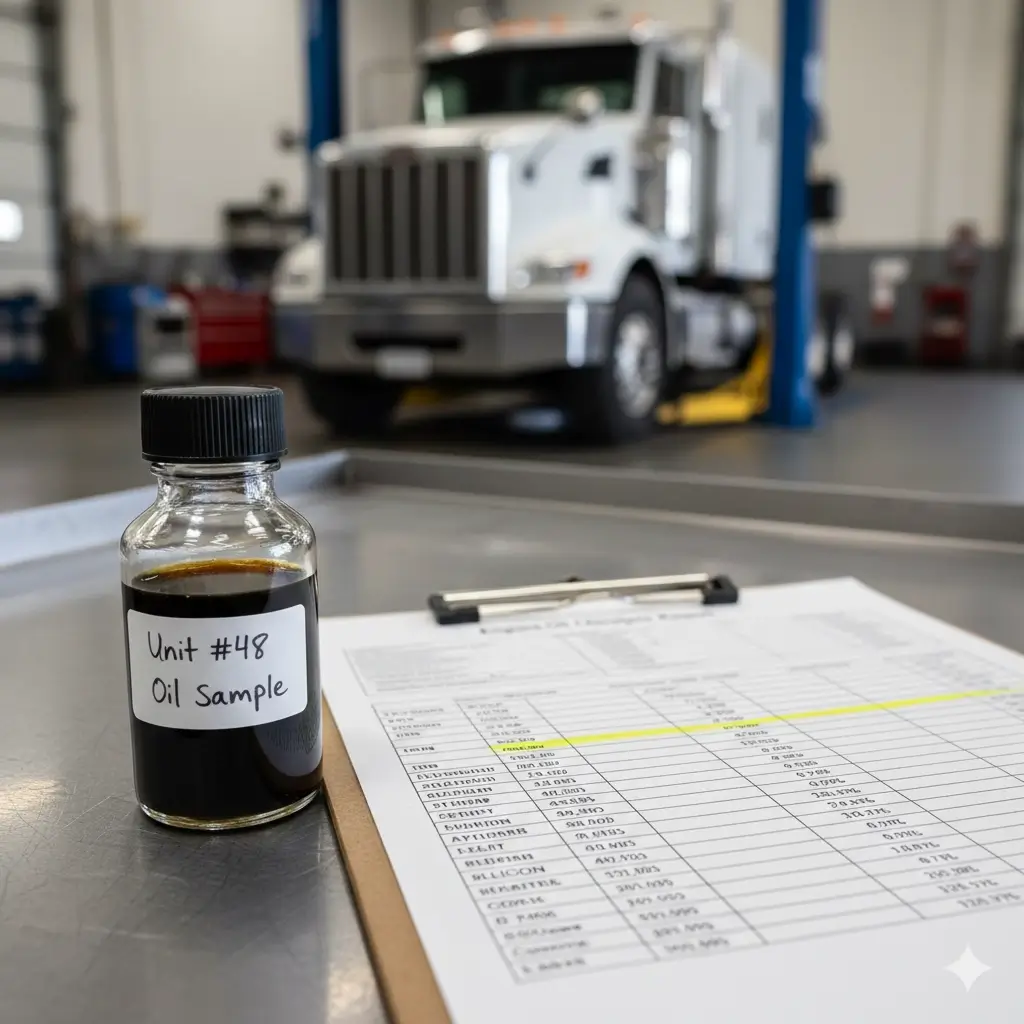
Used oil analysis detects contaminants, viscosity change, oxidation and additive depletion before wear appears. For fleets, a program makes predictive maintenance possible and interval stretch safer, balancing cost and risk. To go beyond mileage intervals, sample every cycle to build a baseline, then extend in small steps while watching trends. Pair analysis with filter changes and track outliers by unit and route.
| Sample Date | Soot % | Fuel % | Viscosity cSt | TBN | Action |
|---|---|---|---|---|---|
| 2026-01-10 | 1.2 | ||||
| 0.5 | |||||
| 13.8 | |||||
| 7.5 | OK |
| 2026-03-15 | 1.8 | 1.2 | 13.1 | 6.2 | Watch |
| 2026-05-20 | 2.6 | 2.4 | 12.5 | 4.8 | Change |
Neglect invites wear, turbo coking and even full engine failure. Calibrate schedules to actual usage and actual data.
Your Engine’s Lifeline
Oil protects, cools, and cleans the engine. Clean, quality oil keeps bearings, rings, cams, and turbo parts from metal-on-metal wear. It rocks heat from hot zones, hustles soot and micro metal flakes into the filter, and seals the kiss between pistons and cylinder walls for solid compression. No oil change is a better step to stretch engine life and keep starts smooth in heat, cold, and long hauls.
Oil is your truck’s lifeblood as it cuts friction and prevents heat spikes, sludge, and varnish. When oil breaks down, it loses film strength. This translates into scant protection on heavy-load components such as the crank and cam lobes, accelerating damage and potentially causing knock or seizure. Bad oil additionally gums up tiny oil passages that nourish turbos and variable valve timing systems. Stay ahead of that with scheduled changes tied to hours, kilometers, or duty cycles.
Oil serves as a report card. It grabs signals from whichever component it makes contact with. Black, oily grit implies soot load and wear. Your engine’s lifeline. Milky oil indicates coolant leakage. If fuel consumption increases with routes and loads stable, that can indicate short oil life or viscous, oxidized oil that drags the pump and moving parts. Monitor fuel burn per 100 km and correlate it to oil age to identify emerging problems early.
No hard and fast drain rule. Your engine’s lifeline The old 4,800 km (3,000 mi.) rule of thumb doesn’t apply to every engine. Today’s synthetics can go 16,000 to 24,000 km (10,000 to 15,000 miles) in best-case scenarios, but only if the engine design, age, and seals support it. Stop-and-go abuse, hot deserts, dusty roads, heavy towing, long idling, and cold starts all reduce oil life. High-soot diesel duty, short runs, and constant regen events reduce oil life too. Newer engines with tighter clearances can shear oil faster. Older engines can burn or leak more and require top-offs and shorter intervals. Follow the maker’s spec for viscosity and approvals, then establish intervals with a combination of time, distance, and engine hours. For fleets, oil analysis provides concrete information on wear metals, soot, fuel, and coolant so you can tailor intervals and prevent waste and risk. Neglect leads to sludge, spun bearings, turbo failure, and total engine loss.
Proactive Oil Maintenance

Proactive oil maintenance means you’re thinking ahead, not waiting for warning lights or noise. It’s the grind of oil checks at a fixed interval, recording your findings and timely oil changes. This reduces wear hazards, conserves fuel, and keeps rigs trucking. It helps lower emissions and extend engine life, which is important for both individual vehicles and entire fleets.
Define a specific interval that suits each truck, not a blanket rule. The old 3,000 mile rule is outdated. A lot of newer trucks do 8,000 to 12,000 kilometers (5,000 to 7,500 miles), and some on full synthetic can make 16,000 kilometers (10,000 miles). It depends. The interval varies by engine model, oil type, duty cycle, tow weight, idle time, and climate. A regional hauler on highways may go longer than a city delivery truck with many stops and cold starts. Check the manufacturer’s manual, oil specifications, and used-oil lab reports if you have them, then configure the change schedule for each machine.
Be proactive with oil changes. A simple habit works: check during fuel fill-ups to be consistent and put a few minutes of idle time to work. Wipe, read, color, and smell. Dark oil can be okay, but a burnt smell, heavy grit, or milky appearance are bad signs. Top up with the correct grade if it is anywhere near the low mark. Carry a closed 1-liter bottle in the cab to minimize mix-ups.
Maintain a record for each car. Keep tabs on the oil change date, kilometers, brand and grade, filter part number, top-ups, and any indicators like start-tick, higher temperatures, and drop in fuel economy. Schedule digital reminders in kilometers and engine hours. Short trips and extended idle time both prematurely age oil beyond what distance would indicate. This history assists in catching patterns early and demonstrates maintenance should you sell the truck.
Postponed oil changes increase internal wear, sludge and heat. That results in leaks, timing part destruction, turbo problems, and in the absolute worst scenario, complete engine failure, which is expensive and preventable. Proactive oil maintenance involves regular oil changes that prevent major repairs, enhance fuel efficiency and safeguard emissions equipment.
Team up with Get ’R Done Heavy Truck Repair Ltd. In Edmonton for professional oil changes, comprehensive preventive inspections, and on-the-go assistance. Their crew assists in establishing run-time intervals, selecting the proper oil, and sampling used oil to detect wear before it becomes a breakdown. For fleets, they construct service calendars, handle reminders, and maintain records you can audit. Reach out to Get ’R Done Heavy Truck Repair Ltd. Now to keep your fleet in tip-top shape and prevent expensive repairs.
Conclusion
In closing, oil care keeps your truck honest. Small cues tell a clear story: louder idle, rough shifts, hot smell, slow starts, dark grit on the dipstick. Missed changes cause heat, wear, and expensive bills. New oil reduces drag, maintains temperature control, and increases your chances of a successful long haul.
Set a simple scheme. Inspect oil each month. Track overs and leaks. Choose the correct grade for your load and climate. Maintain a brief record with date, oil type, filter name, and remarks. Change sooner after heavy towing, dust, short trips, or long idles. Snap inspections save time and money.
I need a step next. Pull the dipstick today. Observe the shade, experience the grit, and measure the amount. Reserve a replacement if it appears off.
Frequently Asked Questions
What are the earliest signs my truck needs an oil change?
Watch for a louder engine, ticking on startup, rough idling, or loss of power. Look for dark, gritty oil on the dipstick and a burning oil odor. When your oil or check engine light comes on, that’s immediate. Catch these signs early to avoid erosion.
Why does truck engine oil fail before the recommended interval?
Harsh driving reduces oil life. Regular towing, stop-and-go traffic, short trips, extreme temperatures, dusty roads and heavy loads hasten oxidation and contamination. Bad oil or the incorrect viscosity accelerates breakdown. Adopt a severe-service schedule when needed.
What happens if I ignore oil change warnings?
Oil thickens, loses additives, and can’t protect bearings, cams, and turbochargers. Heat rises, sludge forms, and metal-to-metal contact intensifies. This results in expensive repairs or engine breakdown. Prompt oil service saves your engine and your money.
How often should I change oil if I tow or drive in heavy traffic?
Take advantage of your truck’s severe-service interval. Many trucks need changes every 5,000 to 8,000 km under load or stop-and-go use. Consult your owner’s manual and oil-life monitor. Confirm by checking oil color and texture, monitoring gas mileage and noise.
What oil type and viscosity are best for my truck?
Use manufacturer’s specification and viscosity, for example, 5W‑30 or 5W‑40. Use premium synthetic oil for stronger high-temperature stability and cold starts. For diesels, use certified heavy‑duty diesel oil of the proper grade. Most importantly, match oil to climate and workload.
How can I extend my engine’s oil life safely?
Put in the right synthetic and quality filter. Warm up easily, avoid long idling, and clean air and fuel filters. Repair leaks, keep coolant temperatures in check, and prevent overloading. Follow oil-life monitors and corroborate with frequent dipstick checks.
Is the oil‑life monitor accurate, or should I rely on mileage?
These modern monitors track starts, load, temperature, and driving style. They are more accurate than hard mileage. Confirm with inspections and maintenance logs. If you tow, idle frequently, or drive in dust, service earlier than the monitor indicates.
Not what you were looking for? Explore GRD’s top resources for expert diagnostic and repair services.
Engine Repair, Rebuild, Overhaul and Conversion
Transmission and Clutch Repair
You may also find the following resources helpful for additional reference.
Vehicle Safety and Maintenance Guidelines in Alberta
Canadian Trucking Alliance