
- Key Takeaways
- 7 Heavy-Duty Suspension Warning Signs
- Why Suspension Fails
- The Ripple Effect of Neglect
- Beyond the Visual Check
- The Professional Diagnostic Process
- Alberta’s Inspection Mandates
- Conclusion
- Frequently Asked Questions
- What are the top warning signs my heavy-duty suspension needs repair?
- Why does heavy-duty suspension fail?
- What happens if I ignore suspension issues?
- Can a quick visual check catch all suspension problems?
- What does a professional suspension diagnostic include?
- How often should heavy-duty suspensions be inspected?
- How do Alberta’s inspection mandates affect my fleet?
Key Takeaways
- Learn the 7 signs of suspension damage and act before it’s too late. Check for bumpy rides, obvious wear, strange sounds, tough steering, unusual tire wear, fluid leaks, and sagging.
- Check those suspension parts often to halt failures before they spread. Employ checklists, record wear in photos, and book regular alignments and full inspections.
- Handle load and terrain shocks to prolong suspension lifespan. Stay within load limits, test weight distribution, and think about heavy-duty or upgraded components for harsh or inconsistent terrain.
- Tackle lurking problems with smart diagnostics to keep you running. Test for air system leaks, bushing wear and spring fatigue to avoid unexpected breakdowns and downtime.
- Avoid ripple effects that increase costs and hazards. On-time suspension repairs minimize tire and fuel costs, prevent collateral damage to axles and chassis, and preserve cargo and driver safety.
- Trust professional diagnostics for precision and standards. Go with certified shops that do physical inspections, load simulations, component testing, and comply with regional inspection requirements.
Heavy-duty suspension repair involves the inspection, servicing, and parts replacement for vehicles that endure intense load requirements, including trucks, buses, and commercial vans. It covers springs, shocks, struts, control arms, bushings, airbags, and linkages that maintain ride height, balance, and tire contact under heavy weight. For fleets and owner-operators, early repair reduces tire wear, eases brake strain, and keeps steering straight. Typical symptoms are uneven tire wear, harsh bounce, lean in turns, sagging ride height, and clunks over bumps. Common repairs include everything from airbag and leaf spring swaps to shock rebuilds and bushing presses. To normalize these expectations, shops often utilize load ratings, number of axles, and service intervals in kilometers. The following sections discuss diagnosis, costs, and timelines.
7 Heavy-Duty Suspension Warning Signs
1. Unstable Ride
Too much bounce or sway after a bump means feeble damping. If your truck continues to rock back and forth two or three times after a pothole, a set of shocks or struts might be shot. A hard ride under load increases driver fatigue and braking distance. Worn shocks, struts, or air springs cause the chassis to float, which adversely impacts control on ramps and in crosswinds. Fix the suspension quickly to save tires, mounts, and steering components.
2. Visible Damage
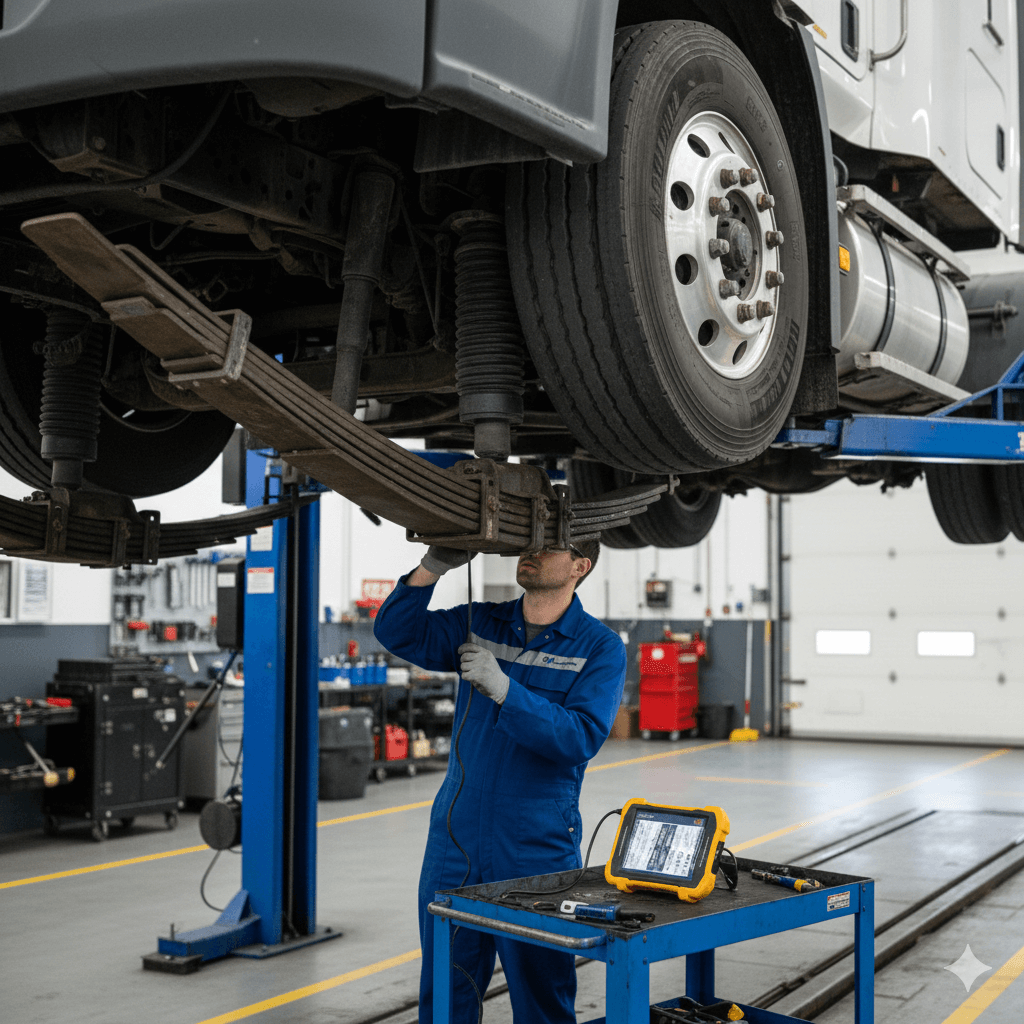
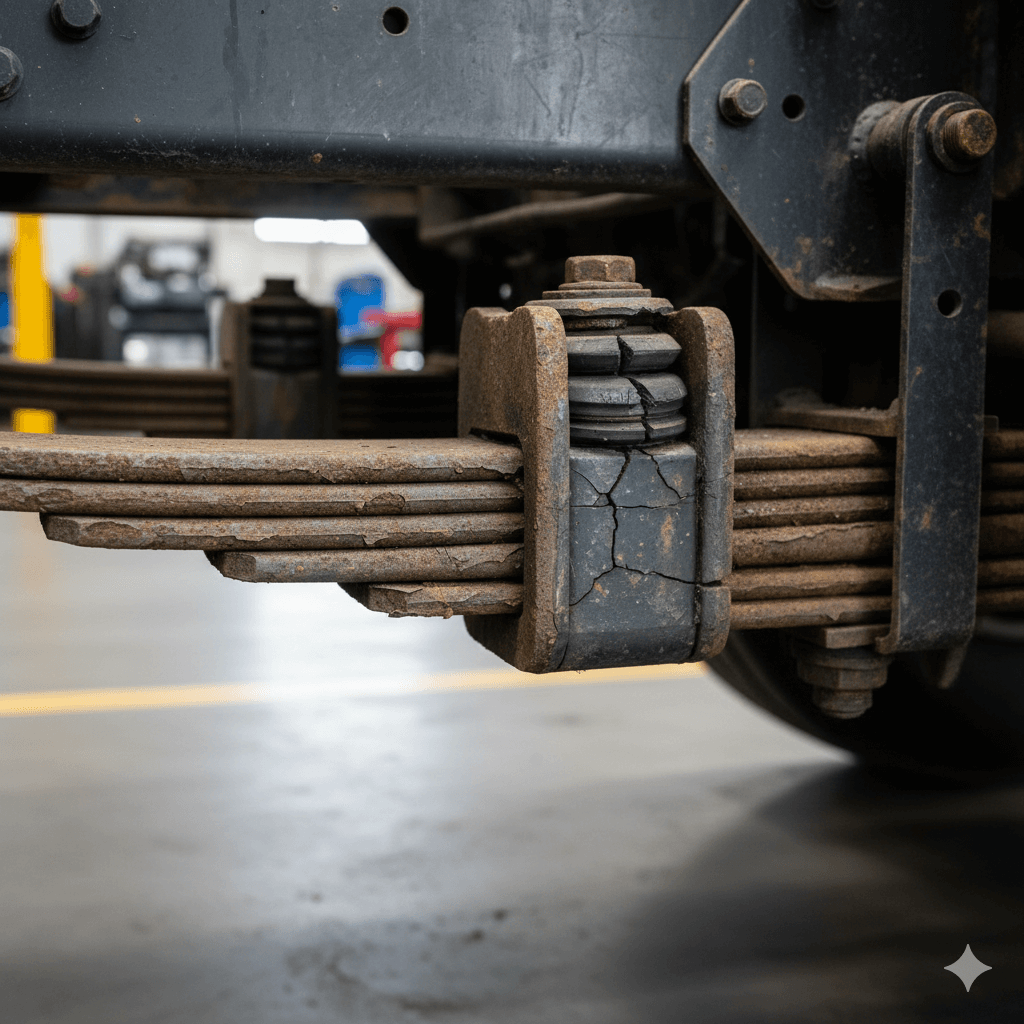
Inspect springs and leaf packs for cracks, bent leaves, or broken clips. Split metal is a red flag.
Air systems, spot bulging, sagging, dry rot or deflated bags. Inspect U-bolts for looseness, split bushings, or deep rust that thins brackets. Photograph and checklist for cycles and torque specifications.
3. Unusual Noises
Clunks over bumps frequently indicate worn bushings or loose stabilizer links. Squeaks indicate dry or torn bushings. Rattles can indicate failing shock mounts. If the noise persists, underlying issues probably require pro diagnostics. Record the noise, velocity, road condition, and frequency to facilitate repairs.
4. Steering Difficulty
Hard-to-turn, slow return-to-center, or off-center feel can indicate alignment or worn tie rods. Wandering or pulling to one side indicates uneven suspension or misalignment. Drifting under steady throttle is another tip. Suspension and steering work together for exact control.
5. Uneven Tire Wear
Look out for cupping, feathering, or one-side wear. These patterns connect to misaligned wheels, weak shocks or sagging springs. Uneven wear reduces grip on wet gravel or paved roads and hikes expenses. About 7 Heavy-Duty Suspension Warning Signs. Regular inspections and alignments extend tire life and steady the ride.
6. Leaking Fluids
A wet set of shocks or struts indicates seal failure. Fluid loss poisons rebound control and creates added bounce. Handle leaks quickly to save your mounts, bushings, and brakes. Include leak inspections with each complete suspension service.
7. Vehicle Sagging
A low corner or rear drop indicates weak springs or a broken leaf. Sagging skews load spread and can shift cargo. In time, it warps the chassis and accelerates wear. Replace bad springs to regain height and balance.
Why Suspension Fails
Hard-working truck suspension sees the most extreme loads every day. Failure results from load abuse, rough terrain, environment, and simply wear. By understanding where it breaks, we can schedule inspections, select appropriate components, and prevent minor defects from becoming expensive downtime.
| Primary cause | What happens | Impact on performance | Repair/Maintenance link |
|---|---|---|---|
| Overloading | Springs over-compress, shocks overheat, bushings crush | Sagging ride height, poor control, uneven tire wear | Upgrade spring/shock rates, load testing, axle scale checks |
| Poor alignment | Side load on joints and tires | Drift, scrub, faster bushing wear | Alignment, tie-rod/end repairs, bushing replacement |
| Rough terrain | Repeated high-force hits and vibrations | Shock fade, cracked mounts | Heavy-duty shocks, mount gussets, frequent torque checks |
| Environmental exposure | Rust, seal and rubber decay | Seized joints, leaks | Anti-corrosion coatings, sealed bushings, periodic cleaning |
| Neglected service | Worn shocks blow, springs over-compress | Lowered ride height, risk of tire blowouts | Shock/spring replacement schedule, fluid and boot inspections |
Load Impact
Heavy freight shoves springs, shocks and bushings beyond their engineering envelope. Mass beyond rated crushes rubber, overheats dampers and drives metal fatigue. A blown shock lets the spring over-compress, dropping local ride height and spiking stress on mounts.
Static weight carried on long hauls keeps elements at maximum deflection while constant load shifting occurs on harder parts. Both accelerate wear. Overloaded trucks return for repairs more frequently and prematurely retire suspension components.
Utilize top of the line, load rated components, onboard scales, and regular load testing. Measure ride height at all four corners and check for uneven tire wear. Both of these indicate imbalance or sag.
Terrain Stress
Rough roads, potholes and mixed loads generate elevated impact forces that stress joints, U-bolts and mounts. On icy roads, construction sites and unpaved highways, shocks overheat, bushings tear and brackets crack.
Hard routes require powerful dampers, strengthened mounts, and reduced service intervals. Tune damping and spring rates to route profiles. Consider progressive leaf packs or air-assist for variable loads. Track terrain types to match maintenance to actual hazards.
Environmental Wear
Moisture and road salt quicken rust on leafs, bolts, and hangers. Heat and cold wear out rubber bushings and seals that leak at shock shafts and make joints stiffer and noisy. With time, normal wear alone can tip a healthy system into failure, even with normal loads.
Schedule seasonal inspection for corrosion, seal seepage, and bushing play and replace on condition, not just by mileage. Pick coated hardware, sealed bushings, and weather‑resistant shocks. Wash undercarriage after salt exposure to delay corrosion. Keep an eye on tires that wear unevenly, as it commonly portends suspension or alignment strain that requires swift repair. Neglect it at the peril of tire blowouts and expensive downtime.
The Ripple Effect of Neglect
Hard-core suspensions support monster loads, absorb road shock, and maintain brake and steering stability. When maintenance slips, a single weak link ripples stress throughout the system, increasing downtime, safety hazards, and long-term expenses.
Safety Hazards
- Regular checkups detect play in ball joints, cracked bushings, bent springs and leaking shocks before they push handling into the red. Scheduled inspections reduce the possibility that a single worn bit lingers like a ripple effect into a dozen others.
Worn parts increase the danger of losing control by as much as 50%, particularly in hard brakes and tight curves. Braking distances can worsen by approximately 30% in emergency situations when shocks give out, springs sink, or bushings seize, converting a close call into an accident. Uneven ride height transfers weight to one axle, reduces tire traction, and forces ABS to labor unnecessarily.
Full suspension tests — ride-height, bushing, shock rebound and spring integrity checks — establish a foundation for rugged operation. They indicate early damage that drivers might not sense yet, like micro-cracked rubber from humidity or salt.
Financial Costs
Procrastination turns little repair jobs into big ones. A simple bushing change can escalate into spring pack, shock, and control arm replacement, with figures that can exceed one thousand dollars once labor and alignment accumulate.
Neglect manifests itself in operating expenses. Uneven tread wear can add up to 25 percent to tire spend across a fleet. Bad damping makes engines and drivetrains combat additional bounce, pushing fuel consumption upward. Friction casualties strike wheel bearings, steering knuckles and brake components when vibrations are allowed to run their course.
Small clunks become haulage hazards as loads shift, drivers decelerate, and timetables slide. Preventive service, including grease points, torque checks, bushing refresh, and shock swaps on interval, spreads cost over time and lowers total spend per kilometre.
Collateral Damage
Neglected problems have a ripple effect. Loose bushings pound leaf and coil spring eyes. Weak shocks spike loads into axles and wheel bearings. Lines around suspension arms, steering fluid or air hoses, can rub and leak. The chassis bears the brunt as cracks begin at mount points.
Neglect has a ripple effect. One neglected piece can overload a dozen others and leave you with steering play, bent brackets, and rotor hot spots following pothole hits.
Cargo takes a beating as well. A bumped ride or slanted deck redistributes weight, smashes boxes and sparks complaints. Early fixes interrupt this cascade and prevent the frame, hubs and tires from entering the danger zone.
Beyond the Visual Check
A lot of suspension issues sneak by under standard ride height and shiny components. Be careful with handling and comfort. Beyond the visual check, a pull to one side, extra bounce, harsh hits or vague steering can indicate more serious problems. Go beyond the visual check and use pressure testing, torque checks, dial indicators, and infrared to scan for heat from friction. Look for bushings, bolts, shock absorbers and hydraulic cylinders. Worn faces, loose fasteners or a bent piston rod can initiate uneven wear or even jam a cylinder. Corrosion can accumulate in 12 to 24 months, quicker if you travel on salted roads. Neglected issues increase tire wear by up to 25 percent and can impair emergency braking distance by as much as 30 percent. Include full suspension inspections in your routine service to catch air leaks, internal wear or spring fatigue in the early stages.
Air System Leaks
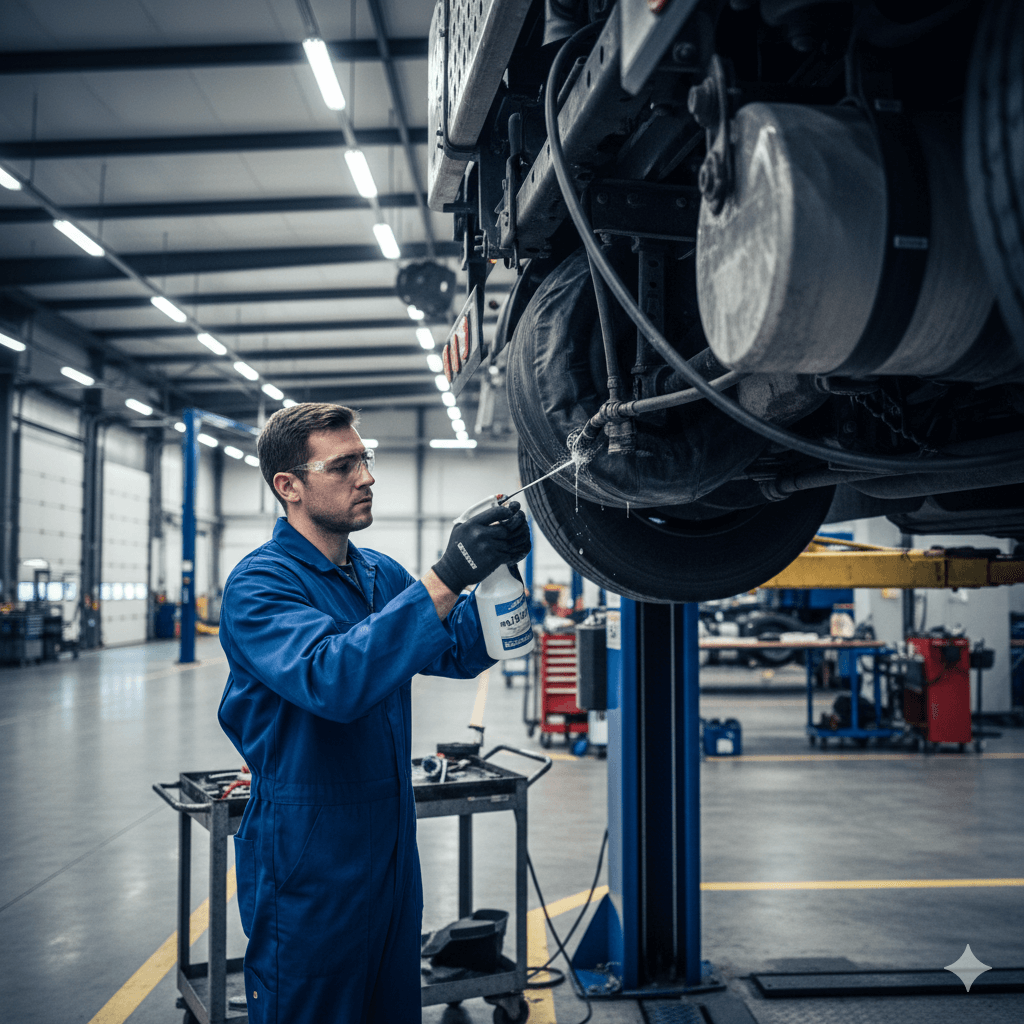
Air suspensions tend to die silently first. Listen for a hiss post-shutdown and observe the dash gauge for gradual pressure drop at idle. Spray soapy water on fittings, valves, and air lines to detect bubbles at unions and quick-connects.
Any truck that sags on one side or has deflated airbags or big air springs is sacrificing load support and ride comfort. This can stress axles and shift braking balance.
Test for steady inflation: With the engine running, measure pressure stability over five to ten minutes. A rapid sump indicates leakage at ride-height valves or fractured lines. Check air dryer operation. Wet, contaminated air accelerates seal wear.
Every professional suspension repair should include a full leak check: lines, bags, valves, tank check valves, and compressor output. Track leak rates and repair prior to alignment.
Bushing Degradation
- Look for cracks, splits, swelling, or missing material
- Pry-bar test for free play at control arms and torque rods.
- Measure axial/radial movement against spec
- Check bolt torque and sleeve corrosion
- Note oil contamination that softens rubber
- Record noise: clunks on start/stop, squeaks over small bumps
Worn bushings create noise, rough vibration and unsafe axle movement which wrecks tire wear and braking.
Swap out worn components quick to regain a smooth ride and minimize shimmy. Include these bushing checks with each thorough inspection, no exceptions.
Spring Fatigue
Slouching posture, torn pages, scratched lenses or lopsided ear-to-ear reducing indicate exhaustion. Rust lines in between leaves and shiny rub marks indicate movement that ought not to be.
Tired springs chop load capacity and control. Your truck may lean, sag, and handle poorly!
Leaf packs, center bolts, and U-bolts should be repaired or replaced as sets. Re-arch just when specs permit and history advocates it.
Monitor track height and leaf condition. Go beyond the visual check. Log millimeters of change and load patterns to schedule refits before breakdown.
The Professional Diagnostic Process
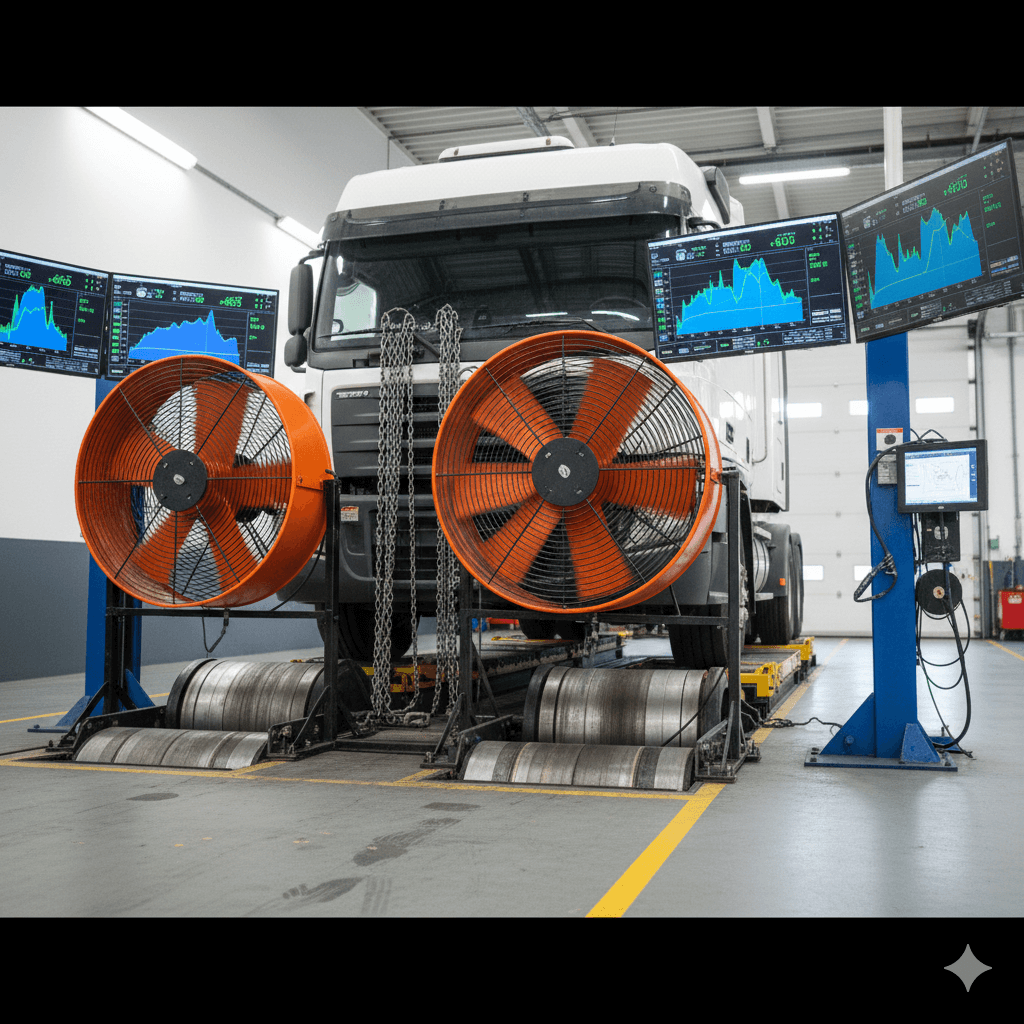
Professional diagnosing the real-time suspension process, our accurate suspension diagnostics stop repeat failures, unsafe handling and wasted time. Professionals combine systematic procedures with pseudo-specific instruments, then confirm under load. Inspections are first, and alignment occurs only after worn parts are detected and repaired.
Physical Inspection
Technicians begin with a complete chassis walkaround and physical inspection of shocks, struts, leaf or coil springs, air bags, bushings, U-bolts, shackles, sway bars, and ball joints. They check for leaks, cracked housings, torn bushings, loose bolts, and bent mounts. Tire cues matter. Cupping or heavy wear on one edge can point to a failed shock, weak spring, or misaligned axle.
They employ their own internal checklist so nothing gets overlooked, from ride height to bump stop clearance. We catalog our findings with photos and torque readings to help inform parts selection and repair order. Daily delivery routes provide simple routine checks that help to catch early problems, such as worn bushings or loosened hardware before they spread to associated components. Because suspension issues are seldom isolated, they examine steering links and wheel bearings during the same sweep.
A professional diagnostic check always precedes alignment to prevent hidden faults from being masked, creating additional wear. We don’t replace just one side, as it can throw off the handling and increase wear on the other side.
Load Simulation
Shops use hydraulic jacks, ballast or calibrated weights to simulate real cargo and the specific axle loads in kilograms, along with the dynamic shift during braking or turns. They track ride height change, rebound control and lateral roll with linear gauges and temperature probes.
Weak springs, tired shocks or leaking air systems reveal themselves when stressed. Data commonly results in matched-pair replacements or uprated components, such as higher-rate leaf packs, heavy-duty dampers or reinforced bushings for routes with frequent curb strikes. If air suspensions sag unevenly, valve blocks and lines are pressure-tested prior to any parts-swapping.
Component Testing
Individual parts get bench or on-vehicle tests: shocks for damping force and rebound, air bags for leak-down, stabilizers for bushing play, and when fitted, hydraulic cylinders governed by Pascal’s Law for pressure loss, heat spikes, or internal wear. Scan tools draw generic and manufacturer-specific diagnostic codes that expedite fault tracing, while laser alignment gauges verify axle set and thrust angle.
Bad parts are swapped in pairs when necessary, then re-tested for heavy duty. Regular shock or strut jobs require at least 3 hours. Comprehensive overhauls can take an entire day, based on corrosion, part access, and calibration procedures.
Alberta’s Inspection Mandates
Alberta prescribes heavy-duty suspension inspection requirements under CVIP. They cover nearly all trucks, trailers, and buses in commercial use, with defined procedures, authorized centres, and compliance documentation necessary to drive.
Legal Requirements and Scope
| Requirement | What it Means | Who It Applies To | How It’s Enforced |
|---|---|---|---|
| CVIP mandatory | Annual safety inspection | Commercial trucks, trailers, buses | Province-wide under CVIP |
| Section 19 (AR 211/2006) | Valid inspection certificate and decal | All commercial vehicles | Decal on unit; records on file |
|Weight threshold | > 4,500 kg used for commerce | HD and MD fleets | Verified roadside checks | 3. | Alberta’s inspection mandates | | Authorized Inspection Facility (AIF) | | inspection by licensed techs | Western Canada standard | Audit and license control | | post-fail repair | fix to safety standard prior to return | any unit that fails CVIP | re-inspection as required | Alberta’s Inspection Mandates
Inspection is once per year for eligible vehicles. Such high-mileage or severe-duty use does well with mid-cycle checks every 6 months to catch wear before it endangers failure. Suspension parts inspected under CVIP generally are springs and air bags, control arms and torque rods, bushings, hangers and brackets, U-bolts, shackles, sway bars and links, kingpins, ball joints, tie rods and drag links, steering gear mounts, crossmembers, frame rails in proximity to suspension attachment points, axles and hubs, wheel bearings, shocks, height control valves, and air lines and fittings. Inspectors check for uneven tire wear, ride-height variance, cracked frames at hanger points, leaks at air springs, and play in steering linkages.
Compliance is important because the stakes are high. Non-compliance can spark out-of-service orders, fines frequently exceeding $1,000 per infraction, license suspensions, and even voided insurance after a crash. Downtime includes lost revenue, tow fees, and late delivery charges. A failed shock or cracked hanger can increase stopping distance and sway, endangering cargo, drivers, and other road users.
Practical next steps are easy. Schedule CVIP inspections before they expire and maintain records in the cab and the yard. Search for an Authorized Inspection Facility near your route with the Vehicle Inspection Search. If you can, book with a certified truck centre such as Get’ R Done Heavy Truck Repair Ltd. Who can conduct CVIP inspections, identify suspension faults, and carry out repairs to comply with Alberta standards. If a unit does not pass, approve work immediately, record parts and torque specifications, and bring it back for re-inspection prior to shipping. Build a preventive list: torque U-bolts after spring work, check ride height monthly, grease kingpins on schedule, and log air leak tests.
Conclusion
Heavy-duty rigs work. So does suspension. Little thumps become large charges quickly. Squeaks, tire wear, loose steering, harsh ride, or uneven height are all trouble signs. Salt, heavy loads, bad roads and missed service accelerate the wear. A quick glance at bushings or shocks is helpful, but it doesn’t capture the entire picture. Real answers come from torque checks, ride height scans, axle alignment and brake balance tests. Alberta rules impose fixed steps and definite pass or fail boundaries. That saves fleets and roads.
To reduce hazard, establish a strong inspection routine, record metrics, and repair minor damage on day one. Looking for a next step? Schedule a shop that does full load tests and gives you clear numbers.
Frequently Asked Questions
What are the top warning signs my heavy-duty suspension needs repair?
Search for irregular tire wear, an overly bouncy ride, nose-diving under braking, swaying on curves, clunking sounds, dropping to one side, and dropping ride height. Any of these signs indicates that you should book an inspection soon to avoid expensive damage and downtime.
Why does heavy-duty suspension fail?
Typical culprits are overloaded axles, bad roads, worn bushings, leaking shocks, corrosion, and skipped maintenance. Contamination and heat speed wear. Routine checks and load management increase part longevity and safety.
What happens if I ignore suspension issues?
Little problems become big problems quickly. You risk tire blowouts, steering loss, brake instability, and frame stress, along with failed inspections. Fuel consumption increases, and components both upstream and downstream deteriorate prematurely. Early issue fixes preserve safety and minimize overall repair expenses.
Can a quick visual check catch all suspension problems?
Tons of breakdowns begin within shocks, air springs, bushings and joints. Hairline cracks and internal leaks are easy to overlook. Heavy-duty suspension repair, a professional diagnostic with measurements and load testing, catches problems early and precisely.
What does a professional suspension diagnostic include?
Anticipate a road test, along with ride height and axle alignment, bushing and joint play, shock and air system leak and torque checks, and scan-tool data review if available. A comprehensive report ranks repairs by safety and cost impact.
How often should heavy-duty suspensions be inspected?
Require inspection every 20,000 to 30,000 kilometers, or at each service interval. Step up to severe duty for heavy loads or rough routes. Always check after impacts, strange sounds, or sudden handling shifts.
How do Alberta’s inspection mandates affect my fleet?
Commercial vehicle inspections are periodic in Alberta. Suspension issues can leave a vehicle parked until fixed. Staying on top of documented inspections and timely repairs lowers fines, avoids downtime, and keeps your safety rating healthy.
Looking for more electrical-focused support? GRD provides comprehensive resources for professional diagnostics and repairs.
Diagnostics and Electrical Repair
EGR and DPF Repair Services for Commercial Rigs
You can also check these resources for additional information.