

- Key Takeaways
- Why Your Truck AC Isn’t Cooling
- Diagnose The Problem Yourself
- Trucks vs. Cars: The AC Difference
- The Hidden Costs of Delay
- Maintain Your AC System
- When to Call a Professional
- Conclusion
- Frequently Asked Questions
Key Takeaways
- Begin with easy fixes for poor cooling and trim troubleshooting. Search for leaks, the cabin air filter, condenser debris, odd noises, and vent temperature with a thermometer.
- Low refrigerant, compressor faults, airflow blockages and electrical issues are the most common causes of poor cooling. Oily residue, rapid compressor cycling, blown fuses and dirty filters are all fast hints.
- Heavy duty trucks put more load on AC systems than cars. Bigger cabins, dual evaporators, and even sleeper vents add to maintenance, and it must be checked regularly.
- Postponing repairs can increase expenses and downtime. Even small leaks, dirty components, or sensor faults can dictate compressor failure, contamination, and lost productivity.
- Take preventive maintenance to maintain cold air. Change the cabin filter on time, clean condenser fins, monitor system pressures, and perform seasonal service before the heat.
- Call a Pro When DIY Checks Don’t Restore Cooling. Turn to professionals for refrigerant leaks, compressor or sensor failures or wiring issues to get precise diagnosis and dependable repairs.
Truck AC not cooling is a decrease in cold air delivered by a truck’s AC system, typically caused by insufficient refrigerant, a bad compressor, a dirty cabin filter, or a clogged condenser. Typical symptoms are warm air at idle, weak airflow, short cycles or frosting on lines. A few quick checks can detect leaks, worn belts, dirty filters or a compressor clutch that isn’t engaging. Basic tools can measure vent temperatures, inspect fuses and relays, and read pressure at service ports. For safety, use R-134a or R-1234yf only and proper charge levels by label under the hood. The following chapters outline quick diagnostics, do-it-yourself repairs with step-by-step guides, and when a trip to the repair shop saves both time and money.
Why Your Truck AC Isn’t Cooling
Truck HVAC works overtime under heat, heavy loads, long idle times, and dust. Long-haul and heavy-duty truck AC systems endure more strain than those in cars. Long winters or months sitting can desiccate seals and open the door to leaks. Alberta’s wide swings in temperature push pressures high in summer and low in winter, which quickly exposes weak parts. Weak cooling usually roots in low refrigerant, poor airflow, failing parts, electrical issues, or contamination. Fast checks save time. Verify fans on the radiator and condenser spin with the AC on, listen for the compressor clutch, and confirm airflow at vents.
1. Refrigerant Problems
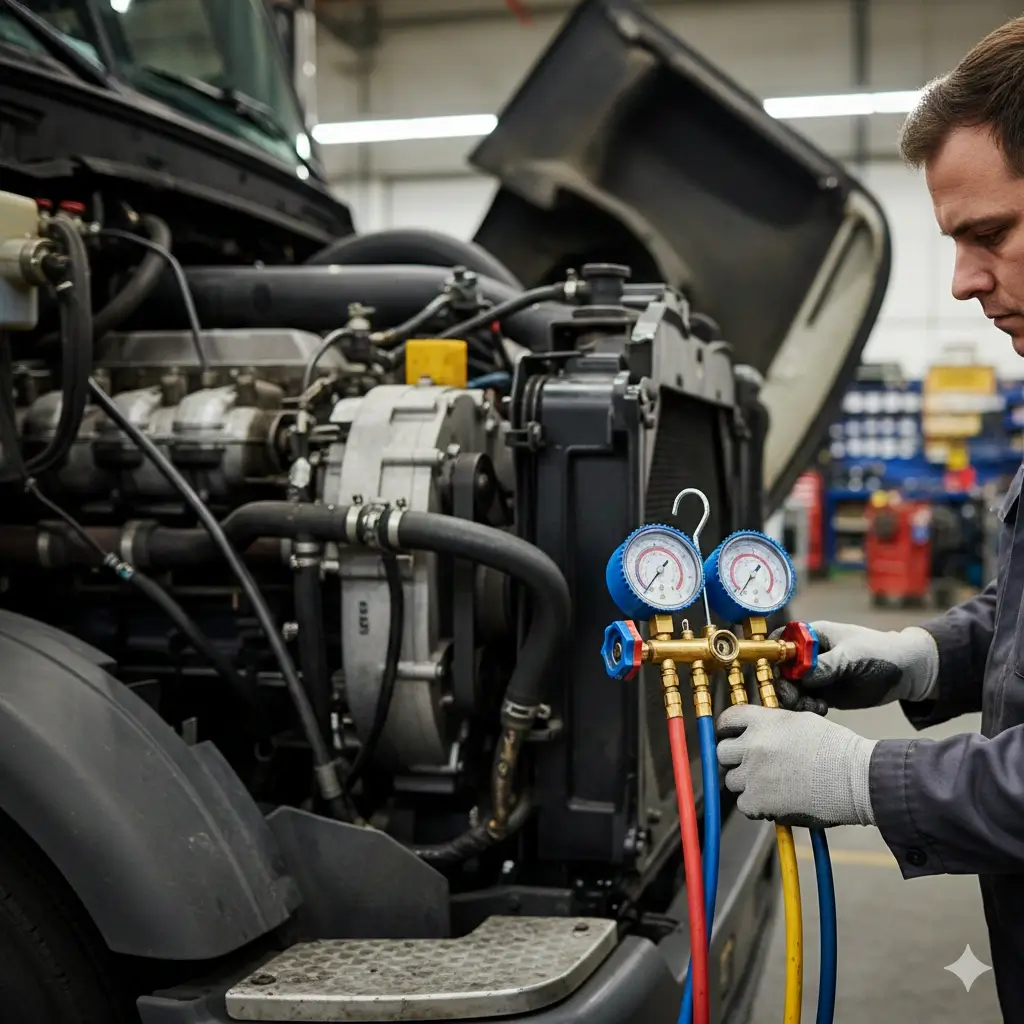
Low refrigerant is the number one cause of weak, warm air. Most commonly, it means a leak at the hoses, O-rings, fittings, the service ports, or the compressor shaft seal. Once stored for a while, seals can shrink and seep.
Check for oily residue around the compressor, condenser connections and hose crimps. If the clutch clicks on then off every few seconds, that cycling is frequently indicative of low charge. Warm vents and an icy evaporator case are indicative of low flow or incorrect charge.
Confirm with manifold gauges. Pressures should align with ambient temperature for proper performance. Don’t just top off blindly. Repair the leak, evacuate and recharge to specifications.
2. Component Failure
The compressor is a pump that moves refrigerant. Age, heat, and high hours wear it out. Ten years or so is typical. Symptoms include grinding noises, a frozen or slipping clutch, metal in the lines, and no cold air.
Inspect the condenser for bent fins or stone hits and the evaporator for blockages or leaks. Test the blower motor and engine-bay fan(s). If the condenser or radiator fans fail to run with the AC on, head pressure spikes and air turns only slightly cool. Check the expansion valve and accumulator/receiver-dryer. A stuck valve starves cooling.
3. Airflow Obstructions
A clogged cabin air filter reduces flow and increases noise.
Your condenser fins have a coating of debris—bugs, mud, plastic—that’s preventing the heat from dissipating. Use low-pressure water to clean straight through the fins.
Blocked sleeper vents, closed ducts or crushed hoses keep cold air from the rear.
A plugged evaporator drain creates moisture, fogging, and smell. Clear the tube to return drip and reduce mold.
4. Electrical Gremlins
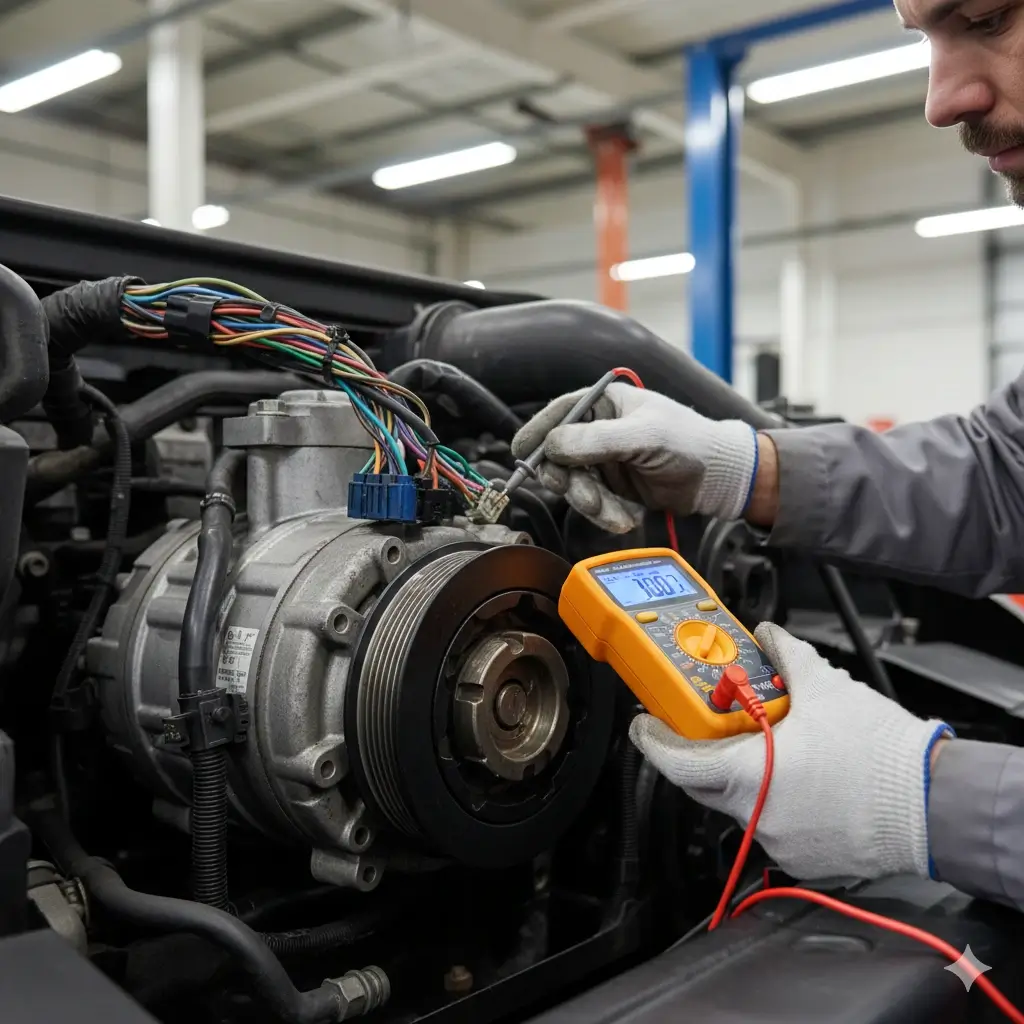
Begin by checking fuses and relays, then see if power reaches the compressor clutch. A weak clutch coil, bad relay, or corroded ground will halt engagement.
Bad pressure switches or temperature sensors can lock out the system or cause erratic cycling. Check harnesses at the compressor and along the core support for rub-through, heat damage or loose connectors. Make sure condenser or radiator fans are commanded when the AC is on. If they remain off, it will only be lukewarm.
5. System Contamination
Moisture makes acid inside the loop that scores the compressor and corrodes metals. Black sludge or glitter indicates an internal failure. Dirty condensers or evaporators lose capacity and corrode more quickly.
Leaks, O-rings or seals suck in air and water, increase pressures and reduce cooling. If contamination is suspected, recover, flush lines and condenser, replace if it is a parallel-flow type, fit a new receiver-dryer or accumulator and orifice or expansion valve, evacuate to deep vacuum, and recharge to correct mass. Run the AC weekly on max for a few minutes year-round to keep oil moving and seals wet.
Diagnose The Problem Yourself
Begin with a minimal itinerary, jotting down every move. Grab a flashlight, a dash thermometer, and if you’ve got them, basic AC gauges. Create a checklist that records ambient temperature, vent temperature, remarks on airflow, noises, clutch behavior, and any visible signs such as oil stains. About: Diagnose The Problem Yourself. Concentrate on non-invasive checks initially. Don’t open the refrigerant circuit unless trained. Most problems, such as low charge, small leaks, clogged debris, bad fuses, and weak belts, present themselves with simple tools and diligent observations.
Visual Inspection
Diagnose it yourself by scanning the engine bay with the engine off. Search for an oily film on AC lines, condenser seams, and around fittings. Refrigerant oil leaves a slick trail identifying leaks. Months of sitting over the winter can dry up seals, so be sure to closely inspect rubber sections and crimp joints.
Inspect the compressor body and clutch face for cracks, scorch marks, or wobble. Scan rigid lines for rust, particularly close to brackets. Wiggle fittings lightly; any lull can indicate a loose joint. If you have a UV lamp, a UV dye kit can assist in tracking slow leaks.
Inspect the drive belt on the compressor. If it’s glazed, frayed, or loose, it can slip under load and slice cooling. Change old belts. A new belt is inexpensive and quick to install.
Remove any debris around the grille area. Leaves and plastic bags clog the condenser and radiator and suffocate airflow. Wash fins with low-pressure water. Bent fins diminish heat exchange and should be combed straight.
Sound Check
Turn on your ignition with the engine running and AC on and listen near the compressor. Grinding or squealing indicates a bad bearing or slipping belt. A persistent clicking that initiates the compressor is okay.
A sharp hiss can indicate a leak or high pressure discharge. Buzzing or rattling behind the dash often indicates a weak blower motor or blend door actuator.
E.g., if the clutch clicks on and off every few seconds, mention it. Rapid cycling usually indicates low refrigerant or a control defect.
Performance Test
Turn on max cold and recirculation. Measure vent air as a rough guide maybe 6 to 12 degrees Celsius below ambient on many systems, but follow consistency more than a single figure. Diagnose the problem yourself.
Compare airflow across center, side, and floor vents. Weak or no flow at one outlet can indicate a clogged cabin filter or blend door issue.
Observe the compressor cycle. Long steady runs with stable cool air display a healthy charge. Rapid cycling suggests low refrigerant. A quality recharge kit with a gauge will confirm low pressure and can sometimes bring it back to life. If the clutch never engages, check fuses and AC relays. Electrical faults are common. Regular maintenance, including cleaning the condenser, checking belts, and running the AC for an hour a week, no matter how cold it is outside, avoids expensive repairs. With gauges, UV dye, fuses, and belts, most problems are at your fingertips.
Trucks vs. Cars: The AC Difference
Truck AC must transfer more heat out of more space, often for hours longer and in rougher conditions. That guides design decisions that impact cooling speed, noise, maintenance requirements, and cost.
- Cabin volume: Trucks cool larger cabs and in some cases, sleepers. Cars cool smaller cabins with quicker pull-down.
- Component size: Truck compressors, condensers, and fans are larger and more robust. Car parts are lighter and smaller.
- Duty cycle: Trucks run AC for many hours per day. Cars have shorter, mixed trips.
- Airflow paths: Trucks route air to the driver area and sleeper. Cars focus on front and rear seats.
- Controls: Commercial trucks may use automated HVAC with separate zones and parked-cooling modes. Cars are simpler.
- Power strategy: Trucks may cool while parked without the engine using parking AC. Cars sit on engine or high voltage hybrids or EVs.
- Maintenance: Trucks often have extra filters, dual evaporators, and longer hose runs. Trucks versus cars: the AC difference. Cars have fewer parts and easier access.
Truck systems are built to endure under load. They have heavy-duty compressors, high-capacity condensers and larger evaporators to maintain steady air flow and temperature when outside air is hot, humid or dusty. This adds bulk but aids in keeping target vent temperatures close to 6 to 10 degrees Celsius at the outlets during regular load. In desert or high humidity fleets, corrosion-resistant coils and higher fin density are common to maintain efficiency as dirt accumulates.
Dual evaporators and sleeper vents transform maintenance. Two cores mean two expansion devices, more sensors, and more joints that can leak. Dust-clogged sleeper filters curb airflow quickly and leave the driver’s vents feeling weak. A clogged rear sleeper blower, a stuck rear blend door, or a low charge that biases to the front circuit results in warm air on the long pulls. Service checks for both evaporators, blend and mode door moves, both blower speeds, and long hose runs are checked for rub-through, ensuring equal vent temperatures front and sleeper.
Controls matter – Trucks vs. Cars: The AC Difference Most trucks employ auto climate with in-cab temperature, sun load, and humidity sensors, as well as parked-cooling modes. In the Netherlands, all new trucks since 2021 must have standard AC, but older rigs differ. Battery-powered parking coolers can keep sleepers at around 18 to 21 degrees Celsius, which are temperatures associated with increased sleep and alertness, without engine idle. This sidesteps fuel burn and noise from traditional AC at idle. The monthly fuel saved can total around 264 liters of diesel. Battery-based parking AC systems manage temperature, humidity, and airflow while parked and cut down on long-term idle expenses.
The Hidden Costs of Delay
Postponing AC repairs makes minor defects into massive invoices, increases safety hazards, and causes trucks to sit idle at peak season.
| Potential Effect | What It Looks Like | Why It Gets Worse | Estimated Impact |
|---|---|---|---|
| Compressor burnout | AC cycles but warms fast | Low refrigerant starves oil flow | Major replacement + labor |
| System contamination | Sludge, metal flakes in lines | Moisture reacts with refrigerant | Full flush, drier, valve, seals |
| Electrical cascade | Blown fuse, burnt relay | High current from seized parts | Harness checks, module risk |
| Total AC failure | No cooling at all | Leak grows, clutch fails | Downtime, missed loads, refunds |
| Reduced fuel economy | Higher engine fan load | Overworked condenser and drag | Higher fuel spend over time |
| Fleet downtime | Multiple trucks queued | Shared parts wear patterns | Lost revenue per day of idle |
Undiagnosed AC faults impact the business side. A truck off the road for a day can lose scheduled loads, incur rush rates on rentals and stress client relationships. Skipping oil changes or delaying transmission fluid neglects AC and leads to broader vehicle wear and higher lifecycle cost.
Driver Fatigue
Hot, muggy cabins suck attention, particularly in summer congestion. When the air remains warm, motorists perspire, drink, and visit more. Focus wanes, response times slow, and the chance of mistakes increases.
Humidity fogs glass, drowsiness creeps in during long hauls. CDL B and CDL C drivers require consistent cool air to remain focused, navigate congested city routes, and execute multiple stops daily. A bad breeze makes every chore more difficult and unsafe.
Productivity Loss
Uncooled trucks cause more breaks, slower speeds, and detours to service bays. Hours accumulate quickly over a week.
Morale dips when taxis seem like toasters. That manifests itself in slower loading, shorter driving stints, and missed targets. All those frequent relief stops and AC service windows delay delivery windows and chip away at customer trust. For fleets, long downtime impacts utilization, margins, and performance.
Cascade Failure
A minuscule refrigerant leak reduces pressure, deprives the compressor of oil and burns bearings. Bad air flow from a dirty cabin filter overheats the condenser, causing the clutch cycle to harden until it gives out. Moisture inside creates acids, pits the expansion valve and disperses debris that blocks lines.
Electrical faults snowball as well. A weak relay causes arcing and heat, then the fuse trips. Repeated spikes can stress control modules. On-time fixes reduce scope, safeguard the compressor, and save components like the drier and TXV from collateral damage. Delay, like worn tires, thin brake pads, or dismissed turbo whine, transforms inexpensive upkeep into costly repair and wasted fuel money, not to mention increased pollution output.
Maintain Your AC System
It’s this sort of preventive care that keeps the system stable, reduces heat stress, and avoids surprise breakdowns. A little consistent care is an hour of misery and expensive shop time saver.
Regular Checks
Check refrigerant level every 2 to 3 years, or earlier if cooling declines. Low charge usually means leaks at hoses, O-rings, Schrader valves or the compressor shaft seal. Inspect for oily residue on lines and fittings. If charge is low, recharge only after leak check. Recharge kits can provide short-term relief, but almost never address underlying causes.
Maintain your AC system. Check belt condition and tension. Glazing, cracks or slippage cut compressor output. Check for wet areas on the condenser or evaporator drain and record musty odors that indicate coil dirt. Dirt on coils and fins is like a blanket and inhibits heat transfer.
Test blower motor speeds and cabin fan door operation. Weak airflow indicates a dying blower resistor, worn motor brushes, or a sticky blend door.
Swap out the cabin air filter annually, approximately every 20,000 to 24,000 kilometers. A clogged filter strangles airflow, increases the risk of coil icing, and degrades air quality.
Log the high and low side pressures and vent temperature. Consistent readings assist in identifying problems such as a dying compressor, obstructed expansion valve, or overcharge early on.
Seasonal Service
Do a spring tune-up: verify pressures, inspect for leaks, and recharge if needed. Wash condenser fins with low-pressure water from back to front. Bent fins should be carefully straightened with a fin comb. This increases efficiency and helps prevent engine bay heat soak.
Before the summer’s peak, clean the evaporator coil if access is available. Grime there can decimate cooling. After winter storage or long idles, recheck lines for dry cracks and fittings for seepage.
Service intervals change with weather and road conditions. Dusty trails, salt air, or lots of stop and go require more frequent filter changes and condenser cleans.
Smart Operation
Ignore max-cold blasts for hours. It spikes compressor load and can push pressures high. Employ recirculation in constant heat to cool already-cooled air and save the system’s effort.
Keep Your AC System About Park in shade or use a sunshade to reduce cabin soak. That reduces start-up demand and pull-down time. Under heavy heat at idle, a little bump in RPM pushes more air across the condenser, but it’s fuel-wasteful and not sustainable in the long term.
Turn the AC off a few seconds before engine shut off to even out pressures and minimize startup wear.
When to Call a Professional
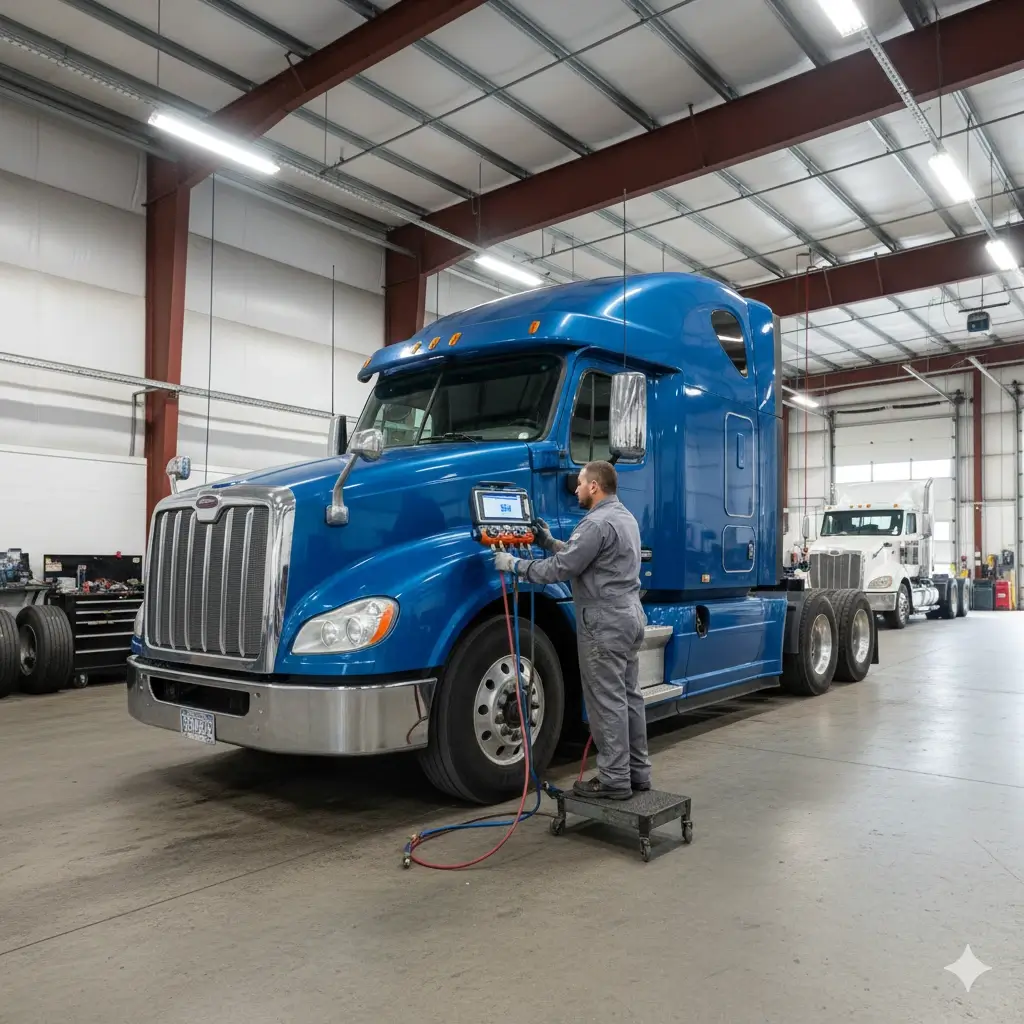
If warm air keeps coming, the airflow is weak or the furnace short cycles after you’ve checked the basics, it’s time to leave the guesswork behind and seek professional assistance. A car’s A/C, light and heavy trucks included, is a sealed, pressurized system. If it’s not cooling well, a pro can identify where it’s going wrong and repair it with proper tools and parts.
Turn to expert diagnostics if easy fixes fail to bring back the chill. Verify the cabin filter is clear, the condenser is clean, and blower speeds change. Fire it up on max for a few minutes once a week to keep seals wet and valves moving. If cooling still fades, call a shop. Inspect the sight glass, if available, and check the service history. If you think there is a low charge, remember that most systems use R‑134a or newer. Don’t top off blindly. Compressor damage can result from the wrong charge level or mixed refrigerant.
About: When to Call a Pro
If you’re unsure about refrigerant type or charge, book a diagnostic.
Call a trusted repair shop for hard faults. Signs are clutch not engaging, loud compressor rattle, rapid cycling, oily residue on hoses or around fittings, which is a leak clue, frost on lines, or fuses that blow again after replacement. Electrical problems such as bad pressure switches, blend door actuators, and control head faults require scan tools and meter tests. Refrigerant leaks need certified recovery equipment, dye or nitrogen tests, and proper evacuation before recharge. Compressor failure, expansion valve faults, or a blocked dryer are not DIY jobs. When you’re unsure of the cause or what next step to take, call a professional.
Select a provider with 24/7 mobile service and full heavy-duty HVAC capability if downtime is costing you. Mobile techs can pressure-test, recover and weigh charge, replace hoses, and verify airflow on-site. For long-haul or fleet work, request experience with sleeper units, multi-evaporator configurations, high-capacity condensers and belt routing on large diesel engines. This minimizes return trips and keeps trucks on the road.
Trust our skilled technicians for expert diagnosis and long-lasting repairs. They test pressures, vent temps, actuator travel, fan draw, and compressor command, then compare findings to specs. The right vacuum, the right oil type and amount, and charging by mass—not by estimation—safeguard the system. Service contracts go a long way, but if your maintenance steps are muddy or problems linger, call in the pros.
Conclusion
In summary, the solution begins with obvious tests, not speculation. Cold air requires the proper charge, stiff airflow, clean components and tight seals. Minor indicators, such as a feeble fan or brief cycle, frequently point to the underlying source. A quick gauge test, cabin filter swap, or peek for oil stains near lines can save money and time.
For real life cases: a fleet truck with a clogged condenser dropped vent temps by 6 °C after a rinse. A pickup with a loose blend door cable went from warm to icy with a $15 clip. Easy victories.
Run the quick tests from the tutorial today. Watch those digits, heed those indicators, then schedule a shop check if temperatures still remain elevated.
Frequently Asked Questions
Why is my truck AC blowing warm air?
Low refrigerant, a clogged cabin filter, or a failing compressor. Inspect for leaks, strange noises or weak airflow. If the AC cools only when driving, check the condenser or fan. Quick checks like these can save you from bigger repairs!
Can I diagnose truck AC problems at home?
Yes, begin with easy inspections. Check the cabin filter, check AC lines for oily spots, check the compressor engagement sound, and check the fan speeds. Consult a gauge to read low-side pressure if you have one. If pressure is off, you may have a leak or component failure.
How is a truck’s AC different from a car’s?
Trucks can have larger cabins and heavier loads. They might have larger condensers, dual-zone systems, or rear evaporators in some models. This means more parts to service and a bit different failure modes, particularly when towing or idling.
Is it safe to top up refrigerant myself?
Only if you’re aware of the right type and charge. It risks hurting the compressor if you overfill. Refrigerant service could be regulated in your state. If you think you have a leak, repair it before recharging. When in doubt, call a certified technician.
What happens if I delay AC repairs?
Delays turn small leaks into compressor failure. Moisture can get in and harm the dryer and valves. It becomes very expensive if a bunch of parts go bad. Early fixes safeguard performance, comfort, and fuel savings, particularly in hot climates or extended hauls.
How often should I service my truck’s AC?
Have it checked annually, preferably before summer. Change your cabin filter every 12 to 18 months, or earlier in dust-heavy regions. Check the condition of the belt, condenser, and pressures. Routine service is a breakdown prevention and keeps your cooling strong under load.
When should I call a professional?
Call a pro if there’s no cooling, you hear grinding, smell burning, see ice on lines, or gauges indicate abnormal pressures. Turn for assistance following do-it-yourself top ups that fail to hold. Our certified technicians can locate leaks, evacuate and recharge to factory specs.
Not what you were looking for? Check these top resources for professional diagnostic and repair services.
Diagnostic and Electrical Repair
You might also check these additional resources: