
- Key Takeaways
- Cold Weather Trailer Challenges
- Critical Malfunction Signs
- Reefer Unit Winter Care
- The Reverse Freeze Threat
- Daily Winter Pre-Trip Routines
- Edmonton Heavy Repair Solutions
- Conclusion
- Frequently Asked Questions
- How does cold weather affect my reefer trailer performance?
- What are the most critical malfunction signs in winter?
- What winter maintenance does a reefer unit need?
- What is the “reverse freeze” threat in reefers?
- What should be in my daily winter pre-trip routine for reefers?
- How can Edmonton heavy repair services help with winter reefer issues?
- How often should I service my reefer unit during winter?
Key Takeaways
- Cold weather means fuel gelling, frozen pipes, moisture buildup, and sensor errors are much more likely. Reefer units require specific winter care instead of standard warm-weather procedures. Being vigilant about slow starts, weird noises, and fault codes helps you identify problems before they impact your cargo.
- Fuel care is important in low temperatures. Winter-grade diesel, anti-gel additives, and full tanks reduce condensation. Routine checks of fuel lines, filters, and water separators go a long way in avoiding freeze-related blockages and shutdowns.
- Batteries and electrical systems are more susceptible in winter. Testing batteries, cleaning terminals, and checking charging output should be included in a regular maintenance plan. Changing out tired batteries before winter lowers the risk of no-starts when the thermometer plunges!
- Temperature precision relies on healthy sensors, robust insulation and unobstructed airflow within the trailer. Regular calibrations, sensor wiring inspections and rapid response to alarm codes forestall temperature drift, overcooling and unintentional freezing of delicate cargo.
- A comprehensive reefer unit winter care checklist — batteries, fuel, belts, heating, defrost, and sensor calibration — ensures stable operation throughout the season. Daily pre-trip routines — clearing snow and ice, checking for animal intrusion, and perusing temperature logs — provide an additional buffer.
- For fleets in harsh winter zones like Edmonton, forming an alliance with a specialized heavy truck repair service increases uptime and extends reefer unit life. By scheduling preventive winterization and having emergency repairs, you’re lessening expensive breakdowns and cargo loss.
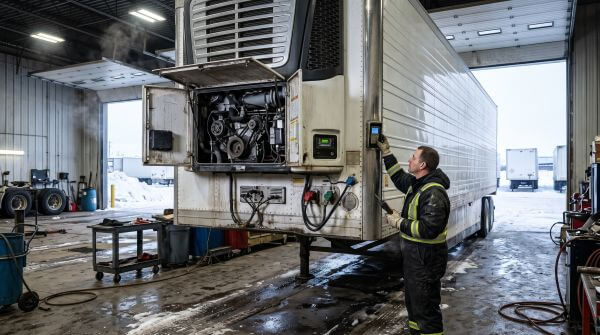
Reefer unit winter care refers to the measures drivers and fleet managers use to maintain refrigerated trailers during cold weather. Cold fuel can gel, batteries can lose power, sensors may act up, and doors or seals can stiffen and leak cold air. Minor problems become cargo loss when reefer units do not start, do not hold set temperature, or shut down during long hauls. To prevent that, winter care typically encompasses pre-season inspections, fuel and oil selections, battery diagnostics, and configuration adjustments for defrost and ventilation. Some fleets even go so far as to modify driver routines and inspection checklists. The following pages walk you through each section in easy, straightforward steps.
Cold Weather Trailer Challenges
 Cold weather challenges reefer trailers in subtle yet expensive ways. Key risks include:
- Frozen pipes and valves inhibit coolant or drain flow and can even crack fittings.
- Moisture buildup on walls, ceiling, and insulation can freeze and cause panel damage and temperature control issues.
- Ice on floors and doors is a slipping hazard and a source of air leaks that cause wasted fuel.
- Snow, debris, and small animals crawling into condenser and evaporator spaces obstruct airflow or harm wiring.
- Just standard wear on belts, hoses, and seals that are already stiff from the cold increases the risk of a mid-route breakdown.
Daily inspections for ice, flooding, damaged seals and closed vents mitigate these issues and regulate temperature control in the most extreme winter weather.
Regular inspections can help identify damaged seals, worn components, and other trailer issues before they affect temperature control or cause a roadside breakdown. Professional heavy-duty trailer repair can address structural and mechanical problems that affect trailer safety and reliability.
Fuel Gel
Cold weather can gel diesel into a waxy substance that starves the engine of fuel. Winter-grade diesel or a reputable anti-gel additive at the dose your fuel supplier or manufacturer recommends does wonders for keeping fuel flowing. This is crucial when working in sub-10 °C regions, where gel danger escalates rapidly throughout evening halts.
Fuel filters and lines need to be inspected with more frequency in winter. A gel or ice clogged filter can result in hard starts, engine stalling, or erratic reefer temperatures. Many fleets plan additional filter changes for units that operate in extended cold snaps.
Keeping the tank near full reduces air space and limits condensation on the tank walls. Less water equals less ice in the fuel system. Any exposed fuel lines or fittings enjoy very simple insulation sleeves or routing away from wind chill zones under the trailer to reduce cold soak and slow gelling.
Battery Failure
Cold air weakens batteries and reefer units still require consistent power. Routine load tests pre and intra-winter indicate which can still crank the engine and which are gasping for air.
Grimy or loose terminals provide resistance, which translates into less usable power in already extreme environments. Cleaning posts with a quick brush, adding corrosion protection, and tightening clamps reduces the risk of a premature blackout on the road.
Older batteries that can barely handle mild weather will give up the ghost once temperatures drop below 0 °C. Replacing iffy batteries before winter is less expensive than emergency roadside assistance and ruined loads.
The charging system requires equal attention. Cold Weather Trailer Challenges: Checking alternator output and voltage regulators in winter service ensures batteries stay topped off even in frequent start and stop cycles.
For additional guidance, review Transport Canada’s winter vehicle maintenance recommendations, which include checking battery condition, terminals, and charging systems before cold weather sets in.
Sensor Errors
Cold temperatures can throw off sensor accuracy and cause the unit to run warmer or colder than setpoint. Winterizing by checking and calibrating temperature sensors ensures readings stay accurate to box temperature and safeguards sensitive payloads like pharmaceuticals or fresh produce.
Wiring and connectors that feed those sensors contend with moisture, salt, and ice spray from the road. Wrapping harnesses with loom, testing for cracked insulation, and sealing connectors prevents short circuits and false alarms that could cause unnecessary shutdowns.
Any warning codes associated with sensors should be addressed immediately, not deleted or disregarded. Stubborn faults can conceal gradual temperature drift that only surfaces when a load claim arrives.
When sensors are damaged, degraded or test give unstable readings, replacement is typically the most reliable cure and helps the reefer maintain tight temperatures over long winter hauls.
Critical Malfunction Signs
Critical malfunction signs in winter tend to present themselves as sluggish cooling, inconsistent trailer temperatures, weird noises and warning codes on the controller. Catching these early protects the load and avoids roadside breakdowns.
Slow Starts
Cold weather hard starts usually indicate weak batteries, a worn out starter or thickened oil that’s causing the engine to labor. If it cranks longer than normal, falters before firing, or takes multiple attempts to turn, chalk that up to a warning, not a one-off hiccup. In freezing temperatures, each additional second of crank exhausts the battery and reduces your buffer for the subsequent start.
Don’t keep pushing the start button when the unit bogs down. Each try draws a high current load that can drag battery voltage below safe levels and stress connections, cables, relays and the starter motor. A driver who keeps trying for 5 or 6 starts can escalate a minor starting issue into a no-start callout in under 10 minutes.
Inspect the compressor area, fan shrouds, and pulleys for ice buildup, packed snow, or plastic wrap snagged in moving parts. Slush stirred up by the road can freeze on fan blades, jamming them, or a loose pallet cover can become sucked into the condenser fan guard. If slow starts continue to occur on cold mornings, schedule service immediately instead of waiting for warm weather to see if it “goes away.
Fault Codes
Smart reefer units display fault codes on the control panel, which provide a fairly straightforward tip as to what is malfunctioning or near failure. Log the precise code, time, and box temperature prior to adjusting any controls, as this aids repair crews in identifying trends such as repeated low-fuel or high-discharge-pressure alerts.
Prioritize codes associated with temperature drift, defective or loose sensors, and fuel feed. For example, a supply-air sensor failure could cause the controller to “believe” the trailer is colder than it actually is and it would therefore cut cooling prematurely. Fuel-related codes might display when wax in diesel clogs filters in sub-zero temperatures, which can starve the engine and shut it down.
Don’t dismiss or snooze alarms until someone has fixed the root cause. If a driver just resets high-pressure or low-refrigerant codes without verification, the unit can bounce between running and shutdown, leading to broad product temperature swings.
Common winter‑related codes and meanings include:
- Low suction pressure may indicate a possible refrigerant leak or a blocked evaporator coil.
- High discharge pressure occurs when the condenser coil is packed with ice, snow, or dirt.
- Supply air sensor fault: damaged probe or loose wiring connection
- High return air temperature indicates blocked airflow or door seals leaking warm air.
- Engine overcrank: weak batteries, starter trouble, or thick oil in low temperature.
Temperature Drift
Temperature drift manifests as an increasing difference between the setpoint and actual trailer reading, usually by a couple degrees initially. In winter, some operators believe cooler ambient air means it’s all “safer.” Small drifts can disguise larger control or airflow problems, particularly with mixed or sensitive loads such as pharmaceuticals or fresh produce.
Check for the easy things initially. Doors that don’t pull tight, worn seals, or a floor drain left with a crack open can let cold dry outside air sneak in and alter the controller’s temperature sensing. Inside the box, stacked pallets hard against the bulkhead, shrink-wrap blocking return air grilles, or cargo pressed up to ceiling ducts will all alter the rate cold air disperses and returns to the sensors.
Inspect insulation, interior wall panels, and foam around seams and door frames for damage from previous impacts or water. Wet or crushed insulation loses much of its R-value, so the reefer has to run longer to hold setpoint, which raises fuel burn. Even a small gap around a repair patch can become a cold bridge, pushing heat out and making the unit cycle more.
Recalibrate/verify temperature probes with a trusted thermometer at various spots in the trailer, not just by the door. If the built-in sensors are off by even 1 to 2 degrees Celsius, the controller can keep the box warmer or colder than the bill of lading demands, and that’s a claims generator.
Reefer Unit Winter Care
Reefer unit winter care is inspecting every system that can fail in cold temperatures, then installing easy protection prior to the initial hard freeze. A short, written checklist helps: coolant strength and level, belts and hoses, battery health, fuel treatment, heater and defrost test, sensor check, door seals, drain lines, and covers for any exposed condenser or control boxes when the trailer sits. Almost all servicing follows the unit’s manual, which dictates belt tension limits, coolant mix, refrigerant charge and oil type. Keep that handbook handy and record every service date.
Cover condenser coils and fans on the outside of the unit when parked for long periods. Protect them from snow and ice with plywood, fabric, or foam covers that permit some airflow and do not trap water. Be sure to label and store these covers on the trailer so that they are ready at the next stop instead of left behind at a single depot.
1. Test Batteries
Conduct a load test on every battery to verify the cold-cranking amps remain in the rated range, as weak batteries can appear okay on warm days but fail on a sub-zero °C start.
Clean off any white or green corrosion on posts and cable ends, then coat terminals with a thin layer of dielectric grease or a special battery spray so moisture and road salt don’t creep back in as quickly. Inspect hold‑downs and brackets so batteries can’t shift on rough winter roads, which can crack cases or loosen connections. Swap out any battery that falls beneath the manufacturer’s test line rather than attempt to nurse it through the season.
2. Treat Fuel
With winter-blend diesel or an approved anti-gel added at each fill, depending on the coldest temperatures on the route, to keep fuel from waxing and clogging filters.
Open and drain water separators to extract any trapped moisture before it can freeze. A quick daily check during very cold weeks can avert a no-start call. Check tanks, caps, and exposed lines for wet spots or fuel odor that could indicate small leaks that become worse when ice expands inside lines. Reserve a little treated fuel on board so the unit can keep running through delays or if a remote station carries only summer fuel.
3. Service Belts
Check all drive belts for glazing, missing chunks or cracks, and frayed edges because cold rubber stiffens and weak spots snap sooner.
Set belt tension to the range in the manufacturer guide, using a gauge if possible so it’s not only by feel. Replace any belt that appears questionable instead of taking the chance of a roadside breakdown with temperature-sensitive freight in tow. Lightly lubricate pulleys and key moving parts wherever the manual permits, which reduces friction and curtails ice accumulation around exposed components.
4. Verify Heat
Cycle the unit in heat and defrost modes long enough to ensure it hits setpoint and responds to changing thermostat settings, both at idle and under a light load.
Inspect vents, returns, and ducts to ensure they’re open, clean, and not blocked by cargo, snow, or plastic wrap that someone taped over an outlet. Where a backup heat source is present, like an electric standby heater, test that as well and label the switches so employees know to turn it on in case the primary system goes down.
5. Calibrate Sensors
Recalibrate temperature and humidity sensors ahead of deep winter with a known reference or the service manual procedure so the readout in the cab corresponds with the actual box temperature.
Check sensor housings and wiring for cracks, loose grommets, or gaps that allow meltwater to creep in and freeze around the probe. Swap out old, slow, or incompatible sensors with ones the manufacturer lists as approved in order to keep data consistent for monitoring and claims. Document all calibration dates, persons, and methods in maintenance records. This goes a long way toward demonstrating care if there’s a cargo dispute.
The Reverse Freeze Threat

Reverse freeze is when the reefer cools product too hard or too fast, despite outside weather not being that cold. The unit continues to blow cold air into the trailer and the cargo surface dips below its safe threshold. Leafy greens, fruit, beverages, and certain medicines are able to freeze like this with the air outside remaining at 10–15 °C. Any cargo with water in it is in danger. The reverse freeze threat occurs because a box of tomatoes near the air chute can freeze solid while boxes in the middle of the pallet remain fine, making claims more difficult to argue and more difficult to catch early.
Overcooling is usually the result of a relatively minor setpoint or mode error. A crew may set –2 °C just to be safe when the product calls for +2 °C. That 4 °C margin can send product at the air discharge below 0 °C, which is enough to ruin a lot of fresh items. Intermittent runs with low load can draw the air too far below setpoint between cycles. Prudent use of setpoint, return-air control, and proper operating mode reduces this danger.
The tight control of trailer temperature is our best defense. This means verifying those sensors read properly pre-peak season, contrasting return and discharge air readings, and monitoring data logs at every stop. If the display indicates steep drops under setpoint, it means the unit is either overcooling or short cycling. A lot of fleets, for example, now check downloaded trip data to identify runs where air remained too cold for extended periods and then make changes to default settings or driver behaviors.
It turns out that insulation inside the trailer is important too. Exhausted pipes, door frames, drain lines, and metal floor channels are like cold bridges. They suck cold into crannies and create thin ice patches or frozen spots on nearby cartons. Simple steps help: seal gaps around doors, wrap exposed pipes, protect drain lines, and avoid stacking sensitive freight right against metal walls, floor, or ceiling where cold air hits first.
Drivers require straightforward training on what freezing in the box looks like. That means looking for stiff or frosted boxes at the front, frosted vents, brittle produce on initial delivery and data points that indicate discharge air falling well under setpoint. When they observe these indicators, they should check in immediately, raise the setpoint slightly if possible, open doors momentarily only when essential and follow the dispatch or cold chain manager’s instructions.
Daily Winter Pre-Trip Routines

These daily winter routines keep the reefer unit stable, reduce load claims, and help you catch small faults before they turn into breakdowns in sub-zero weather.
In addition to daily reefer checks, fleet operators should understand Alberta’s commercial vehicle inspection requirements. Inspection schedules vary according to vehicle type, registered weight, and operating conditions, so confirm the requirements that apply to each vehicle in your fleet.
- Walk-around visual inspection of the unit and trailer body.
- Check the fuel level and inspect the fuel lines for leaks or wet spots.
- Verify setpoint and box temperature on control panel.
- Check doors, seals, and latches for gaps, frost, or damage.
- Check for oil, coolant, or refrigerant stains under the unit.
- Check belts for cracks, fraying, or loose tension
- Verify that vents and air channels inside the trailer are unobstructed.
- Examine electrical cords and plugs for cuts, abrasions, or a loose fit.
- Listen for odd sounds from the compressor or fans
- Make sure alarms are cleared and no new codes are active.
Check temps logs prior to each trip to see how the unit maintained setpoint on last run — long stops, border waits, etc. Verify that the temperatures correspond with the product and route plan. If a unit exhibits swings of more than 1 to 2 °C without an obvious cause, mark it for a more thorough inspection. Check that data loggers, telematics, or onboard recorders are on, have sufficient memory, and display the correct date and time. Occasionally compare the display temperature with a handheld probe or calibrated sensor, so you know the readings are not drifting.
Remove snow, ice, and debris from intake grilles, condenser fins, and around the central air conditioning unit and condenser area on the trailer front. Snow packed on the condenser restricts airflow, which makes the compressor work harder and can lead to high-pressure trips. Use a brush or broom, not sharp things that bend fins. Free ice from drain holes so that meltwater can flow out and not refreeze inside the housing. Ensure that the vicinity of the unit is clear of loose plastic, cardboard, or straps that could be drawn into fans.
Look for little menaces around wiring looms, foam panels, and fabric or plastic covers. Check around warm areas for gnaw marks, droppings, torn insulation, or nests. Rodent damage to sensor cables or foam insulation can create false readings, short cycles, and hot or cold spots in the load space. Seal small entry gaps with appropriate covers and mark any significant damage for repair prior to leaving.
Edmonton Heavy Repair Solutions
Edmonton fleets have cold spell after cold spell, so reefer winter care demands a strong foundation, not hearsay. Heavy repair shops that know local winter patterns can identify weak points in units and trailers before they fail in sub-zero conditions.
Trust Get ’R Done Heavy Truck Repair for professional reefer unit and trailer repair in Edmonton. They service mixed fleets, from single-axle delivery trailers to multi-compartment long-haulners, so the inspections aren’t cookie-cutter. They can inspect insulation, door seals, and floor drains, then match that with unit health, including compressor performance, condenser fin condition, and evaporator cleanliness. For instance, a grocery carrier darting on short hauls around the city requires tight door seals and quick pull-down times, whereas a long-haul exporter might be more concerned with fuel consumption and consistent temperature over 1,000 kilometers journeys. Service plans can mirror those needs rather than arbitrary checklists.
Book fall preventive maintenance appointments before winter to save on expensive repairs. A standard pre-winter visit may consist of full diagnostics, battery load testing, alternator output, and inspecting belts and hoses, as well as checking coolant strength for cold temperatures. Fuel system checks might include filter changes and water drain-off ahead of the initial freeze. This sort of work goes better in early fall, when units can park for a couple of hours without affecting delivery timelines. For many fleets, consolidating multiple trailers in a single booking minimizes downtime and streamlines planning.
Get emergency repair when surprises break during severe weather. Even the best cared for reefers can encounter sudden sensor failures, frozen valves or starter issues in -20 °C weather. GRD Heavy Truck Repair can dispatch technicians to yards, highway stops, or loading docks when a loaded trailer is in danger. Their mobile heavy-duty repair service helps fleets address urgent problems without always having to bring the vehicle into the shop.
Take advantage of our expertise in winterizing AC units, fuel systems, and electrical. Techs can tune defrost cycles for colder ambient air, set proper clearances around condensers, and verify fans push sufficient air even with partial ice buildup. Fuel lines and tanks can be treated to cut down on gelling, and routing or shielding can be modified to minimize exposure to slush and road salt. Electrical tests can concentrate on connectors, harness routing, and control boards that typically fail first in the moisture and cold. This degree of attentiveness enables reliable performance throughout the entire winter.
Conclusion
Preparing your reefer unit for Alberta’s winter conditions is essential to protecting temperature-sensitive freight, preventing unexpected breakdowns, and keeping your fleet running reliably. From testing batteries and treating diesel fuel to inspecting belts, calibrating sensors, and monitoring trailer temperatures, every preventive maintenance step helps reduce the risks associated with freezing temperatures. Daily pre-trip inspections and prompt attention to warning signs can also prevent minor mechanical issues from turning into costly cargo losses or roadside emergencies.
Don’t wait for the first major cold snap to discover that your reefer unit needs attention. Get ’R Done Heavy Truck Repair provides professional reefer unit and trailer repair in Edmonton, helping fleets prepare for winter with thorough inspections, preventive maintenance, and emergency mobile repair services. Schedule your winter maintenance today to keep your refrigerated trailers operating efficiently and your freight protected throughout Alberta’s toughest winter conditions.
Frequently Asked Questions
How does cold weather affect my reefer trailer performance?
Chilly temps cause engine fluids to thicken, sap battery strength, and even freeze fuel lines. Doors and seals can stiffen and leak cold air. These conditions complicate the ability of the reefer unit to maintain set temperature and increase the possibility of load loss and breakdowns.
What are the most critical malfunction signs in winter?
Keep an eye out for high-temperature alarms, frequent unit shutdowns, changes in visible exhaust smoke, fuel leaks, ice build-up on coils, and unusual noises or vibrations. If you notice any of these, pull over and check right away to save your cargo and costly repairs.
What winter maintenance does a reefer unit need?
Check coolant strength, battery health, belts, hoses, and fuel filters. Use winter-grade fuel and keep tanks full. Check door seals and drains. Clean condenser and evaporator coils. Adhere to the manufacturer’s winter service schedule and record all inspections and repairs.
What is the “reverse freeze” threat in reefers?
Reverse freeze occurs when warm, moist air enters and freezes around the evaporator coil. This impedes airflow and results in temperature fluctuations and potential cargo spoilage. It’s very common with on-the-go access during cold weather or malfunctioning defrost cycles.
What should be in my daily winter pre-trip routine for reefers?
Inspect fuel level, engine oil, coolant, belts and exposed lines. Check doors and seals for gaps or ice. Verify setpoint and box temperature. Run a pre-trip diagnostic if you have it. Clear vents and grills of snow and ice. Document your findings prior to leaving.
How can Edmonton heavy repair services help with winter reefer issues?
Local heavy repair shops in Edmonton know extreme cold. They can do expert diagnostics, winterize your reefer unit, cure fuel gelling, perform electrical repairs and address major trailer damage. Having access to local experts means less downtime and greater fleet reliability.
How often should I service my reefer unit during winter?
Observe the manufacturer’s hours-based schedule. In harsh winter conditions, inspections should be more frequent. A lot of fleets do full checks every 2 to 4 weeks in heavy operation. Scheduled service keeps surprise breakdowns at bay and safeguards your high-value temp-sensitive loads.