
- Key Takeaways
- The Mechanics of Moisture Intrusion
- Critical Warning Signs
- Complete Air System Maintenance Checklist
- Thermal Dynamics and Component Failure
- Modern Ultrasonic Leak Detection Standards
- Professional Cold-Weather Fleet Support
- Conclusion
- Frequently Asked Questions
- How often should a commercial air system be maintained?
- What are the most common warning signs of air system problems?
- Why is moisture intrusion so dangerous for air brake systems?
- What should a complete air system maintenance checklist include?
- How does ultrasonic leak detection improve air system maintenance?
- How do cold temperatures affect air system components?
- When should a fleet call a professional for air system support?
Key Takeaways
- Moisture seeps into air systems from compressor intake and condensation, then accumulates in reservoirs where it decreases heating and cooling efficiency and harms components. Routine maintenance keeps this buildup in check and helps to avoid minor problems from escalating into costly breakdowns or downtime.
- Warning signs like sluggish brakes, frozen valves, decreased airflow, visible water in reservoirs, banging noises and fluctuating air pressure signal possible moisture contamination. When any of these symptoms arise, operators ought to quit procrastinating and book service now to safeguard safety and prevent surprise downtime.
- A comprehensive air system maintenance checklist includes filters, ducts, thermostats, refrigerant levels, coils, and complete system diagnostics. Recording all work and repairs helps track optimal performance, energy savings, and extended working life for both HVAC and vehicle air systems.
- Standard cartridge changes, reservoir purging and frequent valve leak tests are staples that keep moisture, oil and air leaks in check. With manufacturer-approved parts, documented findings and safe procedures, these tasks become a predictable, dependable maintenance regimen.
- Checking heater circuits and governor pressure is important in cold conditions when freezing moisture and wrong pressures can cause blockages, mechanical failure, and unsafe operation. Incorporating these checks into seasonal service and annual inspections bolsters system reliability and can prevent those emergency repair calls during periods of extreme weather.
- Advanced ultrasonic leak detection enables technicians to locate furtive air losses more quickly and precisely than traditional means, particularly in intricate fleets and sizable HVAC systems. When you couple this technology with routine examinations, it promotes energy efficiency, reduces operating costs, and ensures more reliable year-round performance.
Air system maintenance is the periodic inspection, cleaning, and servicing of heating, cooling, and ventilation components to maintain indoor air quality and unit efficiency. For many homes and workplaces, air systems are essential to comfort, health, and consistent energy use. Bypassed maintenance can lead to an increased power bill, low airflow, or bad air quality. Easy measures such as filter changes, coil cleaning, and duct checks frequently reduce wear and assist in preventing unanticipated breakdowns. Proper care plans keep fans, compressors, and sensors functioning as they should, which can extend system life by years. In the following sections, the guide walks through critical steps, trouble signs, and simple schedules for intelligent maintenance.
The Mechanics of Moisture Intrusion
 Moisture in air lines is simply physics. Water in the air travels as ice, liquid water, or vapor, and it transitions between all of these constantly. Every shift radiates or absorbs heat. Thus, each drip of moisture that infiltrates a system alters its heat balance and load.
Moisture initially enters a compressed-air system at the compressor intake. The compressor sucks in air that already contains moisture. Warm air carries more vapor than cool, so intakes near hot process areas or roofs frequently contribute more moisture than shaded, cooler locations. Once air is compressed, its temperature and pressure spike. As that hot compressed air cools in pipes or aftercoolers, its ability to hold vapor decreases. The additional water condenses into liquid and collects in pipe walls, filters, and receivers. This migration is not haphazard. Gravity draws liquid to low points, capillary action pulls it into tiny spaces, and system pressure differentials shove moist air through leaks and seams. Each of these three forces is capable of moving water even if the overall quantity appears minor.
Heat, temperature swings, and moisture are tightly linked:
| Temperature change scenario | Moisture behavior in air system | Typical impact on equipment |
|---|---|---|
| Hot intake, rapid cooling | Heavy condensation in lines | Higher drain load, corrosion risk |
| Mild, stable temperature | Mostly vapor, limited condensate | More predictable operation |
| Night-time cooling | Condensation in long pipe runs | Water pockets, pressure drop |
| Winter near freezing | Possible ice in low points | Blocked valves, cracking risk |
Water and other debris then accumulate in plenum reservoirs, receivers, and low points of ductwork. Rust flakes, oil, and dirt combine with liquid water over time. This sludge covers heat-exchanger surfaces, impedes heat transfer, and compels heating and cooling systems to operate longer for equal production. Once trapped, water can freeze and crack walls, casings, or masonry anchors in the winter or slowly decay coatings and gaskets in the summer. Joints between dissimilar materials or concrete with shrinkage gaps provide leak routes when pressure or wind imparts kinetic energy to moving droplets. Regular draining, filter checks, and inspection of low points keep small moisture pockets from developing into pipe failure, fouled coils, or total shutdown.
Critical Warning Signs
 Critical warning signs in air systems have a tendency to make an early appearance if you know where to look. Most of them are subtle changes in how the system feels, sounds, and consumes energy long before it fails.
Water contamination is one of the initial problems in most compressed air and brake systems. Examples of typical signs include vehicles with sluggish brake response, frozen valves in cold climates, and valves that stick or cycle slowly. When moisture freezes and causes brake components to seize or malfunction, frozen brake repair should be addressed before the vehicle returns to service. In HVAC systems, stranded moisture can cause diminished air flow, hot or cool spots, and feeble cooling in far-away rooms or zones. When one space is fine and another is too warm or too cold, this usually indicates water, dirt, or ice build up inside lines, valves, or coils. Even a minor 1 to 2 degrees Celsius (about 2 to 3 degrees Fahrenheit) miscalculation in room temperature can drive up heating or cooling expenses by as much as 10 percent, and those expenses accumulate month after month.
Operators and facility staff should monitor for critical warning signs. Checking air reservoirs and drain points for liquid water is an easy but powerful early test. Pools, mist, or rusty water at drains indicate inadequate drying or separation. Abnormal sounds, like stuttering, chattering, incessant hissing, or excessive motor cycling frequently indicate valves or regulators aren’t sealing properly. Inconsistent air pressure at tools, brakes, or vents demonstrates the same. Subtle shifts in airflow, sound, or cooling potency are usually the canary in the coal mine, not the death knell; a system is crying out for help.
Today’s systems have dashboard lights or digital diagnostics for air pressure, filter status or dryer faults. These shouldn’t be flicked or reset without a specific reason. Energy consumption should be consistent from year to year, after normal seasonal fluctuations are accounted for. Even minor reductions in efficiency appear in monthly bills. Dirty coils, aging motors, or old controls can silently bump energy consumption while comfort and output slip. Once a system hits 10 to 15 years, performance falls off, repairs climb, cooling and airflow become inconsistent, and odor complaints escalate, a major source of user aggravation. Any of these warning signs should set off immediate, proactive servicing to prevent safety hazards and expensive downtime.
For additional information on air brake training and requirements, operators can review Alberta air brake requirements through the provincial Air Brake Program.
Complete Air System Maintenance Checklist
A comprehensive air system maintenance checklist addresses airflow, pressure, temperature, and component health so your system operates safely, quietly, and with consistent comfort. At a minimum, it should consist of filter checks, duct and vent inspection, thermostat review, refrigerant and coil checks, and a basic electrical and control test. Properly executed, this type of regimen can reduce energy consumption by as much as 25 percent, decrease airflow lost efficiency by up to 15 percent, and even add 5 to 7 years to equipment lifespan.
Start with the air flow. Check and replace your air filter based on your environment’s requirements, not just the label. In dusty environments or high-traffic buildings, that might be every 4 to 6 weeks. In cleaner environments, every 2 to 3 months is sufficient. A clogged filter overworks the blower, increases energy consumption, and deprives ducts of air. Walk the space and check for blocked vents and returns, such as furniture pushed up against grilles or boxes stacked in front of returns. Even minor obstructions in multiple rooms can starve the system.
Check ducts where accessible. Inspect for loose joints, crushed sections, and missing or torn insulation. Check seams for air leaks. Tightly sealed and insulated ducts keep supply air closer to design temperature and help your system hit set points with fewer run hours.
Check thermostat setups and simple control logic. Seasonal modes, fan mode, and setback schedules are confirmed to match how the space is used. About: Total air system tune-up checklist.
Go to system diagnostics. Supply temperature and return temperature then temperature drop across the system. Correlate it with design or manufacturer ranges. A low or high delta can indicate problems with refrigerant charge, coil condition or airflow. If possible, check proper system pressures on the low and high sides and compare to specifications for the corresponding outdoor and indoor conditions.
As available and trained, check refrigerant line temperature and confirm proper superheat for metering device type. Incorrect superheat may indicate undercharge, overcharge, or a metering issue. Maintain clean coil faces. Dirty evaporator or condenser coils dictate longer cycles, higher head pressure, and higher energy use.
Finish each visit by recording what you did and found. Record filter changes, pressure readings, temperatures, any adjustments, and parts replaced. Keeping detailed maintenance records can also help prepare commercial vehicles for CVIP inspections, where air brake and other safety-related components are evaluated.
1. Cartridge Replacement
Cartridge replacement in air dryers is one such action where moisture control counts, particularly for water-sensitive valves or downstream HVAC systems. Just be sure you’re changing cartridges before winter or peak humidity season so your dryer can pull that water out before it freezes in lines or becomes internal rust. Use original manufacturer cartridges only because off-spec parts can alter flow, flake material or negate warranty conditions. When you pull a spent cartridge, look for trapped water, oil film or sludge. Abundant water can indicate saturation or undersized capacity. Heavy oil can indicate compressor carryover. Debris can indicate upstream filter issues. Record all replacement dates, hours or months in service, and any anomalies encountered. This generates a record pattern that can support adjusting intervals or occasion a broader system inspection.
2. Reservoir Purge
 Drain air reservoirs routinely, paying particular attention prior to freezing weather or high-load seasons, to remove water and fine solids that settle at the bottom of tanks.
Use a step-by-step purge: isolate as needed, wear eye and hearing protection, open each drain slowly to control discharge, and keep valves open until only clean, dry air exits. Observe the purged water for rust, flakes, or thick sludge. Rust indicates active corrosion. Sludge can indicate oil or extended neglect and potentially necessitate internal tank inspection or replacement. Record purge dates, volume, and appearance of drained water and differences from previous cycles. This history aids optimal intervals and can reduce unexpected repair expenses.
3. Valve Leak Tests
Leak-test all key air valves by either spraying joints and housing with a simple soapy-water solution or using an ultrasonic detector for tight or noisy places. Prioritize valves associated with safety and comfort, like those serving brake systems in mobile equipment, suspension controls, or main HVAC control valves in critical rooms.
Any bubbling or acoustic leak signature should result in immediate repair or swap-out, as even minor leaks can bleed air, causing compressors to cycle more and increasing energy consumption. Following every test session, record checked valves, discovery, work performed, and parts used. This keeps you on track with your own internal standards as well as with local regulations that demand leak control proof.
4. Heater Circuit Verification
Check air dryer heater circuits prior to cold weather to reduce the chance of freeze-ups that restrict air flow or cause component cracking. Check all accessible wiring runs for brittle insulation, loose connectors and evidence of heat damage at terminals. Verify fuses and breakers are correctly sized and seated. Use a multimeter or system diagnostics to confirm that the heater receives power and turns on at the specified low temperature set point and that current draw aligns with nameplate values within a reasonable tolerance. Fold these checks into your broader seasonal HVAC schedule so heater problems get caught alongside filters, coils, and controls.
5. Governor Pressure Calibration
Calibrate the air governor to maintain proper cut-in and cut-out pressure bands so the system steers clear of both over-pressure hazards and low-pressure deficiencies. Change settings only according to the manufacturer’s information. Even a minor modification outside the permitted window can reduce compressor life or reduce performance for attached HVAC units. Once adjusted, observe system performance over a few cycles, observing actual pressures and downstream response, such as how consistently supply air pressure maintains at terminal devices. Include governor inspection and calibration in your maintenance plan and record readings before and after tuning. Keeping this in check supports energy efficiency, protects mechanical parts, and provides a traceable record if pressures drift later.
Thermal Dynamics and Component Failure
Or thermal dynamics in air systems, i.e., how heat, cold, and moisture migrate through lines, coils, and mechanical parts. Tiny temperature fluctuations can accumulate and become leaks, trips, or shutdowns if they’re not observed.
Frozen air lines and valves represent a fundamental risk in cold areas. Any moisture in compressed air or HVAC lines can freeze when temperatures drop, expand in the metal or plastic body and push on seals and seats. Ice can jam control valves, stick actuators and rupture small fittings. Frozen coils in air handlers or outdoor units restrict airflow, increase pressure in the system and compel the compressor to push harder. If that goes on long enough, the compressor can fail. Oil can harden in places while refrigerant flow decreases. Then later, as it heats, oil can thin and float over where it isn’t wanted, damaging bearings and other moving pieces.
High temperature kills in different ways. When oil is too hot, it thins and doesn’t protect parts as well. It can hitch a ride with the refrigerant or air stream and muck up coils and valves. High compressor operating temperature, particularly if discharge air escalates toward or beyond 200°F (93°C) for most units, accelerates the aging of windings, gaskets, and oil. Overheating can manifest itself as oil temperature warnings, overheated wiring, or tripped thermal overloads. One thermal overload trip may be a fluke. Frequent trips typically indicate more significant problems like bad airflow, incorrect charge, or a failing motor. When overheating or related mechanical problems extend beyond the air system, diesel engine repair may be needed to identify and correct the underlying issue.
Bad insulation connects a lot of these heat issues. Bare lines dump heat in winter and suck it in summer, wasting energy and swinging pressure and temperature inside the system. That swing can push coils too close to freezing or overheating, depending on the season. In cold weather like Alberta, exposed refrigerant and condensate lines, outdoor valves, and small control lines need the protection of insulation and weather-rated jacketing. Cold-climate compressors, crankcase heaters, and low-ambient fan controls are examples of upgraded components rated for low temperature that reduce the risk of freeze-up and hard starts. Basic maintenance, like maintaining clear air filters and clean coils, supports steady temperatures by maintaining airflow and pressure in a healthy range.
Proactive HVAC care intercepts weak insulation, dirty coils, clogged filters and early thermal alarms before they manifest as emergency breakdowns in a heatwave or deep freeze. Poor installation or hasty commissioning can obscure problems in airflow, charge or controls that manifest later as thermal overload, frozen coils or compressor damage. It pays to compare design data to actual operating temperatures and pressures during regular service.
Modern Ultrasonic Leak Detection Standards
Modern ultrasonic leak detection establishes a rough baseline for how to locate and control air leaks fast, repeatably, and connected to energy price, not speculation. With compressed air leaks wasting as much as 30 percent of all the plant’s generated air in most plants, these standards view leak finding as an energy project, not something to do on the side.
Ultrasonic instruments detect high-frequency sound from leaks that are inaudible to humans, typically in the 35 to 45 kHz range. Technicians use the handheld ultrasonic detector to scan air lines, valves, fittings, and HVAC ducts with the system operating, even in noisy production areas. Handheld units assist in hunting concealed leaks behind guards, in ceiling runs, and inside plenums where soap solution or basic listening won’t suffice. A number of instruments now estimate leak rate in cubic feet per minute and connect that to compressor efficiency and local electricity rate, so each leak has an estimated annual cost associated with it. Even if the leak appears small on the pipe, it may nevertheless exhibit a cost of several thousand dollars per year, thereby supporting prompt repair.
Modern practice shifts from straightforward “yes/no” checks to organized diagnostics. Standards recommend quarterly or semi-annual ultrasonic surveys, depending upon plant size and air use, along with continuous monitoring on critical headers. Permanent ultrasonic sensors can attach along the compressed air system and listen continuously for leak signatures. A good rule of thumb is one sensor every 4.5 to 7.5 meters of main header, with additional coverage at manifolds, tool drops, and regions of numerous fast-change connections. Plants that monitor in this way and close the loop with repair work frequently reduce compressed air energy expenditures by 30 to 50 percent.
| Method | How it works | Main limits |
|---|---|---|
| Soap solution & listening | Spray joints, look or listen for leaks | Slow, misses hidden leaks, labor-heavy |
| Periodic manual audits | Walk‑through with basic tools | Infrequent, no real‑time insight |
| Ultrasonic leak detection | Detects high‑frequency leak sound | Needs tools and basic staff training |
Professional Cold-Weather Fleet Support

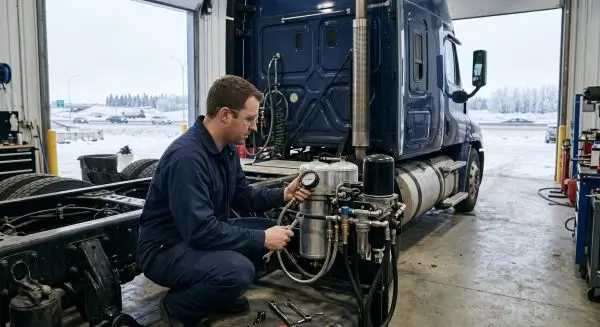
Professional cold-weather fleet support begins with air system care that suits real Alberta winter conditions, not a generic checklist. Professional Cold-Weather Fleet Support GRD Heavy Truck Repair offers air system maintenance, diagnostics, and repairs for local fleets running in sub-zero temperatures, blowing snow, and long highway stretches. We specialize in air brakes, HVAC and related air controls, looking for leaks, frozen lines, weak dryers and valves that stick when it gets cold. This sort of hard work reduces the danger of missed air pressure alarms, sluggish brake action, and cabin defrost systems that can’t keep up in blizzards.
Winterizing heat and air is a staple of the shop’s work with local and regional carriers, vocational fleets, and owner-operators. Our technicians conduct complete pre-winter inspections, checking air dryers, purge valves, lines, and tanks, paired with coolant flushes, heater core inspections, and blower output tests. Batteries are important, as they can lose up to 50% of their power once temperatures dip below freezing, and a tired battery can translate a minor pneumatics glitch into a roadside breakdown when the truck refuses to restart. This philosophy extends to a larger proactive maintenance schedule that incorporates seasonal inspections, brake system checks, and service intervals constructed around real routes and duty cycles.
Robust cold-weather support implies clean workflows, not just a magic touch. Professional cold-weather fleet support winter operations require established communication and maintenance protocols, so drivers, dispatch, and maintenance staff know when to report symptoms like slow air build, weird compressor noise, or poor defrost. GRD is an insured contractor, provides local mobile and in-shop service, and keeps you in the know with transparent estimates and repair notes. The shop supports fleets that distribute winter emergency kits, with blankets, shovels, ice scrapers, tire chains, and non-perishable food and water, along with high-visibility emergency signals, electronic flares, and reflective triangles for roadside safety. Many fleets combine this with routine winter driving and vehicle operation training, so drivers know how to operate that equipment and detect early air system problems. Through pre-winter inspections, fleet professionals and owner-operators get more stable uptime, lower surprise repair costs, and safer units all winter long.
Conclusion
Moisture in an air system does more than fog lines. It frays components, biases sensor readings, and bogs down fleet availability. The marks remain distinct once you recognize them. Slow brake response, ice in lines, stray alerts, or new hissing near fittings all indicate this one root issue.
Regular service keeps it sane. Drain tanks on schedule, test dryers, record compressor run time, and employ leak checks as a standard procedure, not a final effort. In the cold months, that attention counts for even more.
As a next step, take out your checklist, visit one unit, and make actual notes. Minor repairs now outperform extended truck rolls later.
Frequently Asked Questions
How often should a commercial air system be maintained?
Most fleets are well served by a complete air system check-up every 6 to 12 months. High-mileage or cold-climate fleets might require quarterly checks. Routine maintenance minimizes moisture, corrosion, and valve failure and combats expensive roadside breakdowns.
What are the most common warning signs of air system problems?
Look for slow air build-up, incessant compressor cycling, moisture at drain valves, frozen lines during cold weather, and hissing noises. Any deviation from standard air pressure activity is an indicator to check for leaks, blockages, or malfunctioning dryer systems.
Why is moisture intrusion so dangerous for air brake systems?
Corrosion, plugged valves and frozen lines occur from moisture inside. In brake systems, it can lead to laggy response or outright failure in freezing conditions. Controlling moisture safeguards safety-critical components, increases service life and maintains fleet performance dependable through the seasons.
What should a complete air system maintenance checklist include?
A good checklist includes compressor and governor operation, air dryer performance, reservoir draining, line and fitting inspection, pressure testing and ultrasonic leak detection. It should have cold-weather checks, such as checking alcohol evaporators or heaters where fitted.
How does ultrasonic leak detection improve air system maintenance?
Ultrasonic tools ‘hear’ the high-frequency sounds of leaks that human ears overlook. Technicians can find small leaks fast, even in a noisy shop. It detects problems sooner, reduces the strain on your air compressors, lowers your fuel consumption, and promotes compliance with current maintenance practices.
How do cold temperatures affect air system components?
Winter’s cold weather thickens lubricants, freezes moisture and stresses seals and hoses. Valves stick, lines plug with ice and compressors sweat. Expert cold-weather assistance establishes proper drying, heating and draining processes to maintain systems reliably.
When should a fleet call a professional for air system support?
Give a trained technician a ring if pressure takes a sudden drop, brakes feel inconsistent, leakage continues after simple checks, or freeze-ups strike repeatedly. Expert diagnostics such as ultrasonic and thermal testing locate underlying causes and shield trucks, drivers, and freight.