
- Key Takeaways
- When to Choose Custom Welding
- The Custom Welding Process
- Common Custom Welding Applications
- Welding Integrity and Safety
- Navigating Compliance and Standards
- Cost Versus Value
- Conclusion
- Frequently Asked Questions
- When should I choose custom welding for my truck?
- What does the custom truck welding process involve?
- What are common custom welding applications on trucks?
- How do I know if custom welding is safe and structurally sound?
- What standards and regulations apply to custom truck welding?
- Is custom truck welding worth the cost?
- How do I choose a qualified custom truck welding shop?
Key Takeaways
- Custom truck welding is most appreciated when OEM parts simply don’t exist, have gone obsolete, or cannot hold up to extreme damage or custom equipment. It keeps older or hard driven vehicles in safe, reliable service without waiting for scarce parts.
- In cases of intense frame, chassis, or body damage to trucks, custom welding and reinforcement can bring back integrity and prolong their lifespan. Thoughtful application of appropriate alloys and reinforcement techniques minimizes the potential for subsequent failures and unexpected downtime.
- Custom welding backs modifications like increased payloads, installing cranes or racks, and next-gen safety electronics. By building mounts, frames, and supports to precise specifications, operators can modify trucks for changing business and industry needs.
- A well-planned custom truck welding service will include consultation, material selection, precision fabrication, reinforcement, and system integration to provide safe, compliant, and long-lasting results. Transparent records of materials, welds, and modifications assist with future maintenance, inspections, and regulatory inspections.
- Everyday applications such as frame mods, HD bumpers, specialty racks, and body repair address service issues that OEM parts can’t solve. This is particularly true in hard-hitting industries like mining, heavy equipment support, and dedicated service fleets.
- Robust welding integrity, safety protocols, and regulatory compliance are imperative to safeguard drivers, cargo, and the public. Custom truck welding versus OEM parts isn’t just about upfront cost. It’s about long term value, minimized downtime, and increased fit for your unique operational needs.
Custom truck welding is designing or modifying truck components with metal work that suits a particular purpose, not just a generic package. Many owners employ custom welds to attach toolboxes, ladder racks, frame reinforcements or install brackets for off-road or work gear. Shops can weld steel, aluminum or stainless steel, depending on load, weather and budget requirements. Sturdy welds assist trucks in hauling more cargo, navigating crumby roads and staying on the job longer. Smart design keeps crucial components accessible for maintenance and inspections. In the following guidance sections, the post walks through common custom welding options, cost factors, and tips to talk clearly with a welder or fabricator.
When to Choose Custom Welding
Custom truck welding works best when off-the-shelf parts or repairs can no longer keep up with how you use the truck or when you require one-off work with exact control over fit, strength, and function.
Obsolete Parts
- Map the failed part: measure size in millimeters, note thickness, check mounting points, and record load paths. Then a welder can draft or scan the piece and craft a replacement that complements or enhances the original.
- Have a clear decision as to whether you want to duplicate the OEM design or improve it with stronger steel, better joint design, or additional bracing on brackets that tend to crack on older dump trucks or service bodies.
- Team up with a local shop to cut, form, and weld the part, which frequently beats weeks of waiting around for exotic imports, particularly for low-volume or discontinued models.
- For legacy mining or equipment fleet trucks that have to comply with safety regulations, get the shop to document materials, weld procedures, and measurements so the replacement bits follow compliance standards.
Severe Damage
When a frame rail, crossmember or suspension mount is badly bent, cracked or rusted through, that simple OEM swap part may not align with real-world wear, previous repairs or extra equipment weight. A custom fabricator can cut out just the damaged zones, design splice plates or sleeves and weld in new sections that realign and add targeted reinforcement. They might specify advanced alloys, like H32 aluminum in body structures or higher-grade steels in high-stress points, to help delay future fatigue and extend the life of refuse trucks, tankers or heavy service rigs.
Custom welding on large assemblies keeps trucks going when complete overhauls might bench a unit for months. Rather than ordering a full new chassis, a shop can rebuild sections around your existing hydraulics, wiring, and mounts, typically minimizing both downtime and overall project expense.
Performance Upgrades
It’s a strong choice when you’re looking for payload, emissions, or safety upgrades that the OEM never intended for your exact configuration. A shop can extend or shorten frames, add sub-frames underneath cranes or rework suspension brackets so the truck can handle increased static and dynamic loads, still limited back to legal GVMs. Consider a duty chassis deployed as a dedicated service truck, which could receive a reinforced deck, custom-welded outriggers, and stiffer equipment mounts to transport heavier compressors or lube systems, all without frame twist.
When new electronics or emissions hardware requires solid mounts, welding enables small, precise brackets positioned millimeters away from sensors, harnesses, or after-treatment units. Combine these brackets with the right alloys and protective coatings, like zinc-rich primers and topcoats, and you can reduce corrosion and vibration damage, which counts on salty coastal roads or off-road work. As these are typically low-volume or one-off builds, the extra time and expense are often worth it for the precise fit and long-term durability.
Unique Applications
Specialized or cross-brand fleets frequently require truck bodies and trailers that do work the OEM never provided, such as on-the-go workshops, small crane units, or on-site mining or express manufacturing repairs as stations. Custom welding provides the flexibility to work with non-standard materials and difficult shapes, like incorporating steel frames with aluminum boxes or creating contoured protective guards around delicate instruments. This works for low volume and difficult designs, where conventional welding and mass-produced parts cannot cut it.
Shops can construct unique racks for long bar stock, modular tool drawers, or side‑mounted hose reels, all integrated into existing frames without over‑straining them. They can chop and weld trailer tongues, hitch plates, or load‑securing points so that older trailers transition into new careers, such as transitioning from general freight to specialized equipment transport. Since every weld, bracket, and gusset is built to project specs, material requirements, and the precision you request, the end result is cost‑effective for certain, narrow tasks even if it would not scale to thousands of units. In these instances, custom welding does not pursue volume; it addresses one distinct issue very effectively.
The Custom Welding Process
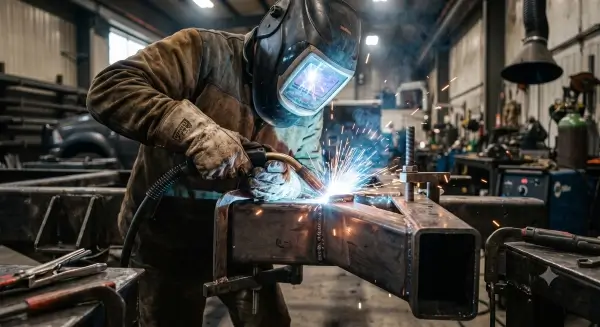
Our truck custom welding process is a solid flow that transforms a requirement into an accurate, dependable welded product. From design and materials selection to fabrication, reinforcement, and system integration, this process is frequently completed through mobile welding and fabrication services, allowing portable welding and cutting equipment to minimize downtime and keep fleets moving.
1. Consultation
Work begins with a hand-crafted consultation that plots how the truck is used and where it drives, identifying what needs to change. Clients describe things like their average payload, road conditions, climate, and any previous failures, such as cracked frames near suspension mounts or ripped tailgate hinge brackets. This input defines the scale, from small bracket repairs to complete custom bodies or crane mounts. Together, both sides establish objectives, timelines, and any downtime restrictions, which is important for commercial trucks that can’t be down for too long. Before repair history and driver anecdotes flag vulnerable nodes and typical stress zones, it is determined if the work is a band-aid or contributes to a comprehensive revamping strategy. Payment terms, shipment of finished components, and onsite versus workshop work are confirmed early, which keeps the project predictable and easier to schedule across big or mixed fleets.
2. Material Selection
Material selection is done based around load, environment, and weight goals. Typical choices are mild steel for high-strength crossmembers, aluminum for lighter toolboxes and side panels, and alloys such as H32 where strength and corrosion resistance matter, such as in refrigerated or coastal operations. For trucks operating in wet, coastal, or road-salt saturated environments, the weld strategy sometimes leans toward corrosion-resistant materials, sealed welds, and coatings that shield both the base metal and the welds. Cost is balanced against weight and longevity. A lighter aluminum subframe may increase up-front cost but reduce fuel consumption and wear on components. Everything from material choices to welding processes, such as stud welding or other specialized welding processes, is documented for quality standards and future repairs so repairmen know exactly what they are dealing with years down the line.
3. Fabrication
When it comes to fabrication, seasoned welders adhere to the approved plans and specifications, employing precision shearing and cutting instruments to align measurements within narrow tolerances, frequently as precise as a few millimetres. Custom welding involves structural welds and custom parts like winch mounts, tank brackets, or liftgate frames, built with the right welding process for the material, like MIG on steel rails or TIG on aluminum boxes. The Custom Welding Process uses advanced shop and portable welding equipment to support in-house builds as well as on-site truck work, which is invaluable for emergency repairs where a 24-hour response can get a vehicle back in service. The crew samples their work at inspection milestones, evaluating joint fit-up, weld penetration, and alignment to codes and client specs, so mistakes are sniffed out before finishing assembly. Final parts are cleaned and marked with part numbers and orientation notes, then blanketed with wraps or coatings for storage, shipment, or on-the-go installation at the customer yard.
4. Structural Reinforcement
Structural reinforcement hits points of anticipated stress like suspension hangers, frame step downs and crane pedestals where bending moments are greatest. When a truck is upgraded with heavier payloads or new gear, such as a knuckle-boom crane, additional crossmembers, gussets, or fish plates are sometimes added to distribute load and minimize frame flex. We weld to order. Welders use optimal welding processes and sequences to minimize heat distortion and maintain true chassis geometry. Every added plate, bracket, and weld zone is logged with sketches or digital models, providing a transparent roadmap for compliance inspections, future repairs, or resale.
5. System Integration
System integration ties the new welded parts to existing systems so the truck functions as a whole, rather than a collection of discrete upgrades. Sensor mounts, wiring harness routes, exhaust brackets and emissions-control hardware are inspected and, if required, reworked so state-of-the-art safety systems and engine controls continue functioning as intended. If aftermarket equipment like liftgates, cranes or tank systems are involved, our welders work with equipment dealers to verify load paths, mounting guidelines and warranty terms. We test all functions prior to handover, from simple tail-lift cycles through to electrical continuity on lights and safety interlocks, and log the results. Customers get a handy checklist or easy table that notes every integrated feature, its score and inspection comments, so future upkeep and audits are quicker.
Common Custom Welding Applications
Day-to-day fleets, service trucks and off-road units that labor in harsh sites like mines, quarries and remote camps benefit from our custom truck welding. It appears elsewhere, from commercial trucking to foodservice, where weld quality and hygiene standards are tight.
- Structural frame work, including repairs, reinforcements, and wheelbase changes
- Heavy-duty bumpers and guards for impact protection and hitch points.
- Tool, ladder, and product racks are designed to route and load patterns.
- Body and rust repair and panel replacement for extended life.
- Our Welding Services for you) On-site structural welds with portable gear for onesies and twosies or remote and urgent jobs.
- Foodservice-grade welds with fully sealed seams help block bacteria.
Custom fab often fixes problems that off-the-shelf or OEM parts don’t — oddball payloads, mixed-use trucks, or tight site rules that require safer access, enhanced visibility, or lower contamination risk.
Frame Modifications
Frame work is all about how the truck supports load and absorbs tension. Custom welding can extend or reduce the wheelbase for specialty trailers, place new mounting points for cranes or service bodies, or reposition cross members to make room for tanks, hose reels, or toolboxes. Mining support trucks, for instance, can require reinforced chassis and additional stiffeners to contend with constant vibration and elevated payloads on rugged haul roads.
Many of these structural welds can be completed on-site with our portable welding and cutting equipment, minimizing the need to take large trucks off the job. Our mobile service truck allows certified technicians to complete many structural welding repairs directly at your worksite, reducing transportation costs and equipment downtime. This is typical for fleets in Alberta and other resource areas, where units operate miles from comprehensive shops. With state-of-the-art shops and cutting-edge welding procedures, common custom welding applications can fulfill safety and compliance regulations and still be speedy. Emergency frame repairs might require 24-hour action when a key unit is down and stalling production.
Custom Bumpers
Custom bumpers put emphasis on protection and functionality simultaneously. Heavy-duty front and rear bumpers help protect radiators, lights, and essential body components from animal collisions, loading dock impacts, and close quarters maneuvering. Custom welding applications like thicker plate, gussets, and recovery points can make your bumper for winching, towing, or bar storage strong, especially on service trucks that support heavy equipment and mining fleets.
Shops can add plates for winches, work lights and steps, then custom-tailor each bumper to a truck so approach angles, airflow and sensor locations continue to function. Coatings are just as important as the welds. With corrosion-resistant finishes and well-sealed seams, CX Series custom weld bodies slow rust, a constant enemy for trucks that encounter road salt or wet mine roads. Tough, thoughtfully engineered bumpers minimize downtime and repair expense throughout the vehicle’s lifecycle.
Specialized Racks
Custom racks assist in securing tools, cylinders, foodservice, or delicate products so they travel securely and remain accessible. Custom welding lets racks contour to the actual shape of the truck body rather than forcing a generic frame to conform. For example, a service truck might require oxygen-fuel bottle racks with positive restraints, and a mobile food unit might need fully welded stainless racks that don’t have open joints where food debris and bacteria could gather.
Quality trailer rack design begins with the work habits of crews. We observe where people stand, how they lift, and what tools they reach for most. Then they put racks to reduce climbing and clumsy reaching. Short spans, bracing, and solid welds ensure the rack can withstand daily abuse from vibration, sudden stops, and uneven terrain. In active fleets, modular rack systems come in handy. Welded bases remain locked down while bolt-on or pin-on pieces shift around as routes and loads evolve. This flexible solution addresses requirements that OEM shelves or generic ladder racks seldom address.
Body Repair
Body repair is one of the most popular custom welding jobs, particularly for commercial trucking fleets in unforgiving climates. Collision damage, rust, and metal fatigue all weaken doors, steps, floors, and side panels. Alberta fleets in particular see heavy rust from road salt and gravel, which frequently requires cut-out and replacement of entire sections rather than patching the surface area alone.
Spot welding repairs bring back both the appearance and structural integrity of the truck. Our technicians can take off the battered panels, fabricate new ones, and stitch them back in with fresh, seamless welds that prevent moisture and dirt from seeping in. On foodservice units and temperature-controlled trucks, sanitation is key, so they are frequently 100 percent welded and ground smooth to prevent places for bacteria to form. Portable welding rigs allow them to take care of many of these structural welds and reinforcements on-site, reducing transport time.
Downtime has an obvious price tag, so body work is frequently scheduled around route itineraries and shift transitions. Other operators require emergency repair or rust remediation with 24-hour call-outs when doors, steps, or safety rails are no longer safe to use. State-of-the-art shops utilize the latest welding technology, superior fillers, and corrosion-resistant materials to extend the life of every repair and keep trucks on the road longer.
Welding Integrity and Safety
Welding on custom trucks is directly related to uptime, legal compliance, and safety on the road. Each bead influences how the car supports weight, fights rust, and endures everyday wear and tear, particularly as it transports multiple tons across hundreds of miles.
Material Science
Material selection is at the heart of safe truck welding. Steel, aluminum, and specialty alloys each behave differently under heat, stress, and vibration. The improper filler or process can result in cracking, warping, or concealed vulnerabilities. Aluminum might save weight, but it loses its hardness more quickly from heat than most steels. High-strength steels bear heavy loads effectively, but they can lose strength if overheated or welded with an improper process.
Good practice is to optimize strength, weight, and corrosion resistance for each component. Welding integrity and safety is important because a steel frame rail requires different properties than an aluminum side box or a stainless tool rack. In brutal winter regions, road salt and moisture assail exposed welds and thin sections, so corrosion-resistant alloys or coatings are a part of the safety scheme, not an afterthought.
Teams need basic training on how common truck materials behave: why aluminum needs strict cleanliness, why some steels need preheat, and why dissimilar metals can invite galvanic corrosion. All those lessons swing back around when you’re mapping out repairs on tanks, decks, crane mounts, and suspension brackets.
For pressure tanks or structural tank components, standards are much tighter. Welding on tank components that hold lading or support the shell and on tanks certified to the ASME Code must utilize qualified welding procedures and welders per Section IX of the ASME Boiler and Pressure Vessel Code. Procedures and welders may require registration with the ABSA (Alberta Boilers Safety Authority) and all material and filler decisions should be recorded for traceability and later reference.
Weld Quality
It’s about welding integrity and safety. Every weld must be inspected for penetration, fit-up, alignment, and surface finish so that it can bear the loads it was engineered for without premature fatigue.
Non‑destructive testing such as visual inspection with magnification, dye‑penetrant or ultrasonics on critical joints validates weld integrity without dismantling parts. This matters most on frame repairs, suspension hangers, crane bases and tank welds where failure would jeopardize lives or expensive spills.
Welder training needs to match real jobs: fillet welds on brackets, groove welds on frame rails, and position welds on vertical or overhead joints, all in different materials. Defined processes maintain welding integrity and safety across welders and shifts.
Tracking serves a safety function. Shops that work on DOT regulated tanks are required to retain welding and inspection data for regulatory and warranty reasons. Under CSA B620, the repair facility must draft a repair report in accordance with Clause 7.5.10 and maintain it for 20 years. They log what procedure, welder, and inspection method were used, and generate a trail if an issue arises down the line.
Load Dynamics
Load dynamics are concerned with what the truck really experiences on the road. A truck that hauls literally thousands of kilos day after day puts some serious stress on every weld, in particular areas where frames have been stretched, or axles relocated, or cranes and liftgates installed. Estimating anticipated vertical loads, torsion, and impact forces enables us to size welds and select joint types that remain secure during braking, cornering, and off-road terrain.
Critical areas, like suspension mounts, fifth-wheel plates, hoist pivots, and tank saddles, typically need gussets, backing plates, or thicker sections to prevent fatigue or cracking. A strong weld here can save breakdowns, towing charges, delivery failures, and dangerous roadside patches.
Design checks and where possible, stress simulations or simple physical tests help demonstrate how the structure acts under real-world conditions. This could be load testing a crane base, observing a new frame notch, or looking for early signs of distortion after a few months in service.
Welding integrity and safety doesn’t stop when the truck pulls out of the shop. Yearly inspections can catch minor cracks, early rust around weld toes, or coating damage from road salt and moisture before they become full failures. When problems emerge, designs ought to be modified, not duplicated, so that every new fix or enhancement increases safety and performance.
Navigating Compliance and Standards
When it comes to custom truck welding, compliance means that every cut, weld, and bracket adheres to well-defined standards for safety, durability, and road worthiness. It details how the welds are performed, what parts and materials are used, and how the finished truck behaves under actual loads and extreme weather.
A simple checklist helps keep work on track: confirm the truck class and legal gross vehicle mass (GVM), define the new payload and center of gravity, choose weld materials that match or exceed the base metal, design for weatherproofing and corrosion resistance, plan for load testing and durability checks, document weld procedures and inspections, and collect all approvals before the truck goes back on the road. This type of checklist reduces gaps that can cause failed inspections or dangerous builds.
Industries have rigid guidelines and those guidelines shift. Custom truck welding shops have to keep up with emissions systems, advanced safety electronics, and the standards of manufacturing operations. For instance, a new bed or frame change cannot mask exhaust after-treatment units, crash sensors, cameras, or radar units. Any wiring and brackets for these systems should be routed and shielded so heat, vibration, and water do not cause faults. A one-size-fits-all setup frequently breaks down here, as sensor configurations and exhaust hardware differ per model and market.
Recording every compliance step is as crucial as doing the work! Joint prep photos, weld logs with process and filler, material certificates, load test and corrosion-protection records all back certificates. Clients should leave with a clear package: what was installed, which standards it meets, test results, warranties, and contact details for post-installation support. This aids in optimizing cost versus quality, as it reveals where lower-cost alternatives may compromise safety or longevity.
Finally, constructors should verify that their modifications comply with Transport Canada road transportation regulations and, where required, consult certified inspectors before and after construction. Most places require some evidence that load testing validates the bed supports the declared payload and that wear and tear tests prove it can withstand everyday use. Quality welds, sealed joints, and rust-resistant coatings enable the truck to stay safe under heavy loads, harsh climates, and long use, while keeping it legal to operate.
Cost Versus Value
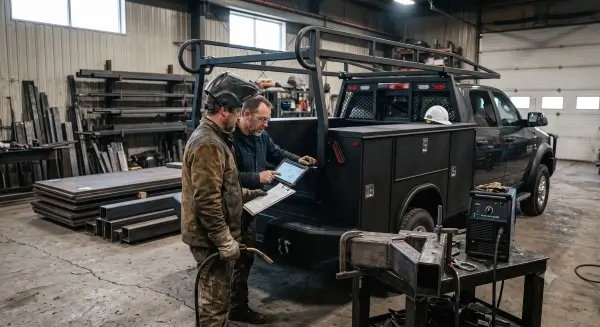
Cost for custom truck welding ranges so the real question isn’t just “How much?” but “What do you get for that money long term?” For trucks that get the job done every day, value comes from less time spent down, less rework, and parts that fit the way you actually use your truck on the job.
Mobile welding rates tend to be between CAD $100 and $200 per hour. Work that has to be done at night, on the weekend, or in bad weather can drive that rate up even higher because the welder is providing equipment, fuel, and hours on short notice. Most mobile welders establish a minimum charge that encompasses the first hour or a travel fee, which can be significant on minor fixes. The kind of weld also affects the cost. Alloy steel, aluminum, or stainless can require specialty wire, gas, or higher-end tools, so the hourly rate can increase.
Custom truck work — new tool racks, frame bracing, bespoke hitch plates — typically runs somewhere in the vicinity of $1000 to $6,000 and upwards. The jump in cost usually tracks three things: design shape and size, grade of steel or alloy, and how clean the final finish must look. That range might seem high compared to humble off-the-shelf, OE parts, but OEM parts can fail sooner if they are not sized or braced for actual loads.
A simple way to see this trade‑off:
| Item | OEM Part (approx.) | Custom Welded (approx.) |
|---|---|---|
| Standard ladder rack | 400–700 CAD | 1,100–2,200 CAD |
| Heavy‑duty rear bumper | 600–1000 CAD | 1,500–3,000 CAD |
| Reinforced hitch assembly | 350–700 CAD | 900–2,500 CAD |
Upfront, OEM is less expensive. Over time, custom work can pay for itself if it prevents a small handful of catastrophic failures that would take the truck off the road, drive repeat repairs, or put a load in peril. That’s why a transparent cost breakdown aids. A good quote will itemize labor hours, welding process, material type and thickness in millimeters, finish steps, any rush or after-hours fees, and payment terms or milestones. You can align price to actual value, not speculation.
Conclusion
Custom truck welding gives a truck genuine proportion for genuine labor. It’s tailored to how you haul, tow, or go off road. It can repair weak points and install intelligent features, not just more metal.
It’s the kind of thing that takes time and skill and straight talk. Good welders plan, check load, pick the right steel, and test welds. Preventive inspections through our fleet maintenance services help identify cracked welds, frame fatigue, and structural wear before they lead to costly breakdowns. Hard work keeps your truck on the road and helps comply with laws that can save you from being fined or a failed check.
For one crucial hack, first name your use case clearly. Daily haul, job site work, or long trail use. Then speak to a welder that’s familiar with trucks and can show you actual jobs, not just a price sheet.
Frequently Asked Questions
When should I choose custom welding for my truck?
Select custom welding when a standard part won’t do. It is perfect for custom builds, heavy duty use, additional tool storage, special mounts, or frame modifications. Custom welding tailors the structure to your specific work, payload, and safety needs.
What does the custom truck welding process involve?
It begins with an inspection of your truck and a conversation about your needs. Then the welder designs, measures, fabricates and welds the pieces. Finally, it is tried, completed and inspected for safety, fit and standards.
What are common custom welding applications on trucks?
Popular items include custom bumpers, toolboxes, racks, hitches, lift points, flatbeds and frame or suspension mount reinforcement. We utilize welding for repair of cracked frames, brackets, or crossmembers. All add strength, function, or safety.
How do I know if custom welding is safe and structurally sound?
Ask if the welder is certified and experienced with automotive or truck standards. They should use real materials, real welding, and non-destructive inspection where appropriate. Safe work means clean welds, good penetration, and a design that doesn’t weaken the frame.
What standards and regulations apply to custom truck welding?
Custom work has to honor Alberta transportation requirements, including weight limits and lighting rules. In most areas, frame modifications need to be done per manufacturer instructions and national vehicle regulations. An experienced shop will engineer within these guidelines and specify materials, weld types and load ratings.
Is custom truck welding worth the cost?
Custom welding is usually more expensive than bolt-on parts. It could last longer, fit better and carry more load. For work trucks, greater durability and function lower downtime and replacement costs, resulting in higher long-term value.
How do I choose a qualified custom truck welding shop?
Search for certified welders, experience with trucks and a portfolio of similar projects. Inquire regarding materials, procedures, load ratings and warranty. A reputable shop justifies its design decisions, adheres to the relevant safety specifications and provides written quotes before onboarding.