
- Key Takeaways
- DPF and EGR Systems Demystified
- Why DPF Regen Fails
- Decoding Warning Signs
- The Ripple Effect of Emissions Faults
- Proactive Maintenance Strategies
- When to Call a Professional
- Conclusion
- Frequently Asked Questions
- Why does my DPF regen keep failing?
- Can I drive with a failed DPF regen?
- What are the early warning signs of DPF regen problems?
- How are DPF regen problems usually fixed?
- How can I prevent DPF regen issues?
- What is the connection between EGR faults and DPF regen failures?
- When should I call a professional for DPF regen problems?
Key Takeaways
- DPF and EGR, in combination, significantly reduce particulate matter and NOx outputs, respectively, safeguard engine durability, and assist in keeping automobiles after emission regulations. Knowing how these systems work makes it easier to recognize and treat regen issues early.
- DPF regen issues typically originate from too much soot buildup, which can block the filter and cause warning lights or limp mode. Normal highway driving, with consistent speed and temperature, finishes regen cycles and stops recurrent soot buildup.
- Typical causes of failed or incomplete regens are upstream component faults, incorrect driving habits, malfunctioning sensors, fuel and oil quality, and EGR system issues. Systematic checks of the turbocharger, injectors, intake, sensors, and EGR valves can isolate these faults before they cause major damage.
- Dashboard lights, less power, increased fuel consumption and odd smells are all warning signs that DPF or EGR parts are malfunctioning. Acting fast upon these signals, rather than ignoring them or clearing them without diagnosis, minimizes the risk of breakdowns and expensive repairs.
- Emissions faults directly affect operating costs by diminishing fuel economy and increasing engine wear and unplanned downtime. Monitoring fuel use, servicing, and fault codes over time provides a better sense of emerging issues.
- An active maintenance schedule with regular check-ups, diagnostics, and prompt expert assistance ensures that DPF and EGR systems stay dependable. When elementary checks fail to clear warning lights or performance problems, professional diagnostics are advised to determine root causes and avoid recurrence.
DPF regen problems are issues that prevent a diesel particulate filter from burning off soot in its normal regeneration cycle. Most drivers encounter issues such as frequent warning lights, failed passive regens, intense fuel smell, or increasing oil level from extra fuel in the exhaust. Some encounter power loss, increased fuel consumption, or limp mode once the DPF begins to become clogged beyond a safe threshold. Typical culprits are short trips, faulty sensors, low exhaust heat, or poor fuel. To diagnose why, the vast majority of folks require a combination of scan data, visual inspections, and simple service records. Below are a few separations by types of regen, symptoms, causes, and solutions in easy to follow steps.
DPF and EGR Systems Demystified
DPF and EGR systems lie at the heart of contemporary diesel emission control. One catches solid soot, and one reduces NOx by lowering combustion temperature. When both function as intended, the engine runs cleaner, fuel consumption remains reasonable, and the vehicle complies with emissions regulations without constant warning lights or enforced downtime. When they do not, you see the classic DPF regen problems: frequent regens, derates, and costly repair bills. A simple understanding of how these systems operate streamlines troubleshooting and assists you in evaluating guidance from shops or scan tools.
The Soot Trap
 It’s a ceramic or cordierite filter placed in the exhaust flow. Inside, it employs a honeycomb design with miniature channels that are sealed at opposite ends. Exhaust gas is able to pass through the porous channel walls, but soot (particulate matter) remains trapped in the filter medium. That’s how the system reduces visible smoke and fine particles that otherwise would make it to the air.
As the engine operates, soot accumulates on the channel walls and gradually saturates the filter. Initially, this thin soot layer aids in catching more particles, but as the layer thickens, exhaust backpressure increases and the engine strains to force gas through. If nothing burns that soot off, fuel economy declines, turbo lag can feel sluggish and the ECU begins to derate to protect hardware.
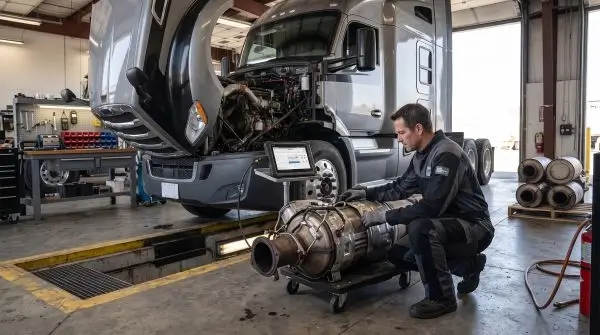
A normal regeneration cycle remedies this by increasing exhaust temperature sufficiently to incinerate soot into ash. This can be a passive regeneration during steady highway driving, or an active or forced regeneration where the ECU injects extra fuel and utilizes the turbo and EGT probes to raise temperatures into the 550 to 650 degrees Celsius range. Off-truck ultrasonic or thermal cleaning is another choice if ash load is high, but it must be done properly in order to avoid cracking the filter or voiding a warranty.
If soot accumulates faster than it burns, the DPF clogs. You might have a DPF warning light, elevated idle speed, aggressive active regens or even limp mode if backpressure thresholds are exceeded. Older EGT probes, rusted or seized exhaust sensors and tar-like sludge in the can all confuse the ECU and cause false regen behavior, so it’s not always the filter.
The Exhaust Cooler
The EGR system returns a controlled portion of the exhaust gases to the intake, often after routing through an EGR cooler. Since exhaust gas contains less oxygen than ambient air, mixing it into the intake charge reduces peak combustion temperature, which then trims NOx production at the cylinder. This compromise, somewhat “grittier” intake gas for significantly less NOx, lies at the heart of contemporary diesel emission tactics.
The EGR cooler itself is a tiny heat exchanger that utilizes engine coolant to strip heat from the exhaust stream before it re-enters the intake. By cooling the gas from several hundred degrees down closer to coolant temperature, it helps avoid knock-like events, protects plastic intake parts and keeps overall engine temperatures under control. If the cooler plugs with carbon or cracks, you experience problems that cascade into DPF regeneration problems. For instance, a clogged cooler can alter EGR flow, raise combustion temperature and NOx spikes, while a cracked core can bleed coolant into the exhaust, where it combines with soot and creates sticky sludge that lines the DPF.
EGR valves and coolers reside in a dirty world, and carbon deposits develop on valve faces, shafts, and internal passageway walls. Sticking valves can misinform position, misdirect return flow of exhaust to intake, and alter the amount of soot the engine produces to begin with. Packaging varies widely by platforms—light-duty pickups, heavy trucks, and industrial engines all route EGR and DPF hardware in different manners—so some engines are simpler to service than others. Coolant loss inspection, EGR valve cleaning, and visual inspection of pipes and sensors at service intervals prevent small flow or leak issues from becoming everlasting regens and power loss.
Why DPF Regen Fails
DPF regen fails when it can’t get the right temperature, flow, or timing to turn soot to ash. When this occurs frequently, soot accumulates, warning lights remain illuminated, fuel consumption increases, and the likelihood of limp mode or MOT failure escalates.
Common triggers for failed or incomplete regens include:
- Frequent short trips and low-speed city driving
- Excessive engine idling
- Faulty sensors (temperature, pressure, oxygen)
- Turbo, injector, or air intake problems
- Low‑quality or contaminated fuel and oil
- EGR system faults or heavy carbon buildup
- Unnecessary or repeated forced regens without fixing root causes
1. Upstream Component Failure
Turbo, injector, and air intake faults alter exhaust flow and heat, so the DPF never hits the temperature it requires to clean itself. A weak turbo, for instance, can drop boost and reduce exhaust temperature. A leaking charge pipe can upset air-fuel ratios and lead to rich operation and thick soot. Leaky or overfueling bad injectors send unburned fuel into the exhaust, increase soot, and can spike or starve exhaust temperature during regeneration.
These upstream faults frequently manifest as black smoke, weak power, excessive fuel consumption, or strange turbo noises well in advance of the DPF warning light. When a regen keeps failing, a forced regen might seem like an easy solution, but it’s no good if your turbo, injectors, or intake leaks are present, causing yet more downtime and return trips to the workshop. Diagnosing regen problems should include a checklist: turbo condition and boost leaks, injector balance, intake and charge pipes, and air filter restriction.
2. Incorrect Driving Habits
Frequent short trips and stop-start routes keep exhaust temperatures low, so the DPF can’t complete passive or active regen. Most vehicles require consistent fast driving—typically on a motorway-style road—for a given duration to complete a cycle.
Excessive idling causes soot to harden and does not provide sufficient heat or exhaust flow for regen. Long idling is bad for engine health. Drivers need to heed the manufacturer’s recommendations for minimum speed, engine load, and time during a regen, rather than defaulting to request a forced regen every time an indicator comes on because the vehicle is stuck in a “no‑regen” zone where a forced cycle is not recommended.
3. Sensor Malfunctions
 Temperature, pressure, and oxygen sensors inform the control unit when to begin, control, and stop a DPF regen. If any of these sensors dispense incorrect data, the system may issue false warnings, initiate regen at an inappropriate time, or prematurely terminate a cycle. A pressure sensor that reads too high can cause frequent active regen while one that reads too low can postpone regen until the filter is almost blocked.
When regens fail with no obvious mechanical failure, inspecting sensor wiring, plugs and harness routing for damage or corrosion is essential. Occasional testing and replacing out-of-range sensors keeps the regen logic on point and prevents unnecessary forced regens that just waste labor and clog service bays.
4. Fuel and Oil Quality
Low-grade diesel tends to burn dirtier and create more soot, which means the DPF hits its load limit faster and requires more frequent regens. Certain fuels or additives can leave sticky deposits that the standard regen temperature cannot burn off.
Oil selection is important, too. A non-approved oil grade can increase ash, and ash doesn’t burn off in regen. It remains in the filter and consumes DPF life. Contaminated fuel or oil can damage the DPF and EGR components, creating hard faults that no forced regen will fix. Tracking fuel stations and oil brands can link recurring problems to inferior supply.
5. EGR System Faults
EGR valves and passages regulate the amount of exhaust gas that is recirculated into the intake. If a valve sticks open, closed, or leaks, it changes combustion temperature and soot production, which can mess up regen timing and load. DPF warnings are the last symptom of EGR problems that drivers typically observe, with rough idle, hesitation, or black smoke often serving as early harbingers of EGR trouble.
Carbon blisters in EGR coolers and pipes are common on high-soot engines. This buildup can narrow passages so much that flow readings no longer correspond to actual flow. That mismatch can baffle the engine control unit and cause either too-frequent regens or cycles that never fully complete. A diesel particulate filter check is now included in many roadworthiness tests. Taking the DPF out to ‘fix’ an EGR-related problem risks test failure, voids insurance, and results in fines in such jurisdictions.
DPF Regen fails because technicians don’t inspect and clean EGR passages, test valve actuation, and repair EGR faults early. Instead, they mask symptoms with repeated forced regens. A forced regen can clear a loaded filter in the short term, but if EGR problems, bad fuel, or upstream faults remain, the same DPF codes will return and more downtime will ensue.
Decoding Warning Signs
Decoding early DPF and EGR warning signs is subtle but not arbitrary. Being able to decipher them can prevent small leaks from turning into repair costs ten times the price of an easy early fix.
- DPF warning symbol (often a filter icon with dots)
- Check-engine light tied to emissions codes
- Glow plug / preheat light staying on or flashing
- EGR or generic exhaust/emissions warning light
- DEF / AdBlue low or quality warning
- Engine power‑reduced or limp‑mode indicator
Dismissing these or clearing them with a cheap scan tool without an actual diagnosis can mask repeated or failed regeneration attempts, increased fuel consumption, and turbo or engine damage.
| Symbol / Light | What it usually means |
|---|---|
| DPF icon (filter with dots/lines) | DPF loading, regen needed or failed |
| Check-engine (MIL) | Emissions fault, often DPF, EGR, or sensor related |
| Exhaust / emissions warning icon | General exhaust after‑treatment problem |
| DEF / AdBlue warning | Low level, poor quality, or dosing system fault |
| Power‑reduced / “limp mode” message | System is limiting power due to serious emissions issue |
Dashboard Lights
Most current diesels connect the check-engine light and an emissions icon to DPF or EGR issues. A hard DPF or check-engine light typically indicates a filter is loading or an EGR valve is sticking, but the car can still be driven. When the same light starts to flash or a loud ‘service DPF’ or ‘emissions fault’ message comes on, the system is warning that regen is failing and damage risk is heightened. If the car drops into limp mode and limits speed, at times to around 90 km/h or 55 mph, take it as an emergency. Keep hammering away in that condition and you could fry the DPF, catalytic converter or even the engine. Before anyone erases codes, capture them with a good scan tool or photo the dash. Those codes indicate if you have repeated regens, sensor errors or bad driving (constant short, slow trips) behind the issue.
Performance Loss
Drags, slow pull, slow throttle response and obvious max speed drop are telltale signs that regen is no go or the EGR is clogged. Some drivers experience fuel consumption spikes of 10 to 15 percent within a couple of days as the car continually attempts to regenerate a clogged filter. If that lower power lingers, it can increase exhaust back pressure, overheat the turbo, and strain the engine in ways that reduce its life.
Track simple things: how far you go on a full tank, how the car responds when you press the pedal, and whether hills feel harder than last month. If your engine feels weaker for more than a jaunt or two, have a full check of DPF load, EGR function, sensors, and DEF system rather than waiting for the filter to curl up and die.
Unusual Smells
Unfamiliar or more intense smells in or around a diesel exhaust typically indicate regen issues. A potent diesel or unburned fuel odor from the tailpipe can indicate that post injection fuel isn’t burning completely during regens, so fuel makes it to the exhaust or DPF. A pungent, acrid, “hot metal” or chemical smell can indicate DPF overheating, melted plastics, or coolant from an EGR cooler leak splashing onto hot exhaust components.
If you detect its wafting near the back of the car, inspect for black soot marks, worn pipes or leaky seals at connections, or torn hangers. If it appears to be originating in the engine bay or under the floor, you might have a cracked or loose clamp or even a fire hazard. That’s why we recommend that any sudden smell alteration, particularly accompanied by smoke or warning lights, be inspected immediately because a mere leak or failing cooler is a lot less costly to repair than a scorched DPF or warped head.
The Ripple Effect of Emissions Faults
Emissions faults surrounding the DPF and EGR seldom remain isolated. They ripple throughout the truck’s systems, decelerate operations, drive up fuel and labor expenses, and risk penalties if the rig can’t comply with emissions regulations.
Keeping emissions and mechanical systems properly maintained is also important when preparing for commercial vehicle inspections (CVIP) and maintaining a roadworthy commercial vehicle.
Fuel Economy
A clogged DPF or sticky EGR valve causes the engine to push exhaust through a tighter path. That backpressure reduces airflow, damages combustion, and reduces kilometers per liter, even on steady highway drives. In other fleets, a truck that used to average 32 to 34 liters per 100 kilometers mysteriously spikes up to 36 to 38 liters per 100 kilometers as soon as soot bakes or an EGR sensor drifts out of range.
Fuel use per trip or per 100 km tracking helps catch this early. Basic fuel logs or telematics reports that flag a steep drop in efficiency from one week to the next are frequently the earliest indicator that a regen issue or EGR fault is present, well before a warning lamp illuminates.
Unnecessary regens make it worse. One forced regen can burn approximately 1 to 1.5 gallons of fuel. One research study traced emissions faults to 100 to 260 minutes, which is approximately 1,671 hours, of unnecessary downtime from unnecessary regens, with additional fuel burned while the truck sits and idles high. That same study linked excessive regens to approximately USD 38,433 in technician labor wages, which means dollars not spent on actual maintenance.
| Condition | Approx. fuel use (l/100 km) | Note |
|---|---|---|
| Healthy DPF / EGR | 30–32 | Baseline highway operation |
| Mild DPF restriction | 33–35 | Early soot build-up |
| Heavy DPF clog / EGR malfunction | 36–40+ | Frequent regens, high backpressure |
Engine Wear
Extra soot and elevated exhaust temperature accelerate engine wear over time. If the DPF is clogged or the EGR control is off, the engine may over-fuel and run hotter to reach regeneration temperature. That heat seeps into pistons, valves, and turbochargers, which can crack or coke up oil passages if this continues for months.
Repeated failed regens are a red flag. Every try blasts aftertreatment to high heat, then backs off, dying half-burned deposits inside the DPF and on turbo blades. One fault may not manifest immediately, but numerous cycles gradually wear out metal components and can fray the engine control system and wiring.
Oil analysis is a cheap way to catch this early. Labs can detect signs of fuel dilution, soot load, and metal particles that indicate ring wear, valve seat damage, or turbo bearing faults. It’s much less expensive to fix a faulty sensor or sticky EGR valve when these markers first rise than it is to replace a turbo or do an in-frame rebuild a year later. Taking action on small emissions faults early typically translates into lower long-term engine costs and fewer surprises.
Unplanned Downtime
When an emissions fault leaves a truck stranded away from the shop, a mobile heavy-duty truck repair service can provide on-site assistance and help reduce unnecessary towing and downtime. When the control unit detects high soot load or faulty sensors, it can push the truck into “limp mode,” where it runs at very low power or speed, or in some cases becomes undriveable until a forced regen or repair is done.
Forced derates, limp mode, and hot aftertreatment parts all fuel downtime. The heat from a regen cycle can make the DPF and surrounding hardware unsafe to touch until it cools, transforming a brief stop into an extended wait. Those needless regens already associated with 100 to 260 minutes of preventable downtime demonstrate how quickly minor faults spiral into lost time for drivers and dispatchers.
Preventive checks shatter this cycle. Straightforward strokes such as scanning for active and stored fault codes, checking DPF differential pressure, and making sure sensors and wiring are not compromised can be integrated into routine service. Record every emission incident: fault codes, regens, workshop notes, and parts replaced so patterns emerge and recurring issues can be tracked to a root cause rather than treated as a stochastic event.
Unplanned downtime doesn’t just impact time — it affects budgets and customer service. Roadside repairs, towing, missed slots and extra tech time for repeat regens quickly add up, and many of them begin with a tiny emissions fault that was simple to fix when it was first detected.
Proactive Maintenance Strategies
Proactive care of the DPF system reduces regen issues, guards the engine and prevents expensive repair bills that can cost thousands of dollars per truck. It helps fleets and owners keep trucks on the road instead of derate.
- Inspect the DPF housing and clamps for leaks, heat marks, or dents every 10,000 to 20,000 km.
- Check EGR valves and coolers at the same interval for soot, sticking, or coolant residual.
- Test exhaust temperature, pressure, and differential pressure sensors for proper readings and damage every 20,000 to 40,000 kilometers.
- Check wiring and connectors around the DPF and EGR for corrosion, loose pins, and heat damage at every service.
- At manufacturer-designated mileages or hours, remove the DPF for cleaning, weigh it, and compare it to the clean baseline to monitor soot and ash load.
- Then, after each clean or major service, reset learned values in the engine control unit according to the service manual.
Diagnostic tools are key to this strategy. Newer systems can track dozens of factors live and forecast repairs weeks before they become urgent. With a scan tool, technicians can monitor for forced and passive regen cycles, determine if regen is too frequent or identify infrequent regen, which often indicates a deeper issue such as malfunctioning sensors, low exhaust temperature, or excessive short-trip driving. Advance warnings on increasing soot load, increasing backpressure or abnormal exhaust temperature spread enable workshops to schedule downtime within the 24 to 72 hour period prior to when a derate reduces engine power and impacts operations.
Good notes convert that raw data into lasting wisdom. Recording date, mileage, hours, regen frequency, dpf cleaning results, fault codes, and repair steps provides a vivid trend line over months and years. Fleets can feed this data into simple trend charts or sophisticated predictive analytics tools to identify which engines or duty cycles build soot faster, which fuels or oils deliver cleaner operation, and where next-generation filters with up to 30% longer service life are delivering return on investment. That type of tracking aids in prolonging DPF life, reducing maintenance expenses, and minimizing unexpected breakdowns.
When to Call a Professional
 Knowing when to quit trying to fix a DPF regen issue on your own and call a specialist can save the engine, minimize downtime and reduce costs over the long haul. A few signs are superficial and can hold. Others are time-sensitive and require specialist assistance immediately.
If the DPF light or check-engine light remains after you check the basics — low-ash engine oil, exhaust leaks, recent driving habits — it is safer to proceed to a workshop. A light that returns after every drive frequently indicates that the soot load is already elevated or there is an alternative fault. When the soot load is about 70% or more, the system may need a forced regeneration. Here is where you call a professional because this is done with dealer-level or specialist software while the vehicle is parked and is better handled by a trained technician who can monitor temperatures, pressures, and safety limits throughout.
Any engine derate warning is time-critical. Derate means the control unit is reducing power to safeguard the engine and aftertreatment. If you continue driving, you can be left with a DPF that is entirely clogged, high exhaust backpressure, and then an engine that won’t restart. That’s when you pretty much always require a tow and professional work, which may involve DPF removal and off-vehicle cleaning.
When repeated DPF regen failures involve multiple fault codes or related EGR, injector, turbo, or sensor problems, working with an experienced heavy-duty diesel repair shop can help identify the underlying cause rather than repeatedly treating the symptoms. A shop can run a scan for active and stored codes, check live data from pressure and temperature sensors, and test parts like EGR valves, injectors, and turbo operation. When more than one fault code pops up at a time, the issue is usually a combination of things, not just one bad part. Clearing codes without addressing the source results in more failed regens and more soot build-up.
If soot load rises over 80 to 90 percent, it is considered a critical overfill. At this point, a forced regeneration, thorough cleaning, or even DPF replacement could be required. If you notice repeated DPF warnings, derated power, or a no-start associated with clogging, reach out to a reputable professional shop for comprehensive diagnosis and dependable repair solutions.
Conclusion
DPF regen problems seem messy. They almost never pop up from nowhere. They accumulate from short jaunts, thin petroleum, overdue tune-ups, and tiny errors that no one investigates. Eventually, the system just taps out.
Clear symptoms emerge early. Dash warning lights. Power drop. Additional fuel consumption. Rough runs. Hot odors. None of that requires guesswork. It just requires fast intervention.
A good plan takes you a long way. Good fuel, a clean air filter, full warm runs, and on-time oil changes keep DPF and EGR in check. A shop you trust can intervene quickly once fault codes arise.
DPF regen issues now or back in the day? Tell the tale, pose an inquiry, or snag a new plan for your next road trip.
Frequently Asked Questions
Why does my DPF regen keep failing?
DPF regens fail when exhaust temperature is too low, the filter is too full, or sensors provide false information. Short trips, clogged EGR systems, malfunctioning temperature or pressure sensors, and fuel quality are typical culprits. A quick scan tool and expert diagnosis typically uncover the underlying issue.
Can I drive with a failed DPF regen?
You can drive for a bit, but it’s dicey. A clogged DPF increases exhaust backpressure, decreases engine power, and can destroy your turbo or engine. If the DPF light flashes or power drops, get it professionally checked and do a forced regeneration as soon as possible.
What are the early warning signs of DPF regen problems?
Usual symptoms are increased regen frequency, increased fuel consumption, pungent exhaust odour, power loss, and DPF or engine warning lights. You’ll hear the cooling fan running frequently. Early diagnosis saves you expensive damage to the DPF, EGR valve, or turbocharger.
How are DPF regen problems usually fixed?
Technicians initially scan for fault codes and examine live data obtained from DPF pressure and temperature sensors. Common solutions include forced regeneration, DPF cleaning, replacing faulty sensors, fixing EGR issues, and engine software updates. Fixing the root cause avoids recurring breakage and prolongs parts life.
How can I prevent DPF regen issues?
Enable full regens through regular longer drives at steady speed. Use good fuel and the right oil. Stay on top of maintenance, such as air filter and EGR cleaning. Take care of check-engine lights as soon as they appear. Preventive care reduces the chance of costly DPF replacement.
What is the connection between EGR faults and DPF regen failures?
A busted EGR can cause the wrong air-fuel mix, elevated soot levels, and colder exhaust temps. This in turn causes more frequent or incomplete regens and faster DPF blockage. Repairing EGR valve, cooler, or sensor issues is frequently necessary to make DPF work again.
When should I call a professional for DPF regen problems?
Get professional assistance when your DPF or check-engine light remains illuminated, your vehicle enters limp mode, or regens occur with excessive frequency. Call a pro if fuel use spikes or you see heavy exhaust smoke. Early evaluation saves downtime and preserves the engine.