
- Key Takeaways
- Hydraulic Functions in Heavy Trucks
- Warning Signs of System Failure
- Common Root Causes
- Diagnostic Safety and Protocols
- Cost-Benefit Analysis: Rebuild Versus Replace
- Hydraulic System Repairs and Maintenance
- Conclusion
- Frequently Asked Questions
- What does a hydraulic system do in a heavy truck?
- What are the most common warning signs of hydraulic system failure?
- What usually causes hydraulic system breakdowns in heavy trucks?
- How are hydraulic system problems diagnosed safely?
- When is it better to rebuild instead of replace hydraulic components?
- How much do hydraulic repairs usually cost compared to replacement?
- How often should heavy truck hydraulic systems be serviced?
Key Takeaways
- Hydraulic systems in heavy trucks power crucial functions like dump beds, cranes, liftgates and dock levelers, so proper pressure and clean fluid are critical for safe, reliable operation under heavy strain. Routine checkups prevent surprise breakdowns and prolong machinery longevity.
- The most common warning signs that a hydraulic system is in need of repair are fluid leaks, weak or slow movement, noises, overheating, and erratic operation, as well as visible hose or fitting damage and low or dirty fluid. Having a checklist and logging common issues speeds up troubleshooting and improves it.
- Hydraulic system repairs — Fluid leaks, weak movement and strange noises are usually indicative of worn seals, damaged hoses, internal cylinder wear, or pump and valve issues. Tackling these problems early minimizes the risk of total system failure, environmental spills and safety hazards.
- Overheating and contaminated fluid cause pumps, valves, and cylinders to wear out faster, resulting in more frequent, costly repairs. Regular fluid checks, temperature monitoring, filter replacements, and system flushing all keep hydraulic oil in the safe zone and debris-free.
- Safe diagnostics may involve depressurizing the system, using proper tools, and following lockout and tagout procedures before inspection or repair. If symptoms are unclear, it’s best to go with a professional diagnosis, as it will prevent wasteful part replacement and misdiagnosis.
- Major hydraulic system repairs, whether to rebuild or replace, should take into account the condition of rods, glands, and mountings as well as long-term reliability and warranty. Regular preventive maintenance and timely minor repairs are the most economical way to reduce breakdowns and keep trucks in service.
Hydraulic system repairs refer to those measures and repairs taken to repair pressure, flow, and control in fluid-powered machinery. Hydraulic systems are an integral part of many industries, from construction and mining to agriculture and manufacturing, so minor malfunctions can result in expensive downtime and potential safety hazards. Typical repair work includes leaking hoses, worn seals, pump and valve failures, and fluid contamination. Shops and field techs now employ pressure tests, flow checks, and fluid analysis to chase down the true cause instead of just changing parts. To schedule repairs wisely, it’s useful to understand how each part functions, what symptoms indicate premature wear, and which repairs provide the most value across the system.
Hydraulic Functions in Heavy Trucks
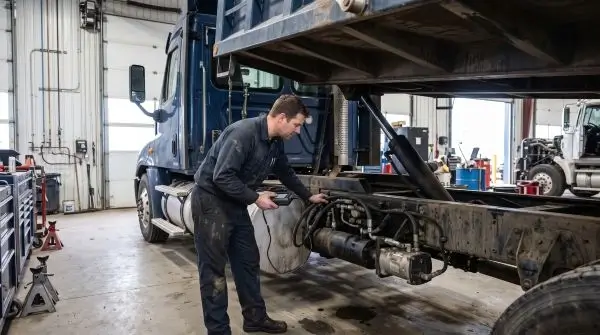
 Heavy trucks are equipped with hydraulic functions that convert fluid pressure into mechanical energy to lift, tilt, push, or hold heavy loads. These systems lie at the heart of numerous truck-mounted tools, so understanding how they function is crucial if you want to identify problems early and schedule intelligent repairs.
Hydraulics can show up in dump beds (like on a dump truck), truck cranes, liftgates, and dock levelers. A dump truck bed hoists tons of gravel or dirt multiple times a day, frequently via a single-acting telescopic cylinder that requires scheduled de-airing to keep the lift smooth. A knuckle-boom crane utilizes multiple cylinders for boom raise, extension, and slewing. It also has a load-sensing system on certain units so it can deliver more flow only where required. Liftgates on delivery trucks use miniature cylinders and close hose runs, so a pinhole leak can keep shippers’ freight grounded. Hydraulic dock levelers, which bridge the truck to the platform, can hold up an entire loading line if they lose pressure or move slowly.
Behind all this, a pump, cylinders, hoses, and valves put force into motion and control it. The pump, generally gear or piston, pulls fluid originating from the tank and forces it into the mechanism. Valves direct that flow to the appropriate cylinder and control the pressure limit. Hoses and fittings transport fluid and have to withstand pressure and vibration. Fretting can begin where metals rub in minuscule motions, which then accelerates wear if lubrication at pins, rod ends, and pivot points is poor. Hydraulics can be open-loop, where fluid returns to the tank at low pressure; closed-loop, where flow circulates between the pump and motor; or load-sensing, which follows demand and trims energy loss.
Proper pressure and healthy fluid keep these parts safe under heavy loads and numerous duty cycles per day. Most systems operate optimally with fluid at approximately 49 to 60 °C (120 to 140 °F). Excessive heat reduces service life and can thin the oil to the point where parts score and seals leak. The fluid itself should be close to 100 SUS (approximately 20 cSt) in normal use, and in cold climates, its pour point must be at least 11 °C (20 °F) below the coldest startup temperature so the pump does not starve at start. Systems on trucks need to withstand wide temperature swings and extended idling, so selecting fluid for both temperature range and load is just as critical as selecting the right pump size.
Routine inspections minimize downtime and safeguard expensive components. A good checklist involves checking for leaks at hoses and fittings, cleaning and inspecting cylinder rods, bleeding air from single-acting telescopic cylinders, recording any loss of power or slow movement, and taking tank temperature during normal use. Open-loop, closed-loop, and load-sensing setups all show trouble in similar ways: odd whining or knocking from the pump, slower response from the controls, visible oil on the chassis, or a crane or dump bed that will not reach full speed or full height. When these signs show up, testing system pressure, flow, and temperature with the right gauges helps isolate the cause before parts break.
For broader mechanical problems affecting the truck itself, professional heavy-duty truck repair can help identify whether a hydraulic issue is isolated to the hydraulic system or connected to another vehicle component.
Warning Signs of System Failure
Hydraulic systems don’t just fail without warning. Tracking leaks, noise, heat, odd motion, and pressure changes provides early warning so you can schedule maintenance before you encounter downtime or a safety incident.
1. Fluid Leaks
Hydraulic fluid belongs inside those hoses and valves and cylinders. Any oil film on hose connections, fittings, cylinder rods, pump housings or under the machine is a warning. Leaks often originate from cracked hoses, worn seals or loose fittings. A slow drip can turn into a sudden hose burst under pressure.
If you observe puddles, wet spots or oil spray patterns, record the location, size of the leak and when it occurs, such as only at full load or only when a particular function runs. Recurring leaks typically indicate underlying issues such as pump seals that continue to fail or a bent or misaligned rod that continues to cut seals. Use absorbent pads and simple containment trays to keep the area clean and minimize slip, fire and environmental risk until repaired. Don’t use these as a band-aid.
2. Weak Movement
Warning Signs of System Failure
Slow, weak, or uneven cylinder movement almost always means you are losing force somewhere. Typical culprits are low fluid level, internal leak past worn seals, or a pump no longer generating full pressure. If a boom, lift, or clamp that used to move fluidly now hesitates, stalls, or requires additional seconds to complete a stroke, consider it a definite malfunction.
Watch for cylinder drift — a raised load that slowly sinks with valves closed. That usually indicates seal failure, valve leakage or internal scoring. Look at current lifting force, travel speed and cycle times compared to the manufacturer’s data or earlier logs. Record which functions are impacted (lift, tilt, extend, steer), load and oil temperature when the problem presents itself. This log assists service techs in following the source.
3. Unusual Noises
Hydraulic systems should run with a consistent, low mechanical buzz. Knocking, banging, whining, or grinding noises coming from pumps, valves, or cylinders are typical early warning signs of trouble. A high-pitched whine can emanate from air in the oil or cavitation when the pump starves for fluid. Heavy knocking or rattling may indicate misalignment, loose mounts, or worn parts banging under load.
Pay attention to when the sound appears: during start-up, at full stroke, when holding a load, or only when a certain valve shifts. Note time, working pressure, and which part of the bearing area the noise appears to originate from. Allowing the pump to continue to whine or knock can convert a minor air or alignment problem into broken gears, cracked housings, or valve damage.
4. Extreme Heat
Hydraulic oil should remain within the manufacturer’s specified range and in most general systems should not exceed approximately 82 °C (180 °F). If the tank, lines or valves are too hot to touch for more than a second or two, or oil smells burnt, you probably have excessive friction, low oil or restricted flow.
Look for plugged filters, a stuck or undersized cooler, a non-running fan, or a relief valve left open and dumping oil back to the tank at full pressure. Overheating accelerates oil breakdown, hardens seals and reduces the life of pumps and valves. Periodic temperature checks with an infrared thermometer and a simple log sheet help you notice a slow climb in normal operating heat pre-failure.
5. Contaminated Fluid
Hydraulic oil ought to appear crisp and uniform in color. Contaminated fluid is dark, milky, or cloudy, or has visible sludge, metal specks, or water drops. It’s one of the leading causes of hydraulic failure since dirty oil abrades pumps, valves, and cylinder surfaces far more quickly than clean oil.
Typical culprits are dirty or overloaded filters, worn or defective fittings that draw in air or moisture, or sloppy habits during regular maintenance, like opening lines without cleaning off the surface first. If you notice contamination, schedule filter changes and, if necessary, a complete flush with fresh oil. Then investigate the source so the issue doesn’t come back. Keep fill caps closed, employ clean tools and containers, and sample oil on a schedule.
Look for unpredictable cylinder movement, abrupt pressure drops on gauges, and odd vibration in hoses or frames. These can indicate underlying problems like failing pumps or misaligned parts that accompany or soon cause fluid contamination and system damage. Take note of all such occurrences, with date, operating conditions, and readings, so patterns emerge and troubleshooting remains rooted in data.
Common Root Causes
Hydraulic losses generally stem from a few recurring issues. Understanding these root causes assists in reducing repair time, expense, and risk.
| Root cause | Typical symptoms | Main risk if ignored |
|---|---|---|
| Fluid contamination (dirt/water/air) | Slow or jerky motion, leaks, wear, noisy pump | Premature failure of pumps, valves, seals |
| Overheating | Faded power, thin weak oil, strong oil smell | Seal damage, fluid breakdown, higher failure rate |
| Poor lubrication / wrong fluid | Loud operation, scuffing, higher friction | Metal wear, pump and cylinder scoring |
| Misalignment / bad installation | Uneven wear, repeated hose or rod failures | Frequent downtime, safety hazards |
| Restricted flow (clogging) | Weak movement, cavitation noise, slow response | Pump damage, high local temperatures |
Weak whack and trampoline motion in cylinders usually originate from issues within the internal components, not just from low pressure. Internal cylinder wear can allow fluid to bypass the piston, so the rod moves in a slow or jolting manner under load. Valve malfunctions, for example, stuck spools or worn lands, can send the wrong flow to an actuator, which appears as random speed shifts or drifting positions. Pump failure or wear drops actual flow output while gauges read normal, so motors stall and cylinders fail to reach full stroke. In practice, these issues often overlap. For example, a worn piston rod or seal surface from contamination will cause seal leakage first, then weak force, then full cylinder failure.
Overheating and noise typically indicate poor lubrication, misalignment or restricted flow, not “old age.” Running fluid above about 180°F (82°C) damages seals and accelerates oil degradation, and operation in excess of this limit should be avoided when possible. Too much heat desiccates additives and facilitates cavitation, which produces that raspy, gravel-like sound. Jolting motions induce heat through friction, but high heat can also occur by itself from clogged filters, crushed hoses or blocked coolers which choke flow. These small blockages add up. Contamination causes roughly 70% of hydraulic failures, and about 80–90% of equipment failures link back to air or water in the oil or too much heat.
Repeated failures in the same place are almost never accidental. Piston rods fail more frequently than any other hydraulic component. Seal leakage, contamination, and heat resulting from poor routing, misaligned mounts, or wrong component specification are common causes of cylinder failure. Hoses that chafe on jagged edges, fittings shoved into off-center ports, or cylinders undersized for the load are going to continue to blow even after meticulous repairs. Keeping contamination out is a simple, consistent routine that includes good filtration, clean oil transfers, and regular inspections. This routine can save hundreds or thousands in repair and replacement costs over the lifespan of a system.
Diagnostic Safety and Protocols
 Hydraulic diagnostic work requires an explicit safety routine, as leaks, high pressure, and hot oil can hurt people and stop production lines. A simple, repeatable protocol helps trim hazards and keeps fixes lean.
Command operators to halt equipment immediately if a hydraulic problem might injure people, destroy parts, or jam a line. This includes a burst hose, unexpected loss of lift, hammering from a pump, or exposed fluid spraying in the air. Any indication of liquid close to hot surfaces or moving parts necessitates a halt. The machine remains off until a competent individual diagnoses the system failure mode and scope of damage, so that nobody restarts a unit that is not safe to run.
Visual inspection is the front line and it can only take place when the system is completely depressurized, locked, and tagged out. Technicians should implement lockout/tagout procedures so that no one can energize the pump or shift actuators accidentally. Once the system is safe, they can check for oil on the floor, cracked or blistered hoses, loose fittings, bent tubes, damaged seals, or rubbed-through lines on frames. Temperature checks matter — if components or fluid run above about 180°F (82°C), the system needs attention before seals harden or fluid breaks down.
For diagnosis and repair, utilize correct hydraulic tools — rated pressure gauges, flow meters, test ports — not jury-rigged setups. A sound protocol starts with basics: confirm fluid level and condition since low or dirty oil sits behind many failures. Then determine if it’s pressure-related, volume-related, or a mechanical defect. Slow cylinder movement typically indicates volume problems, whereas a load that won’t hold is usually pressure-related. Inlet and air issues such as aeration or cavitation require inspections of suction lines, strainers, and reservoir return flow. A complete pressure test can maintain the system at peak rated pressure for about 15 minutes while observing all joints for potential leaks. Guesstimates or parts swapping solely on symptoms tends to hide underlying causes and increase expenses, but a diagnostic workflow reduces that risk and facilitates safer, more durable repairs.
Cost-Benefit Analysis: Rebuild Versus Replace
 Hydraulic systems go down in more ways than one, so the appropriate decision is not always clear. A clean cost-benefit perspective lets you know when to fix, rebuild, or replace rather than responding to the latest failure.
- Check for rod wear or scoring over the entire stroke. If the chrome is slightly scored and still straight within tolerance, polishing or re-chroming might suffice. Deep scoring, pitting, or bending that causes seal damage or side-load is a good indication that a full rebuild or new rod is safer.
- Examine glands for cracks, thread damage, or warped seal grooves. If the metal body is sound and only the seals are hard, cut, or swollen, a reseal kit and careful cleaning will often restore function at low cost. If the gland is egg-shaped, severely corroded, or has a history of multiple leaks, it might not seal well even after a repair.
- Look at mountings: clevises, trunnions, pins, and brackets. Oval pin holes, cracked welds or misalignment cause side-load that will kill a fresh rebuild immediately. If you require heavy machining or redesign of mounts to correct alignment, that begins shifting the decision from patch to replace.
A simple rule of thumb often used is the 50% rule: if the repair or rebuild quote is more than half the cost of a suitable new component, many shops lean toward replacement. Still, that rule works only if you pay attention to operating hours, cycle counts, and historical failure data. A cylinder that runs 20 hours a day, 6 days a week will expire much faster than one used a few hours a week.
Rebuild can be the clever middle way, delivering near “like-new” performance for less than replacement in full, so long as the core design still fits your load, pressure, and duty cycle. Some elder units, however, cannot be modernized to meet newer safety or control standards, so no rebuild can install absent technology. New parts tend to promise longer expected life, higher efficiency, and better control, but they come with the highest up-front cost and the longest payback.
Repairs can be the quickest way to return a line to service, and that reduced downtime can mean more than the bill on that individual job. Over time, all those short-term repairs can add up to more than a smart rebuild or a crisp switch to brand-new equipment. Actual service life for hydraulic components is anywhere from about 7 to 50 years, contingent upon fluid maintenance, filter quality, temperature, and system load. A proper cost-benefit perspective would total not just parts and labor today, but probable downtime, subsequent maintenance, energy consumption, and throughput consequences over a stretch of years.
| Option | Pros | Cons |
|---|---|---|
| Rebuild | Lower cost than new, keeps fittings and layout, can clear known issues | Needs sound base hardware, may not add new technology |
| Replace | Latest design, higher efficiency, longest expected service life | Highest upfront cost, may need new mounts or plumbing |
Hydraulic System Repairs and Maintenance
Hydraulic system repairs and maintenance focus on uptime, worker safety, and making catastrophic failures a distant memory. In any plant or job site, a scheduled check that costs minutes is a lot less expensive than an unscheduled stop that costs hours.
Routine preventive maintenance begins with a simple schedule. Main activities involve hydraulic fluid inspections, changing filters, inspecting hoses and fittings, and leak detection. Many failures link back to skipped basics: low or dirty oil, clogged filters, or a hose that was “good enough” last month. Fluid contamination, worn components, and pinhole leaks are some of the most common breakdown triggers, and you want to catch these early. For machinery in severe duty work, like mining or heavy construction, monthly inspections are a reasonable minimum. Lighter duty systems can extend the interval, but if your system runs hot, noisy, or slow, inspection should be more frequent.
For fleets managing multiple heavy trucks or equipment units, a structured fleet maintenance program can help organize inspections, service intervals, and repairs before small hydraulic issues become major downtime events.
Manufacturer service intervals are not marketing; they are constructed around actual pump, valve, and seal test data. Respecting those intervals and using the proper hydraulic oil ISO grade extend parts life and maintain system stability. Overly thick or thin oil can increase wear, complicate cold starts, and reduce pump life. For instance, a press engineered for ISO VG 46 oil is hot and noisy on a lesser grade, causing varnish, sticking valves, and premature pump failure.
For day‑to‑day work, a simple checklist keeps things clear:
- Check fluid level and color. Top up with the right grade.
- If gauges or hours indicate, replace or clean filters.
- Inspect hoses for cracks, bulges, abrasion, and kinks
- Check fittings and joints for leaks or looseness
- Wipe and inspect around cylinders, pumps, and valves for seepage.
- Heed strangeness and detect hotspots on components.
Small problems require immediate fixing. A damp fitting, a worn hose cover or loose clamp won’t halt work today, but these often precede a burst line, pump damage or total system failure. A couple of minutes to tighten, re-seal, or swap a suspect hose can save injuries, fluid spills and long shutdowns down the road.
Conclusion
Hydraulic issues in a heavy truck delay jobs, increase danger, and devour margins. The nice thing is that it hardly ever strikes out of the blue. Leaks, heat, funny noises, sluggish lift, or weak pressure all speak the same language. Tiny fixes and inspections, timed just right, keep massive failures off the yard.
Intelligent fleets monitor fluid condition, filter change histories, hose age, and seal degradation. They record test results and repair information. That sort of habit slashes guesswork and labor expenses. It establishes good faith with drivers and customers.
Got stress symptoms in your system already! Pull out your previous service notes, compile a symptom list, and consult with a reliable hydraulic tech before the next load heads out.
For trucks that cannot easily leave the jobsite, a mobile service truck can provide another practical option for getting repair support where the equipment is located.
Frequently Asked Questions
What does a hydraulic system do in a heavy truck?
A hydraulic system uses pressurized fluid to drive components such as lifts, dump beds, cranes, steering and brakes. It takes the raw power of an engine and transforms it into measured force and movement. When functioning properly, it enhances safety, accuracy and load-handling effectiveness for heavy-duty operations.
What are the most common warning signs of hydraulic system failure?
Typical indicators are sluggish or jumpy motion, strange sounds, fluid leaks, overheating, diminished lifting capacity, and warning signals. Any abrupt change in performance or new vibration needs to be investigated immediately to avoid major damage and unsafe operating conditions.
What usually causes hydraulic system breakdowns in heavy trucks?
Common reasons are polluted fluid, worn seals, hose damage, overheating, insufficient fluid, and bad maintenance. The wrong fluid, clogged filters, and too-high pressure settings speed wear. Many can be minimized with inspections and timely fluid and filter changes.
How are hydraulic system problems diagnosed safely?
Technicians follow strict lockout/tagout steps, depressurize the system, and wear appropriate protection. They check for leaks, measure pressure, test components, and review fluid condition. Using manufacturer procedures and calibrated tools reduces risk and helps pinpoint the exact fault quickly.
When is it better to rebuild instead of replace hydraulic components?
A rebuild is logical if the housing is solid, damage is limited to wear parts, and the unit is still supported with parts. If there is severe scoring, cracks or repeated failures, a full replacement typically provides greater long term reliability and reduced downtime.
How much do hydraulic repairs usually cost compared to replacement?
Pricing depends on truck type, size of part and damage. Small repairs and seal kits are generally less expensive than replacement. If labor time is high or failure is severe, a new or remanufactured unit may be more cost-effective over the life of the truck.
How often should heavy truck hydraulic systems be serviced?
Service intervals are based on operating hours, loads, and environment. Most fleets check systems at each service, change filters on manufacturer schedules, and swap fluid by hours or condition. Proper maintenance staves off failures, prolongs component life, and minimizes repair expenses.