
- Key Takeaways
- The Roadside Dilemma
- Common Mobile Welding Repairs
- When Towing is Unavoidable
- The On-Site Advantage
- Field Repair Realities
- Choosing Your Repair Partner
- Conclusion
- Frequently Asked Questions
- What is mobile welding repair?
- What types of problems can mobile welders fix roadside?
- When is towing still necessary instead of mobile welding?
- How fast can a mobile welding repair service respond?
- Is mobile welding repair safe and reliable?
- What should I check before choosing a mobile welding repair partner?
- How much does mobile welding repair usually cost?
Key Takeaways
- Compare towing and shop delays with speedy, on-site mobile welding repair when downtime impacts production or delivery schedules. Measuring downtime and cost metrics ensures future repair decisions are made on hard data, not guesswork.
- When safety and structural requirements permit, let mobile welding perform those convenient repairs, such as frame brackets, exhaust mounts, trailer damage, and equipment attachments. For serious system failures or extensive damage, arrange to haul gear into a professional welding shop.
- Think logistics first prior to selecting mobile welding repair, including equipment location, access, and the potential impact of weather and terrain. Develop a basic accessibility checklist, power requirements, and safety perimeter before sending out a mobile welding unit.
- Consider safety as a determining factor by industry standards, certified welders, and acknowledging when an on-site repair is insufficient for critical components. Make clear guidelines about what welds are permitted in the field and which have to be completed in a controlled shop situation.
- Enhance uptime by incorporating mobile welding into your maintenance plan for unplanned downtime and preventive repairs. Organize with operations and maintenance to perform on-site welding during low impact periods.
- Select repair partners who have demonstrated mobile welding experience, relevant certifications, and equipment appropriate for your industry and materials. Periodically check performance, weld quality, and response times to establish a trustworthy long-term relationship that enables you to operate safely and efficiently in the field.
Mobile welding repair is exactly what it sounds like — a welder that will come to your location and repair metal parts, structures, or equipment. A lot of folks employ it for damaged gates, trailers, farm implements, construction equipment, or industrial frames that are difficult or expensive to transport. A mobile welder typically operates out of a truck or van equipped with portable welding equipment, power supplies, and safety equipment. Work can be anywhere from rapid crack repairs to complete structural repairs in a home or small shop or a large work site. To select the appropriate service, it helps to understand what kinds of welding they provide, their pricing structure, and their safety and quality practices, all of which the following sections describe.
The Roadside Dilemma
The roadside dilemma is about more than a busted component. It’s a snap decision between sending equipment to a shop or sending a mobile welder to the location, often under stress, with safety and durability in the balance.
1. Downtime
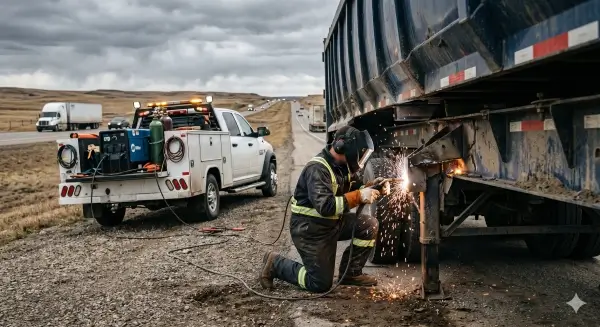
When a truck frame cracks by the highway or a loader arm gives out on the job, every spare hour it lays idle is money down the drain. For highway breakdowns, pairing mobile welding with professional on-road heavy-duty repair services can help fleets return vehicles to service faster while avoiding extended shop delays. Imagine a mobile welding unit that can roll up to the scene with generators, oxygen tanks and a few pre-pave tools and get to work, rather than waiting for a tow and a vacant garage. For fleets or construction sites, this can be the difference between a quick break and a lost shift.
That downtime is more than just the welding time. Towing a 20-ton excavator, waiting in line, and backing up the machine can turn a simple 2-hour weld into a 2-day pause. Others monitor downtime per incident in hours and correlate it to lost output in tons moved, loads delivered, or projects completed. Something to compare that to — average mobile weld response times — puts the service in clearer perspective than weld prices alone.
Hidden damage is icing on the cake. A chip that appears insignificant at roadside can expand when the machine is returned to duty. Good mobile welders check adjacent joints and stress points so problems do not pop up a week later and cause new downtime.
2. Cost
Your direct repair costs can appear higher for mobile welding at first, because the hourly rate frequently incorporates travel and field set-up. Dragging a jumbo apparatus many kilometers and added wrangling at a shop can top the mobile charge before welding even starts. For numerous occupations, the combination of towing, shop labor, and additional down time makes the in the field repair the lesser overall expense.
A simple way to compare is to list all cost lines for each option. For mobile welding, add call-out fee, hourly rate, consumables, and any site access charges. For shop work, include tow in and out, shop labor, storage, and lost work value. Some make this into a little table of common breakage, such as trailer hinge breaks and bucket cracks, to inform future selections.
Quality shortcuts alter the equation. If a low-cost mobile welder uses the wrong rod on high-strength steel and the weld fails, the re-repair and additional downtime can wipe out any savings. Reference checking, certification, and prior work photos are all budget control, not a budget add-on.
3. Logistics
Transporting large or oversize equipment is a tricky business. It may require permits and escort vehicles and lifting gear, even for a short distance. Mobile welding trucks cut through a lot of this. They provide power, gas, and various welding processes to the equipment, be it in a yard, on a farm, or at a remote work front.
This is handy when the machinery cannot be driven. A cracked bus suspension bracket or broken trailer kingpin could make travel on the road unsafe or illegal. A mobile welder can brace or fix these components in place so the car can drive under its own power again or at least be made safe for careful towing.
Field access is important even in the hinterlands. In mining, forestry, or wind farms, your repair point could be kilometers and kilometers away from paved roads. Most mobile welding units are constructed on 4×4 trucks or trailers so they can get to rugged sites and withstand the elements. That reach makes repairs possible that would otherwise require cranes or entire component swaps.
4. Safety
Safety lurks beneath each decision in roadside fixes. Bent frames, ruptured hydraulic lines or severed load-bearing brackets can be instant dangers to drivers and pedestrians. Experienced mobile welders can bring emergency stabilizing welds quickly. They can then return with more thorough repairs once the area is safe and access is improved.
Not every job is field repair-friendly. Pressure vessels, crane booms, or structural parts in passenger vehicles might require controlled shop conditions, non-destructive testing and sign-off from certified inspectors. A good mobile welder will say no when a job cannot meet code or industry rules on site. Operators should also remain aware of current Canadian road safety requirements when determining whether roadside repairs can be performed safely and legally.
There are dangers from the welding as well. Open roadside areas don’t have the controlled ventilation, fire barriers and fixed grounding of workshops. Safe mobile welders establish exclusion zones, fire watches and shields to protect bystanders and materials in close proximity. They employ rods and filler metals that correspond to the base of the material, as the incorrect option can result in brittle welds, latent cracks and lagging failures that manifest days after.
Integrity is at the heart. Others tell stories of previous work where welders employed quick patches, thin plates, or bad prep that caught the eye but failed soon thereafter. Verifying training, appropriate certifications, and transparent repair plans mitigates the risk of these hidden safety issues.
5. Repair Scope
Not every weld should be roadside and not every job requires a shop. Mobile welding works great for stuff like small frame cracks, broken brackets on fuel tanks, worn trailer safety chain mounts, or cracked loader buckets. Such repairs typically require nice access, some basic joint preparation, and standard welding processes like SMAW or FCAW.
A few mobile welders carry sophisticated equipment. We have field guys with backgrounds in metallurgy and patents on specialized repair techniques or fixtures. They can tackle trickier jobs, like mixed-metal joints or fixing up around heat-sensitive parts, with preheat, managed heat input, and appropriate post-weld cooling. Some operators are short on training and don’t even opt for the right polarity or rod type, resulting in weak welds and reoccurring failures.
Very large or high-risk jobs, such as full frame straightening, critical crane boom sections, or precision stainless work on food-grade tanks, may be beyond what is safe in the field. These typically require jigs, temperature-controlled processes, precision alignment, and complete testing. A good mobile welder will set appropriate boundaries, fix only what’s appropriate on site, and recommend when to take the gig back to a shop.
Common Mobile Welding Repairs
Common Mobile welding repair encompasses a broad blend of tasks, ranging from frame issues and trailer cracks on the side of the road to custom railings, water tanks, structural beams and dump truck bins. Work gets done there with gasoline or diesel engine welding units, which eliminates transportation time and frequently reduces the total bill, particularly when small jobs get billed at a reduced hourly rate compared to large, complex ones.
Frame Brackets
Frame brackets on trucks and trailers take constant stress from loads, potholes and braking, so they crack or break frequently. A mobile welder can clean and bevel the damaged area and repair it with SMAW (stick) or GMAW (MIG) using portable wire-feed gear. Each is an option depending on access, plate thickness and whether the steel is mild or an alloy plate.
Good joint prep matters more than many people think. Rust, paint, and oil must be removed, and the arc length and travel speed need to match the bracket thickness. With the right electrodes or wire, combined with appropriate abrasion‑resistant filler when brackets take significant impact, mobile welding repairs restore complete strength and reduce the chances of recurring failure. Immediate on‑site repair safeguards adjacent components such as suspension hangers or fuel tank mounts from bending out of shape while the bracket continues to twist under stress.
Exhaust Mounts
Exhaust mounts on trucks, generators, and farm machines often crack at the weld toe or at thin hanger tabs, which leads to loud noise, higher vibration, and in some cases raised emissions if joints open up. Mobile welders deal with these problems by first checking the full exhaust path, then choosing TIG or stick based on the material and access. TIG gives cleaner work on thin stainless steel pipes, while stick can work better on thicker carbon steel in windy outdoor spots.
Repairs follow a clear sequence: support the exhaust so it does not sag, grind back to sound metal, tack in position, then weld with filler metal matched to stainless or mild steel, and finally add small braces if the design allows. A cautious welder observes local regulations regarding noise and emissions because a substandard weld that breaks down later can cause a vehicle or stationary system to fall out of safety or environmental compliance.
Trailer Damage
Mobile welders take care of numerous trailer problems on the roadside or right in a yard, from cracked frames and bent fenders to broken steps and damaged hinge points. Rather than towing a loaded trailer to a shop, the welding unit gets mobile and comes to the breakdown location, saving towing fees and downtime for freight, farm, or construction work. This very same on-site setup is used to repair custom railings on buildings, fix leaks in water tanks, or rebuild damaged beams or dump truck bins.
We do some common trailer repairs, such as patching cracks at cross-member joints, but many require custom fabrication of gussets, brackets, or new sections. Expert mobile welders maintain logs and images of recurring weaknesses across a fleet, so owners can schedule maintenance, stock parts, and decide when to strengthen acknowledged vulnerabilities prior to failure.
In all of these jobs, the integrity of the welder’s work is paramount. A bad weld on a step, kingpin plate, or ramp can fail without warning under load and cause visible damage immediately or invisible cracks that propagate over time.
Equipment Attachments
Buckets, blades, grapples and other attachments for construction and farm machines experience almost unrelenting abrasion, impact and torsion, so mobile welding crews repair a lot of worn cutting edges, cracked ears and warped quick‑attach plates. Most have both regular welding wire and special abrasion‑resistant wires, so they can rebuild wear surfaces while tying into the tougher base metal, be it mild steel, high‑strength plate or aluminum for lighter gear.
On farms and remote sites, mobile welding is often the only realistic option when a loader bucket ear tears or a dozer blade corner splits because transporting the base machine to a shop can be more expensive than the actual repair.
Using GMAW (MIG) portable for speed, with stick or flux-core when wind or dirt impact, they can weld parts back together or strengthen them. They then recommend primitive inspection intervals so owners identify early cracks or loose pins before a severe field failure halts work for days. Fast mobile response, sometimes within just a few hours for emergency calls, keeps machines making money and reduces expensive downtime on worksites and in the fields.
When Towing is Unavoidable

While mobile welding repair can solve numerous issues on-site, certain types of failures are too severe, too intricate, or simply inaccessible. In those instances, towing to a certified shop is the only safe course, even if it costs more time and money initially.
Critical Failures
Significant structural issues need to head directly to towing. We’re talking bent or twisted frames, cracked chassis rails, damaged booms, collapsed suspension mounts and steering components that have torn away from their brackets. If the frame is no longer straight or a wheel sits at an odd angle, an onsite weld patch won’t address the underlying problem and can conceal more serious damage.
Any load-carrying structural member across the entire machine – like frame crossmembers, hitch points, crane pedestals, or fifth-wheel plates – often requires a complete structural evaluation with jigs, straightening equipment, and non-destructive testing. They’ve only got those tools in a real shop. Attempting to “weld it back together” in the field without alignment checks can induce new stress points and new cracks.
Precision welding — on steering knuckles, key suspension brackets or load-rated lifting eyes — typically demands controlled heat input, preheat, post-heat and precise joint prep. This is difficult to accomplish beside a road or on a job site, particularly in poor weather. As a general rule, if failure of that part could cause steering loss, braking loss, rollover or dropped loads, it should be towed to a certified fabrication shop, not repaired on the spot.
When towing is unavoidable for these failures, proper equipment matters. Rated tow trucks, correct chains, secure attachment points, and attention to weight, balance, and road conditions help avoid secondary accidents.
System Damage
Some issues appear to be weld fixes but instead are system issues. Cracked brake brackets, leaking hydraulic cylinder mounts, and damaged electrical enclosures can be tied to more serious brake, hydraulic, or control failures. If the machine can’t stop, steer, or hold a load in place, it shouldn’t go under its own power. Towing is safer and 24/7 emergency service can assist stranded drivers/operators.
Portable welding units have limits. For instance, thinner or lower-series machines (typically under 300 or 400 series output) can’t run thicker rods or heavy-section welding with the consistency required for pressure-bearing components. When you’re repairing to CSA standard W47.1 or an equivalent, you generally need certified welders, procedure documentation, and a shop with positioners and test rigs.
System damage that is usually not suited for field welding includes: brake lines or mounts tied into complex ABS or stability systems, high-pressure hydraulic blocks on cranes or lifts, and integrated control housings with sensors and wiring near the weld area. Welding too close to these systems can send heat and current where it should not, creating hidden faults that appear later. Proper documentation of what is damaged, what code applies, and why towing is selected helps demonstrate due care and assists with subsequent inspections. Fleet operators should also stay informed about applicable Alberta commercial carrier regulations when making repair and operational decisions.
Accessibility Issues
Not all jobs stem from complexity; some just deal with easy access and safety. If the machine is in a ditch or on a steep slope, under a low overhead line or inside a cramped plant aisle with insufficient ventilation, the mobile welding crew cannot safely set up. Wet, muddy ground, high winds, or heavy rain further increase the risk of weld quality and electrical hazards.
In other words, there’s just no obvious spot to safely ground, route a cable, or shield from bystanders. Welding close to fuel storage, in tight tunnels, or in a public traffic lane can be more hazard than it’s worth. The welder may get to the crack but may never maintain a steady torch angle or shield others from sparks and fumes.
Before dispatch, many companies use a quick checklist: access for the service vehicle, stable ground, minimum clear space around the weld area, safe ventilation, and permission to work with hot tools on that site. If these points fail, the best alternative may be partial disassembly with a crane or forklift, then towing or transporting the section to a safer location where specialized portable welding tools or even full shop equipment can work under better safety control.
When towing is unavoidable in these conditions, prudent evaluation, candid counseling, and a towing service provider or welder with a tested reputation prevent further damage and ensure general safety.
The On-Site Advantage

Mobile welding repair means bringing the welding shop to the asset, so the work takes place where the breakdown happens. This on-site arrangement reduces delivery times, minimizes expenses, and keeps machinery operating on the site instead of sitting idle in line at a stationary workshop.
Operational Continuity
On-site welders assist in keeping production lines and field crews on schedule by addressing cracks, broken brackets and worn joints before they halt a shift. A loader with a broken bucket hinge, for instance, can be fixed in the yard rather than being carted several kilometers to a shop, which keeps the balance of the fleet rolling.
The on-site advantage applies to remote work sites — mines, wind farms or huge agricultural fields. Mobile welders carry generators, welding machines, cutting tools and safety equipment in one truck, so they can operate miles away from grid power and still deliver the same high quality that you’d get at a city workshop.
Mobile emergency welding frequently offered 24/7 gives teams a chance to bounce back from unexpected breakdowns without having to wait days or weeks for a turn at a normal shop. Same-day or next-day response can be the difference between a small schedule slip and a missed contract milestone.
When folded into a scheduled maintenance program, mobile welding facilitates inspection and repair during scheduled stops. Integrating these services into a comprehensive preventive fleet maintenance program can reduce unexpected breakdowns and improve long-term equipment reliability. This reduces the chance of reoccurrences, as issues are resolved in the actual working environment and verified under load where necessary.
Industry Support
Mobile welding services usually cover a wide spread of sectors: long-haul trucking fleets, oilfield rigs and pipelines, construction and demolition equipment, forestry harvesters, and farm machinery. Each of these rigs operates in harsh environments and frequently cannot be removed from the location without significant cost.
Welders tailor their approach to every situation. A fix on a stainless steel food-grade tank requires a different technique than fortifying a carbon steel excavator arm, while offshore parts encounter salt, wind, and motion that demand specialized methods and consumables.
Many mobile welders do light fabrication on site, for example, construct custom guards, brackets or supports that fit existing equipment sizes and mounting points. That eliminates an added cycle of measuring, ordering and delivery, and it assists in achieving the ‘right first time’ result.
Eventually, businesses develop reliable relationships with local mobile welders who are familiar with the local climate, typical machine brands, and typical failure points. This familiarity accelerates fault finding and results in more focused, cost-conscious repair decisions.
Minimized Disruption
Working at the job site allows repairs to be made alongside operations with portable welding machines deployed to keep sparks, noise, and traffic as localized as possible. A mobile welder can rope off a tiny section around a busted conveyor frame while the lines next to it hum along.
Maintenance managers can schedule welding work for low-traffic slots, such as late nights, planned shift changes, or breaks between batches. This type of flexible scheduling becomes easier when the welder comes to you rather than you having to book around a remote shop’s calendar.
By sidestepping transport of heavy or oversize equipment, it reduces fuel, permits and loading labor and minimizes the risk of damage during lifting and hauling. That savings adds up for big fleets and for locations remote from urban hubs.
Numerous mobile welding outfits shape their operation around quick-turn and loose project scopes, ranging from immediate band-aids to several day gigs. The shared goal is simple: handle repairs on site at the right time so operational efficiency stays high and disruption stays low.
Field Repair Realities
Field welding repair means working without the comforts of a fixed shop. So planning, gear, and habits must shift to keep welds sound and people safe.
Environmental Factors
Wind blows shielding gas and leaves porosity. Rain brings hydrogen crack and electric shock danger. Dust or sand gets caught in the joint. Even temperature swings matter. Cold steel pulls heat out of the weld and raises the chance of lack of fusion, while hot weather can lead to rushed work and poor visibility through the helmet.
To manage this, crews typically erect welding tents, wind screens or basic tarps, and they prepare the joint immediately prior to welding. Surfaces are brushed or ground and then maintained dry and covered until the weld begins, reducing rust film, moisture and grit.
Process selection moves into the field. A lot of crews opt for super flux-cored wire with gas (FCAW-G) or self-shielded flux-cored wire (FCAW-S) instead of bare solid wire MIG because the flux does a better job shielding the weld pool in wind. Sometimes stick welding with low-hydrogen electrodes is safer in light rain or where gas shielding would be unstable.
Safety inspections need to follow the weather as well. Wet ground can turn minor leaks or damaged cables into shock hazards, while heat, glare, and fumes accumulate beneath makeshift canopies. Our crews must be mindful of trip hazards, fire risk from sparks on dry grass, and the impact of heat or cold on both the weld and the person doing it.
Power and Portability
Field repair realities Mobile welding repair is reliant on stable power, so many carry engine-driven welders and backup generators sized to run both as well as hand tools. Voltage and duty cycle are important since thin sheet on one assignment and 25 millimeter plate on another demand very different loads.
Portable units need enough range to cover common processes: stick for dirty steel and quick fixes, flux-cored or MIG for faster production work, and sometimes TIG for thin stainless or aluminum. The same truck may haul leads of different lengths, clamps, grinders, and rudimentary cutting equipment so welders can prep, weld, and finish without driving back to the shop.
Stocking the truck is more than loading drawers. Teams schedule rods, wire, tips, nozzles, gas, and PPE off of anticipated jobs, and they keep sealed storage to prevent them from moisture and dirt. Prior to any emergency call, they verify fuel, run test beads, and verify that cables, regulators, and meters are in good condition so faults do not appear on site.
Quality Assurance
Field repair realities Most companies coincide mobile work with the same codes as the shop, like structural steel or pressure vessel rules, and they establish minimum visual criteria, weld sizes, and testing steps even if the repair is minor.
To reach those standards, welders need training in both process control and field practice. This includes reading weld procedure sheets, setting machines by volts and wire speed instead of guesswork, choosing preheat for thick or high‑strength steels, and adjusting travel speed when welding in vertical or overhead positions. They learn to identify when base metal defects render a repair unsafe.
Inspection isn’t just a glance. Rinse and repeat, along with a close look at the contorted arms and legs, really bring home the inspection realities of field repair. Where necessary, a third-party inspector signs off to ensure conformity with project or legal regulations.
Record keeping turns every job into information. Teams record weld locations and parameters, filler types, preheat, inspection results and rework. Over time, that record develops patterns, like some sites requiring additional preheat or alternative wire, and helps schedule future servicing in advance of failures.
Choosing Your Repair Partner
 How to choose your repair partner shapes how quickly you get back to work, how safe your equipment runs and how much downtime costs you over an entire year.
A good place to begin is a track record of hard-core heavy equipment repair and emergency welding work. Seek out a firm that can reference previous work on big diggers, loaders, cranes, or farm equipment and minis like skid steers or miniature generators. Get them to provide you examples where they dealt with on-site breakdowns, night calls, or work in harsh conditions, not just easy shop jobs. A partner who frequently collaborates with repeat customers tends to indicate consistent excellence. No one dials up the same crew again and again if welds continue to falter.
Credentials and safety certifications are just as important as brute experience. Ask if their welders are certified for the processes you require, like shielded metal arc or gas metal arc welding, and if they observe stringent site safety regulations. Inquire how they manage risk when they tack in confined spaces, adjacent to fuel or on scaffolding. Their gear matters: a capable mobile unit should carry machines that handle different metals and plate thicknesses, portable cutting tools, and testing tools to check weld quality. Such a setup demonstrates they are capable of providing you with reliable, repeatable results rather than band aid fixes.
Response time and range are both key for productivity. Emergency repairs are what get your crews moving and your schedule back on track, regardless of whether your site is in a dense industrial area or an isolated location with limited access. This is why same or next day service can be a game changer when a broken bucket, cracked frame, or failed bracket stops work in its tracks for an entire crew. See how they book jobs — a few hours versus a full week — and whether they can shift teams to match urgent work immediately.
A good repair partner wants to get it right the first time, on as much of the scope as possible. When your repair partner can take care of structural welds, brackets, guard rails and on-site modifications all under one roof, you’re not juggling multiple vendors and risking mixed standards. That kind of coverage reduces repeat failures and maintains consistent quality throughout your equipment.
Conclusion
Mobile welding repair steps up fast in hard places. On a busy road with a broken hitch. A cracked bucket on a farm. A broken gate hinge on location4. In both instances, gear remains nearby, work continues, and tension remains minimal.
Towing still has a role. Big frame bends, big hits, and deep rust are full shop, more time jobs.
The true victory is made of wise decisions. Know your equipment, know your boundaries, and keep a reliable welder in your contacts. Verify ability, equipment, and open rates. Inquire what they repair on location and what they have tows for.
For your next weld repair, connect with a local mobile welder and experience how they respond to the call on the road.
Frequently Asked Questions
What is mobile welding repair?
Mobile welding repair: on-site welding service brought directly to your breakdown! A professional welder arrives in a fully stocked truck to fix metal, frames, trailers, or equipment on site without hour-long waits and costly tow bills to a shop.
What types of problems can mobile welders fix roadside?
Mobile welders regularly repair cracked frames, broken trailer hitches, ramps, loose brackets and broken gates. They’re able to fix farm equipment, construction machinery and metal structures in person, provided the damage is accessible and safe enough to weld.
When is towing still necessary instead of mobile welding?
Towing is often necessary if the damage is too extensive, in a risky location, or near fuel lines or electronics. If it’s a twisted frame, parts missing, or unsafe to work in, full workshop repair is often the safer option.
How fast can a mobile welding repair service respond?
Response time is dependent on location, traffic, and technician availability. Most mobile welders have same-day or emergency response, often within just a few hours. Be sure to always request an ETA and verify emergency or after-hours fees.
Is mobile welding repair safe and reliable?
Mobile welding, performed by a certified, experienced welder with the right equipment and safety protocols, is safe and long-lasting. Inquire into qualifications, insurance, and prior experience. A good one will back their work and clarify repair boundaries.
What should I check before choosing a mobile welding repair partner?
Verify licenses, welding certifications, insurance and reviews. Inquire about their experience with your particular type of vehicle or equipment, how quickly they can respond and a warranty on the repairs. Clear pricing and communication are some of the best indicators of a reputable mobile welding provider.
How much does mobile welding repair usually cost?
Costs vary based on the complexity of the job, materials, travel distance, and emergency hours. Most welders bill a call-out fee, hourly labor, and materials. For basic roadside repairs, anticipate at least a service fee and ask for a written estimate before work commences.