
- Key Takeaways
- Why Your Truck Pulls
- The Unseen Forces
- Diagnosing the Problem
- The Real Cost of Ignoring It
- Prevention and Care
- Your Professional Solution
- Conclusion
- Frequently Asked Questions
- Why does my truck pull to one side while driving?
- Can bad alignment make my truck pull even on a straight road?
- Could brakes be the reason my truck pulls?
- How do I diagnose pulling at home?
- Is it safe to keep driving if my truck pulls?
- What maintenance prevents a truck from pulling?
- When should I see a professional?
Key Takeaways
- Discover the cause before fixing. Check alignment, tires, brakes, suspension, and steering. I used a flat road test and simple visual inspections to help isolate mechanical issues from other factors such as road crown or load balance.
- Put alignment on your list of post-pothole or curb impact checks to make sure your ride doesn’t drift or your tires wear unevenly. Check camber, caster, and toe or schedule a professional alignment for exact adjustment.
- TIP – Keep tires even and healthy. Maintain equal pressure on all wheels in kilopascals, rotate regularly, and replace damaged or conical tires. Look for internal belt issues or aggressive tread designs that can cause a pull.
- Check brake balance – look for stuck calipers, unequal pads, or pinched lines. Replace worn components in pairs. Test brakes on a level, straight road to ensure even stopping force.
- Guard safety and your wallet by repairing pulling sooner to lower accident hazards, fuel efficiency drain, and premature part damage. Include alignment and brake checks with your regular maintenance to prevent more expensive repairs.
- For quick, precise alignment of heavy-duty and pickup trucks, book a specialist inspection and alignment service. Consider mobile service to reduce your downtime and keep your truck rolling straight!
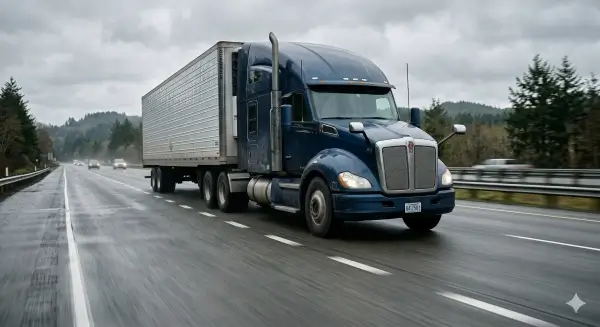
Truck pulling one side can cause a vehicle to drift left or right when driving on a straight road. Typical culprits are uneven tire pressure, cupped tires, misaligned wheels, worn tie rods, or a seized caliper. Road crown and crosswinds can contribute a little pull, but a powerful or consistent drift signals a mechanical problem. Quick checks start with tires: match pressures to the door placard, inspect tread depth across the face, and rotate if wear is uneven. For lots of trucks, alignment specs and suspension bushings enter the picture, particularly after potholes or heavy loads. To go from symptom to fix, the next sections step through tests, probable faults, and repair steps in logical sequence.
Why Your Truck Pulls
Pulling is an indicator that one or more systems are unbalanced. It can be caused by alignment, tires, brakes, suspension, or steering. Road camber and torque steer can contribute to it, but they shouldn’t be hiding a correctable defect.
1. Alignment
As we dial in the toe, wheels that are misaligned push the truck off a straight track and scrub tread. Even minor mistakes generate heat and accelerate wear.
Zero in on camber, caster and toe. If your camber is tilted, it can cause the truck to pull toward the more negative side. Caster split shifts direct straight-line stability versus return to center. Toe is typically the primary instigator. Toe out, even near the typical 0.8 mm (1/32″) toe-in benchmark when offside compared to the other wheel, can push the truck to one side. Front wheel drive pickups can exhibit torque steer when on throttle, which can feel like alignment but shifts with load.
Go to a calibrated alignment rack. A string method can work for checks, and verify with real equipment prior to final set. Following any pothole or curb strike, get an alignment so all wheels keep tracking true.
2. Tires
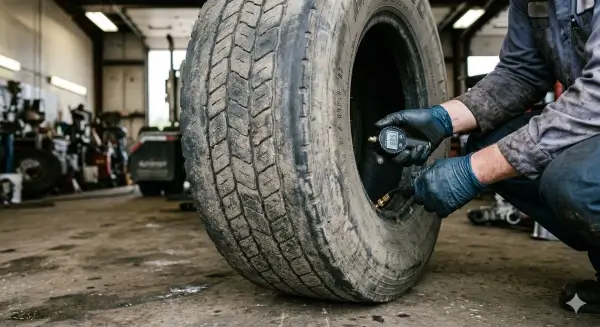
One of the easiest and most common causes of pull is incorrect tire pressure. The truck will drift to the side of the tire with lower pressure as its contact patch expands.
Look for uneven wear from driving or suspension faults. Conicity, when a tire cures with a slightly conical shape, causes radial tire pull that cannot be corrected with alignment. Belt separation can simulate this.
Rotate within a set pattern to balance tread wear and grip. If the pull switches sides after a front-to-rear cross, you probably have a tire problem. Swap out any bad tire and note that super aggressive tread can tramline and drift on grooved roads.
3. Brakes

A stuck caliper or limited brake line causes the truck to yaw on stops and occasionally even while coasting. Verify that each side builds and releases pressure equally.
Measure pad thickness left and right, and replace in axle sets to keep force even. If one rotor runs much hotter, search for a dragging pad or hose collapse.
4. Suspension
Worn ball joints, bushings, or control arms change alignment under load. Bent parts after hits can lock in a permanent slide. If one side has play, your truck will pull. Check geometry post fixes and check whenever you see strange wear or fuzzy handling.
5. Steering
Play in linkage allows the truck to meander. A crooked wheel indicates more significant alignment or mechanical problems. Check tie rods and rack for play or damage. Then, calibrate the steering angle sensor so aid and stability systems register straight.
The Unseen Forces
An external force can rock a truck off the road in a slippery curve even when the frame and axles are perfectly sound. Understanding what the road, the load, and the drivetrain do helps distinguish actual issues from typical behavior and ensures you address the correct component initially.
Road Crown
All but a handful of roads are constructed with a slight center-high camber for drainage. That crown can shove the truck to the outside, frequently to the right on two-way roads. On newer highways, the angle may be slight, but you still sense a drift. Gravel lanes or old city streets could have a more aggressive incline, which will make the drag appear more severe.
To check, locate a flat, straight section or blank car park with level pavement. Cruise at a constant velocity and relax your hand a little. If it goes straight there, crown was the culprit. If it pulls the same way on different flat roads, look at alignment first because misalignment is the most common reason they pull.
Tire pressure counts here as well. One under-inflated tire changes rolling radius and drag, so the truck veers. Inspect all four tires cold and match the door label. Uneven wear from rough roads or skipped rotations can throw in its own twist.
Turn your steering input less on crowned roads and give more space. If the steering angle required feels large or the truck darts, check wheel alignment and brakes. Pulsation from a stuck caliper or a restricted brake line can masquerade as crown but typically manifests more prominently under braking.
Load Balance
Uneven load adds more pressure to one side. That side’s tire squats, changes camber and adds drag, so the truck wanders. A toolbox on one side of the bed or a pallet off-center on a flatbed can suffice.
Cargo can shift while on board. On cobblestone or sharp lane changes, the weight shifts and the tug intensifies. Use straps, nets, and chocks to keep mass in place. Recheck after the initial 10 to 20 kilometers and at fuel stops.
Make load balance part of your routine check. Check left-right weight to ensure it seems even, check tire pressures, and inspect tread for feathering or cupping indicating an alignment problem.
Torque Steer
Torque steer is a yank from uneven power at the drive wheels, prevalent in front-wheel-drive pickups and automobiles. It kicks in under hard or even moderate throttle, not at steady cruise. You will notice it more on rutted or wet roads.
Try it on a level, straight road. Grip the wheel loosely, then accelerate in a low gear. If it yanks right or left just when the torque increases, then that’s torque steer, not crown or load.
Worn axles, unequal half-shaft lengths, tired engine or trans mounts, and loose wheel bearings can make it worse. Uneven tire pressure or a dragging brake on one side can contribute as well.
Examples of repairs might be a worn CV axle, play in bearings, front end alignment, or a sticky caliper. If alignment and pressures are right and it still pulls off throttle, expand the check to suspension bushings and differential wear.
Diagnosing the Problem
Use an incremental plan. Begin with common sense tests, then confirm out on the street and conclude with quantifiable information. Diagnosing the problem involves recording symptoms and when they arrive. Build a shortlist: alignment, tires, brakes, suspension, and steering. Note tire pressures, tread wear, steering-wheel position, and if the truck drifts or veers under brake or only at certain speeds.
Visual Checks
Start at the treads. Check cold pressures against the placard on the door and maintain all four within 10 kPA of each other. In a rig that tows, if one tire is low, or has a bulge or belt shift, measure tread depth across each tread with a gauge. Compare inner, center, and outer blocks. Feathered edges indicate toe problems, inner shoulder wear indicates negative camber, and cupping indicates bad shocks.
Drop in front and sight the wheels. If a wheel leans in or out, or sits too far back in the arch, camber or caster could be off. A crooked steering wheel by itself doesn’t demonstrate a pull.
Examine struts, shocks, and brake hoses for leaks. Oil on a damper softens control. If you see wetness around a caliper, it can indicate a seized piston or a torn boot.
Diagnose the problem by checking for play in tie rod ends and ball joints. Lift the wheel and move it at 3 to 9 and 12 to 6 o’clock. Any clunk or slack is a red flag. Spin the wheel to check for roughness. A failing wheel bearing can cause a steady drift.
Road Test
Find a flat, straight road with little wind. Relax your hands open. Note if the truck drifts with no input and how quickly the drift builds.
Brake from 60 km/h with light to medium force. If it yaws, suspect a sticking caliper or a blocked brake line. Repeat following a brief drive. Heat can alter the pull.
Log speed, throttle and load at pull. A pull only at a set speed can be tire or bearing. One that shows under brake is usually hydraulic or caliper. Notice any shake in the wheel, rumble or groan.
Professional Tools
Validate angles with a 4‑wheel alignment machine. Check camber, caster, and toe, then compare to spec. Adjust or repair before rechecking. A pro check is essential after any suspension work or if basics come up empty.
Scan modules for C‑codes indicating TPMS or wheel‑speed sensor faults that impact stability logic. Make sure the steering angle sensor is calibrated.
Slide a tread depth gauge row-by-row to map wear. To determine if brakes are sticking, use a brake force meter to compare each wheel’s output. A big left-right split backs up a caliper or hydraulic issue.
The Real Cost of Ignoring It
A truck that pulls to one side warns us of safety, cost, and comfort issues. The more you ignore it, the worse the consequences.
Safety Risks
Pulling makes it difficult to maintain a straight course, especially above 90 kph when even slight steering inputs result in large lane drift. Crosswinds and road crown exacerbate this, and the driver strains to maintain centering.
Uneven brake or steering response can add split seconds in an emergency. That lag lengthens braking distance. Ignored brake issues push that distance even higher and put people in actual danger.
Severe uneven tread wear from misalignment or worn brakes heats a shoulder, which increases blowout chances. A blowout at speed can toss the truck off line.
Thin brake pads generate uneven friction left to right, which can initiate the pull or reinforce it. Neglecting maintenance reduces overall vehicle safety for you and everyone else on the road.
Financial Drain
Misaligned wheels create rolling drag. Fuel consumption escalates as the truck scrubs across the lane rather than rolls straight. Over a year, that waste accumulates, particularly on long routes.
Uneven wear kills tires prematurely. One front tire may be rubbing on the wear bars while the other still has some tread life left. That frequently means swapping out a set, not one tire, to maintain even balance and grip.
Suspension, steering and brakes experience increased loads when the truck battles itself. Anticipate expenses for tie rods, ball joints, wheel bearings, rotors and pads if the pull continues. Pads usually last 48,000 to 112,000 kilometers depending on use and terrain. Running past that can score rotors and strain calipers.
Ignoring alignments, rotations, and brake service can void parts warranties connected to maintenance schedules. That transforms a warranty repair into an out-of-warranty fix.
Component Failure
Ball joints, tie rods, and bearings wear faster when wheels don’t all point in the same direction. That slack manifests as wander, clunks, and more pull. Then, parts need premature replacement.
A sticking caliper or uneven pads lugs a wheel, cooking up the rotor and can burn away brake fade. That damage spreads to hoses and ABS sensors and boosts the bill.
Springs, control arms and bushings bear additional strain over time. Small cracks in bushings turn into splits and shocks lose damping, which exacerbates the pull and tire chop.
Recurring pull speeds up wear across systems: tires, brakes, hubs, and even the steering rack. Routine rotation and alignment lessen the danger, trim gas consumption, and prevent small problems from becoming big. If the truck still pulls, check tires, alignment, steering, suspension, and brakes as a group to get to the root before the costs grow.
Prevention and Care
Expect to take small, steady steps that keep the truck tracking straight and parts in good shape. Regular inspections, even loads, and defensive driving combine to reduce the chance of pull and uneven wear.
Regular Inspections
Pick one day a month to check tire pressure when cold and match placard values front and rear. Even a 20 kPa mismatch can push the truck to one side. Just check tread depth along inner, center, and outer ribs. Inconsistent patterns indicate alignment or suspension problems. Rotate your tires every 8,000 km or so to help even out wear and keep steering predictable.
Look over suspension and steering: ball joints, control arm bushings, tie-rod ends, shocks, and struts. Play, ripped boots, oil on shock bodies or bent arms can skew geometry and induce a drift. Look for leaks around power steering lines and rack.
Brake checks count as well. Uneven pad wear, a stuck or slow caliper, and contaminated rotors can pull the truck under braking. Ensure slide pins slide freely and brake fluid is the right level and color.
Use a short checklist: tire pressure, tread and rotation due date, wheel nuts torque, suspension joints, shocks for leaks, steering play, brake pads and calipers, fluid levels, and visible damage after any curb hit.
Proper Loading
Spread weight side to side and front to rear, with the center of mass close to the truck’s centerline. A pallet hard-left in the bed can imitate alignment pull.
Secure cargo with load-rated straps or chains. Re-tension after the first 10 to 20 kilometers to prevent shifts that can alter handling mid-route.
Don’t overburden one axle. Going beyond them strains springs and changes camber. Read the manufacturer’s gross vehicle mass and axle ratings and adhere to load placement guidelines.
Driving Habits
Steer clear of hard turns, sudden brakes and quick lane cuts. These stress toe, camber and caster settings and accelerate bush wear. Potholes and curbs require you to slow down on broken pavement. Impacts can bend rims and knock alignment out.
On crowned roads, a light right pull is to be expected. Counter with small, steady inputs, not incessant sawing at the wheel. Prevention and care make smooth steering and braking moves to protect tires and keep alignment true. Book alignment checks following rough-road rides or a hard impact, and check toe, camber, and caster. Proper alignment increases tread life, steering, and right pressure, and healthy tires prevent drift.
Your Professional Solution
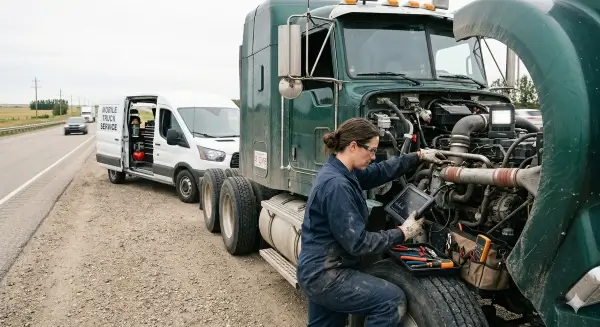
A truck that pulls to one side requires systematic diagnosis and an exact repair, not guesswork. This is necessary to identify the underlying problem, eliminate wasted tire, and return to safe, direct tracking.
Trust Get ‘R Done Heavy Truck Repair for professional alignment diagnostics and repairs for heavy-duty trucks. Their crew takes all the vital angles — camber, caster, toe and thrust — on every axle, then correlates the information with factory recommendations and practical application. We recommend doing all axle alignments at once because even if you get the steer axle set, if the drive axles sit off center, they are still going to push the truck sideways and accelerate tire wear. Others think that doing one axle alignment causes others to go out of alignment, but lots of pros label that “BS.” The real risk is leaving an already misaligned axle untouched. Their process mitigates that risk by inspecting the entire chassis.
Take advantage of their mobile repair services, which deliver advanced alignment technology to you. For hard-pressed fleets or remote locations, mobile alignment reduces down-time and fuel expenses from additional journeys. The techs can do quick on-site tests that matter in the field: tire temperature scans after a short drive, brake drag checks at each wheel, and ride height measurements. Your tires will frequently tell the story — feathering on the edges whispers toe error, cupping can sing of worn shocks and one inside shoulder smooth can croon of camber or bent parts. Uneven tire wear can cause your truck to pull to one side, and rotation every 10,000 to 12,000 kilometers prevents this and distributes wear.
Trust expert professionals who know commercial vehicles and pickups inside and out. They think past alignment when the pull remains. Brake issues such as a stuck caliper, kinked or limited brake line can pull the truck under load. Suspension problems from worn bushings to a sagging spring alter geometry and induce drift. They even consider externalities such as road leverage, which can give a vehicle a shove, but it is less prevalent and not the primary culprit. Once repaired, they road test on flat ground, check for tracking straight, and the center of the steering wheel. Wheel alignment is key. Get it right and you protect tires, fuel and uptime.
Book your appointment today to put your truck back on the right track and drive safely and efficiently.
Conclusion
Truck pulling to one side indicates a specific cause. Tires wear unevenly. Pressure falls. Brakes drag. A bent arm or weak bushing distributes load. Alignment drifts out. There is a signature each one leaves, a scar you can see at a glance.
To sort it all out, start small. Exchange front tires left and right. Check pressure to makers’ spec in kPa or bar. Spin each wheel by hand after a quick cruise. Check for heat at the hub. Check for feathered tread and cupped spots. If the pull remains, schedule an alignment and brake inspection.
Keep a tire log, rotate on a plan, fix play in steering parts early, even if it’s just a truck pulling one side, to save in money and time!
Want assistance immediately? Schedule a quick check. Make it a straight course.
Frequently Asked Questions
Why does my truck pull to one side while driving?
It usually signifies uneven tire pressure, misaligned wheels or worn suspension parts. Brake problems can cause pulling as well. Begin with an inspection of tire pressures and wear. If the pull continues, arrange for a professional alignment and brake check.
Can bad alignment make my truck pull even on a straight road?
Yes. Misalignment alters the wheel angles, which in turn makes the truck drift. You could notice uneven tread wear and a drop in fuel economy. A professional 4-wheel alignment brings back straight-line stability and tire life.
Could brakes be the reason my truck pulls?
Yes. A sticking caliper or uneven pad wear can pull the truck when braking or simply cruising as well. If the steering wheel pulls when you brake, have it checked immediately.
How do I diagnose pulling at home?
Check tire pressures (all four), inspect for tread wear and rotate if due. Try it out on a flat, safe road. If pulling persists, schedule a professional inspection of your alignment, suspension and brakes.
Is it safe to keep driving if my truck pulls?
No. Pulling diminishes steering control and increases stopping distance. It tears through tires and parts more quickly. Deal with it pronto to guard your safety and prevent expensive repairs.
What maintenance prevents a truck from pulling?
Maintain tires at the recommended pressure, rotate on schedule, and get alignments after impacts or every 10,000 to 15,000 kilometers. Swap out worn suspension and brake components quickly. Frequent checkups spot minor problems before they grow.
When should I see a professional?
If tire checks don’t correct the pull or if you sense vibration, uneven braking, or rapid tread wear, visit a professional. Certified technicians can pinpoint alignment, suspension, and brake faults precisely and quickly.
Want to learn more about keeping your heavy-duty truck in top condition? Check out more helpful resources from Get ‘R Done Heavy Truck Repair.
Want to learn more about heavy-duty truck safety, tire maintenance, and commercial vehicle standards? Explore these trusted resources from transportation authorities and industry experts.