
- Key Takeaways
- Why Hire Qualified Truck Technicians?
- The Unseen Costs of Unqualified Work
- What Defines a Qualified Technician?
- The Digital Evolution of Truck Repair
- Mastering Modern Truck Diagnostics
- A Strategic Maintenance Partnership
- Conclusion
- Frequently Asked Questions
- Why should I hire a qualified truck technician instead of a general mechanic?
- What are the risks of using unqualified technicians for truck repairs?
- How can I tell if a truck technician is truly qualified?
- How has digital technology changed modern truck repair?
- Why are advanced diagnostics important for my truck fleet?
- What does a strategic maintenance partnership with a truck shop include?
- Can qualified truck technicians really lower my total operating costs?
Key Takeaways
- Hiring qualified truck technicians supports safety by keeping your fleet up to date with rigorous industry standards. You reduce the chances of accidents and costly legal penalties. This shields drivers, freight, and all other motorists while maintaining your fleet’s legality.
- Qualified professionals assist with cost control by diagnosing problems properly the first time and reducing the number of breakdowns. That minimizes return visits, prevents breakdown callouts, and maintains top resale value with good service documentation.
- With qualified truck technicians, trucks keep on ticking. This optimizes fuel efficiency, power, and handling while bolstering driver satisfaction and delivery reliability.
- Working with qualified truck technicians maximizes uptime by avoiding surprises and controlling the maintenance schedule. That keeps more vehicles roadworthy, reduces repair times, and minimizes downtime-related revenue loss.
- Qualified techs mix certifications, hands-on experience, the right tooling and system-specific specialization to provide precise, trustworthy repairs. Fleet managers can confirm certifications, tooling capabilities and specialties prior to selecting a service partner.
- Adopting new-age diagnostics and digital maintenance strategies future-proofs your fleet to scale with upcoming technologies and legislation. Building a long-term maintenance partnership means ongoing optimization, transparent service records, and customized service plans.
===
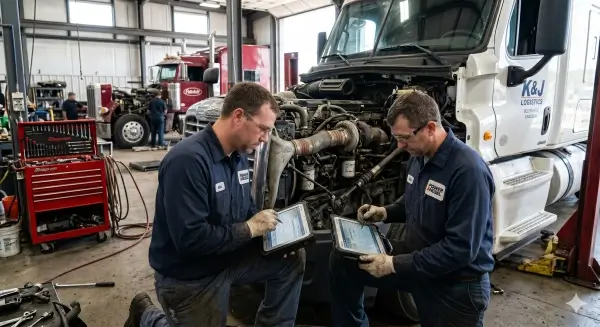
Qualified truck technicians are industry-trained technicians who inspect, service, and repair medium and heavy-duty trucks to keep them safe and on the road. They deal with diesel engines, braking and steering systems, electrical components, and sophisticated onboard diagnostics found in today’s fleets. Some are certified by certification boards, while others complete trade school or apprenticeships and stay on top of new tools and repair techniques. Fleets, logistics companies, and owners depend on them to reduce breakdowns, reduce lifecycle repair expenses, and comply with safety and emissions regulations. In everyday work, they employ service manuals, scan tools, and hands-on tests to diagnose faults quickly and repair them correctly. The following sections deconstruct their skills, training, and actual on-the-job responsibilities.
Why Hire Qualified Truck Technicians?
1. Safety First
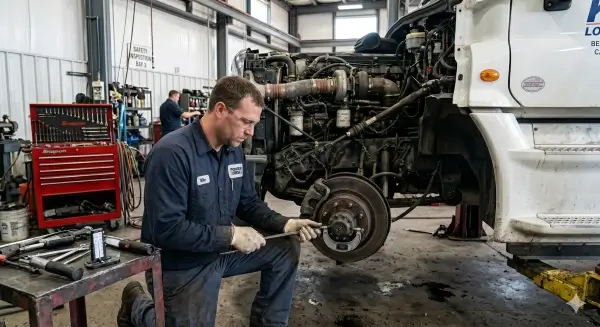
Safety begins with repairs the right way. A qualified truck technician knows how brakes, steering, suspension, and electronic safety systems all connect. When a truck drives in with a brake warning light, they don’t just do a pad swap. They inspect sensors, hydraulic lines, software errors, and wear patterns so unseen issues don’t cause you to lose control on the highway.
Today’s trucks employ sophisticated safety tech including collision‑avoidance radar, lane‑keeping aids and stability control. An experienced tech knows where to test these systems, how to interpret fault codes and verify that they operate under real‑world loads. This care level aids in safeguarding drivers, cargo and everyone on the road.
The legal safety rules are strict as well. Missing a worn tire, cracked brake hose, or faulty light can lead to fines, insurance problems, or liability post-crash. Trained, certified technicians adhere to industry standards, keep meticulous records, and flag items that need to be repaired before the truck returns to service.
Routine inspections are where they frequently discover actual hazards. They might detect early frame rust around mounting points, loose fifth-wheel components or wiring damage behind panels that others miss. This type of specificity greatly reduces the risk of mishaps.
2. Financial Sense
From a cost perspective, precision diagnostics count. A qualified technician uses current tools, service data, and practical experience to get to the root cause, so you don’t pay for the same fault twice.
Fewer roadside breakdowns lead to smaller towing bills, less emergency labor, and fewer missed deliveries. By detecting minor issues, such as small coolant leaks or premature clutch wear, before they break down on the road, maintenance costs remain more manageable. Clean, comprehensive records from qualified technicians help command higher resale values whenever you cycle trucks out of the fleet.
3. Peak Performance
Good technicians tune trucks for strong, steady performance. With engines, drivetrains and pollution controls all linked to electronic control units, a tiny sensor glitch can crank up fuel consumption or limit power. A good tech can fine-tune settings, inspect fuel and air systems and verify that aftertreatment units operate as intended, helping to sustain better fuel efficiency on long hauls.
They protect against slow, latent efficiency drag. A misaligned axle, weak shock, or late software update can make trucks feel sluggish, unstable, or noisy. When trucks run as they should, drivers wrestle the vehicle less, remain more alert, and can hit tight schedules with less strain, which often manifests itself as greater output and fewer grievances.
4. Uptime Assurance
Uptime is the stage on which talent shines. Qualified truck technicians understand which parts are likely to break down at specific mileage or load sequences. Armed with that information, they construct service plans that correspond to actual use rather than estimates. This keeps more trucks on the road at any given time.
Their speed matters, too. A qualified tech can transition from diagnostics to repair more quickly while still maintaining high quality. This means more time on the road and less time in the bay for trucks. Clear maintenance tracking—mileage, engine hours, and service history—prevents missed services that could later morph into costly breakdowns.
5. Future‑Proofing
Being a truck technician isn’t just mechanical anymore. Today, they’re tech-savvy problem solvers who operate with electronic logging devices, complex wiring networks, sensors and software while still knowing bearings, gears and hydraulics. Continued training keeps them up to date on new emissions regulations, revised safety standards and rapidly evolving diagnostic platforms.
As trucks embrace increased automation and connected features, fleets that depend on qualified technicians can embrace new tools earlier and with less risk. This fuels compliance, seamless upgrades, and operational stability in an industry that keeps goods and services flowing and supports most of the world’s economy.
The Unseen Costs of Unqualified Work
Unqualified truck work is more than just risking a one-time breakdown. It can erode safety, uptime, and trust in ways many fleet owners and managers don’t immediately detect.
Face hidden expenses from recurring issues and undetected problems
Unqualified workers tend to rely on memory or guesswork rather than current training and service information. On a contemporary truck with complicated electronics and emissions systems, this can cause minor problems to remain undetected. A small leak, a misinterpreted fault code, or a missed step during a brake check can linger dormant in the background until it becomes a full-blown failure while driving. When they’re not done right the first time, fleets encounter repeat shop visits, additional towing and ‘re-dos’ that take trucks off the road over and over. Emergency repair work is typically far more costly than scheduled maintenance, generally 50% or more once after-hours call-out fees, express parts, and delay costs are tacked on. Time spent on additional diagnosis, trial-and-error part swaps, and test drives too all adds up. Unqualified employees have a way of requiring more time and assistance to complete every task, which gradually eats into productivity and compresses profits.
Risk voiding manufacturer warranties due to improper repairs
Majority of truck and component warranties are contingent on proper procedures, authorized parts and recorded service. If an unqualified technician puts in the wrong fluid, misses a calibration step or installs non-approved parts, the manufacturer can deny coverage when something goes wrong down the line. A gearbox cracked open by an unqualified worker or a safety system reprogrammed with incorrect software may be sufficient to void support for that system. In reality, this moves high-cost failures from the warranty provider onto the fleet with no heads up until that claim gets denied.
Suffer increased liability from safety incidents linked to poor workmanship
Poor preparation erodes the safety net that proper protocol is supposed to provide. When they work from muscle memory rather than correctly, they may skip torque specs on wheel nuts, bypass brake balance checks, or hurry through pre-delivery inspections. It doesn’t just endanger the driver. In 2024, a report from the Insurance Bureau of Canada indicates accident rates for commercial vehicles are increasing, and low maintenance quality is one aspect insurers monitor carefully. One poor fix that results in a crash, a fire, or lost freight can give rise to litigation, increased insurance costs, and stricter outside audits. Courts and regulators typically examine service records, technician qualifications, and whether the company adhered to its own safety protocols. If unqualified work is pervasive, it’s difficult to demonstrate the fleet took reasonable care, which increases liability for owners, managers, and even clients who hired the carrier.
Experience lost revenue from extended downtime and customer dissatisfaction
Every day one of our trucks sits in the yard or in a workshop is a day of lost loads and broken delivery commitments. Unqualified work inflates repair times because tasks are slower and revisits are more frequent. A basic service that ought to consume a few hours can extend to days if parts are ordered twice, fault codes are misread, or the truck returns with the same issue. That lost time dents revenue and can leave drivers stuck idle, which kills retention. Shippers and logistics partners anticipate that lead times will be predictable. When trucks break down on the highway because of shoddy work, loads are delivered late, perishables are ruined, or contracts are broken. Clients will defect to carriers they perceive as safer and more responsible. Over time this damages reputation and may clog the path to premium routes or higher-value freight. Although unqualified work appears less expensive in the short run, the hidden expense manifests itself downstream as lost business, increased unbudgeted spending, and additional pressure on the entire team.
What Defines a Qualified Technician?
Certifications
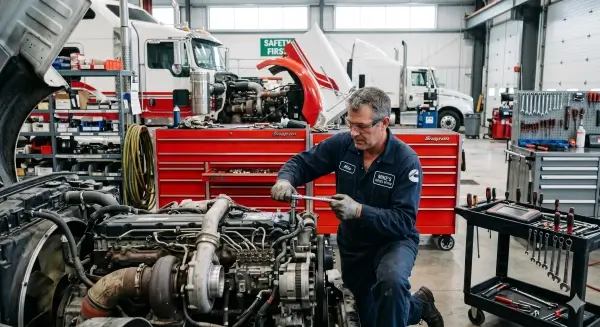
Well-respected certifications indicate that a technician maintains certain industry standards and stays up to date with practices.
- ASE M/H Truck certifications (T1-T8)
- OEM specific qualifications from Volvo, Daimler, PACCAR, Scania, MAN
- National or regional T&C/T&TME licenses
- Electric and hybrid driveline safety certifications where relevant
Good programs put work on tune-ups, lube and fluids, brakes, electrical systems, safety inspections, suspension and alignment, HVAC and advanced diagnostics. Some systems have C-level techs do simple services. B-level techs do safety inspections and suspension and alignment. A-level techs do HVAC and advanced diagnostics. Renewal cycles and ongoing training matter because repair standards, emissions rules and software change often. In Ontario, Canada, technicians have to possess a Registered Training Agreement or Certificate of Qualification and display it on the Skilled Trades Ontario Public Register. For fleets, pre-verified and up-to-date certifications provide a transparent sieve when selecting who gets to handle important trucks.
Experience
Experience on actual rigs transforms book smarts into intuition and quick repair.
- Regular work includes disassembly and cleaning of components, brake installs, balancing and alignment of wheels, and heater or defroster setup.
- Experience with breakdowns on highways, urban routes, and off-road locations.
- Across brands, from vintage mechanical engines to new electronic diesel systems.
A solid Truck and Coach Technician path often means about 6,720 hours of training: 6,000 hours on the job plus 720 hours in school. That timeline, roughly three and a half years, helps develop the ability to identify hard-to-find problems quickly, like intermittent electrical faults or mini mechanical-electronic hybrid failures. To fleet owners, techs with a spotless record in preventive schedules, safety inspections and fast repeat failure turnarounds tend to be safer bets than broad brush strokes with sundry experience. Today’s fleets require individuals comfortable with manual gearboxes and automated transmissions, plus telematics and driver-assist features.
Tooling
- Use of manufacturer-approved diagnostic tools. Technicians need scan tools that communicate in each brand’s language, so they can read fault codes and run tests on ABS, engines, transmissions, and body controllers and reset settings after repairs.
- The latest software and data access. Current software allows them to work on new model years, updated emissions configurations, and new ECU firmware. Without it, even basic diagnostics on modern trucks can break or return inaccurate results.
- Precision and calibration tools include brake testers, torque wrenches, alignment systems, and gauge calibration gear that keep work within tight tolerances. These tools impact tire life, fuel consumption, and safety.
- Complete specialty tool inventory. Pullers, press tools, brand-specific adapters, HVAC service stations and electrical test gear allow them to service engines, transmissions, HVAC, suspension and charging systems without shortcuts.
Specialization
- Core system specializations. Typical specialties are engines, transmissions, brakes, suspension and alignment, electrical and diagnostics, HVAC, and body or frame repair. Each is connected to actual service offerings such as tune-ups or safety inspections.
- About: What makes a qualified technician? Matching skills to fleet needs. Long-haul fleets might rely on engine, drivetrain, and fuel efficiency specialists, whereas urban delivery fleets require more brake, suspension, and electrical diagnostic expertise for stop-and-go operation.
- Keeping up in specialized areas. Focused specialists tend to monitor shifts in emissions systems, advanced driver-assist, or high-voltage HVAC far more closely than broad generalists. They deploy gauges and special tools in very precise manners.
- Tracking specializations in a team
| Area | Example Focus |
|---|---|
| Engine | Diesel performance, emissions, fuel use |
| Drivetrain | Transmissions, clutches, axles |
| Electrical/Diag | Batteries, starters, alternators, CAN bus |
| Suspension/Steer | Alignment, ride height, handling |
| HVAC | Heaters, defrosters, climate systems |
The Digital Evolution of Truck Repair
Digital tools now sit at the heart of how certified truck techs do their work, from initial diagnostics to final fix and sign-off.
These advanced diagnostic platforms provide faster, more accurate diagnoses than older manual techniques. Today, a single truck can stream hundreds of data points from its engine, brakes, transmission, and emissions. Scan tools and laptop-based platforms read fault codes, live sensor values, and freeze-frame data in seconds. Rather than speculate what caused a truck to lose power on a 5 km climb, a technician can observe precise boost pressure, fuel rail pressure, and temperature history. This reduces ‘no trouble found’ occurrences since the information frequently indicates what malfunctioned even if the error is currently inactive. This enables more accurate defect reporting during inspections, as mobile apps help direct the check and capture succinct findings immediately.
Telematics and remote monitoring now color daily maintenance schedules. Sensors on critical parts transmit data in real time, allowing fleets to identify patterns before they become breakdowns. Predictive maintenance based on this data can extend truck life by 20 to 30 percent and has helped some fleets reduce overall maintenance costs by roughly 8 percent. Early fault detection, for example, identifying a bearing vibration pattern or rising brake temperature, can cut maintenance costs up to 40 percent. Repairing problems early saves as much as 30 percent on repair costs over waiting for a catastrophic failure. Mobile access to that data is critical, as most techs and managers do not work at a desk but on the shop floor, in the yard, or on the road.
About: The Digital Evolution of Truck Repair Software-driven repair needs technicians who are comfortable with digital workflows. Many of them use on-screen repair guides and digital checklists, rather than print manuals. They access OEM documentation portals, guided diagnostics and fault code trees that lead from symptom to root cause. An app on the phone could bring up a fault code, connect to the precise service bulletin and even provide images or clips from previous, analogous defects. Improved symptom information, combined with driver photos and videos, significantly decreases no trouble found instances and accelerates repair determinations.
Digital files make every truck’s service history obvious. We track every inspection, defect and repair, including time, location, parts, and technician notes. Managers can monitor trends, benchmark expenses between trucks, and schedule repairs at optimal timing. Technicians view prior related repairs on their tablets, so they know what was attempted and what worked. This visibility enables enhanced safety, more reliable uptime, and smarter decisions around when to repair, rebuild, or retire a vehicle.
Mastering Modern Truck Diagnostics
The modern truck runs on sensors and dozens of electronic control units (ECUs), not just gears and steel. Skilled diagnostic abilities will be important for qualified truck techs to get their hands on complex emissions systems, integrated telematics, and computer-driven powertrains that continue to morph every few years.
A big chunk of the work is understanding what type of diagnostic tool to deploy and when. Tools range from basic code readers to sophisticated OEM software that can communicate with every ECU on the truck. The table below provides a basic overview of popular tools and their capabilities.
| Diagnostic tool type | Main purpose |
|---|---|
| Handheld code reader | Pull basic fault codes and clear them |
| Laptop with OEM diagnostic software | Access all ECUs, run tests, update software |
| Multi-brand scan tool | Work on mixed fleets with different truck brands |
| Digital multimeter | Check voltage, resistance, and continuity in circuits |
| Oscilloscope | View sensor signals and CAN bus activity in real time |
| Telematics / remote diagnostic portal | Read live data and faults from vehicles in the field |
Reading codes is just the beginning. Experienced mechanics understand how to contextualize error codes. A single code could be a failed sensor, wiring, or an ECU software bug. If a NOx sensor code pops on a truck that just had an exhaust repair, a good tech verifies connectors, wiring harness routing, and software updates before ordering a new sensor. This reduces guessing and prevents expensive part swaps that don’t solve the underlying issue.
Onboard sensors with real-time data assist troubleshooting. Live readings for boost, fuel rail pressure, exhaust temperature and aftertreatment status demonstrate how the system is performing under load, rather than just at idle. A power loss complaint accompanied by normal codes but with low live boost during acceleration directs the tech to a stuck variable geometry turbo and not a fuel issue. Computer-aided diagnostics can reduce that search from hours of teardown to minutes of targeted inspections.
When diagnostics are on point, repair times and costs plummet. With clear test plans driven by solid data, you’re raising first-time fix rates and keeping trucks off the lift and back on the road. Shops that archive and analyze diagnostic data across a fleet can identify recurring problems, schedule preventive work, confirm fixes and monitor technician efficiency. Over time, this creates a more robust maintenance ecosystem and a genuine advantage in an industry that moves quickly.
A Strategic Maintenance Partnership
A strategic maintenance partnership views qualified truck technicians as a member of the fleet team, not a last-minute call when a truck is down. This type of long-term arrangement influences how trucks get maintained, how frequently they are on the road, and how secure a work day feels for drivers and mechanics.
Long term relationships with trusted repair guys give fleets reliable skills and reliable standards. When the same technicians see the same trucks over months and years, they learn the history of each unit, spot patterns in wear and flag small issues before they turn into failures. Performed right, the routine work in this model can extend equipment life by as much as 30%, which is significant for any fleet mindful of new vehicle cost. These connections can even extend to joint ventures or technology partnerships, where the workshop and fleet share tools, training, and even risk around new repair approaches.
Synching preventive maintenance schedules with these technicians keeps trucks on the road longer and in the shop less. This operational uptime translates into more hours moving freight and fewer hours parked in a bay, which is key for cost control and customer commitments. A defined plan reduces the necessity for last-minute repairs that can be about 50% more expensive than scheduled work. With competent individuals getting it done right the first time, the likelihood of re-work decreases, along with the safety issues that emerge from hurried patch jobs or experimentation.
By sharing fleet performance data with their maintenance partner, they help build service plans that fit real use. Telematics, fuel records, and fault codes can all indicate routes that wear brakes faster, engines run hotter, or drivers get stuck in stop-and-go traffic. Integration partnerships with software and diagnostic firms allow workshops to connect third-party tools into their central workflow, so the information is channeled into actionable service steps instead of static reports.
By entering into the exclusive service agreements, you can get priority support, speedier response, and more extensive technician training. These deals often have strategic investments in new tooling and education to mitigate the continuing shortage of qualified truck technicians. This supports both daily uptime and long-term business growth.
Conclusion
They are more than fixers of obvious faults. They reduce guesswork, detect minor problems early, and protect rigs on extended hauls. A great tech reads fault codes lightning fast, uses cutting-edge tools, and knows your fleet’s hardware and software.
Smart fleets regard techs as long term partners, not short term hires. That decision conserves fuel, reduces breakdowns, and safeguards drivers on the roadway. For instance, a savvy tech can associate a subtle pull on the wheel with worn components prior to a total steer failure.
Time to check it out with your own configuration. Examine the expertise, training, and equipment of those touching your trucks and upgrade the standard if they don’t meet it.
Frequently Asked Questions
Why should I hire a qualified truck technician instead of a general mechanic?
Qualified truck technicians know heavy-duty systems, regulations, and safety standards. They find problems sooner, stop recurring breakdowns, and minimize downtime. This safeguards your fleet, drivers, and cargo while reducing long-term repair and operating costs.
What are the risks of using unqualified technicians for truck repairs?
Unqualified work typically results in misdiagnoses, multiple breakdowns and safety risks. It can void warranties, waste fuel, ruin critical components and cause roadside failures. In the long run, cheap repairs tend to cost more in lost time and bigger repairs.
How can I tell if a truck technician is truly qualified?
Search for formal training, certifications, and proven experience with heavy-duty trucks. Inquire about diagnostic tools, software access, and brand-specific expertise. Good truck techs provide you with an estimate and an invoice and explain repairs in easy terms.
How has digital technology changed modern truck repair?
New trucks are dependent on electronics, sensors, and software. Our qualified truck technicians utilize advanced diagnostic tools, telematics data, and digital service histories. This enables more rapid fault identification, precise repairs, and predictive maintenance that extends trucks’ time on the road.
Why are advanced diagnostics important for my truck fleet?
Advanced diagnostics rapidly identify problems prior to them escalating to catastrophic failures. This diminishes guesswork, repairman time, and part swapping mistakes. Fleets enjoy less downtime, improved mileage, and more consistent maintenance schedules.
What does a strategic maintenance partnership with a truck shop include?
A partnership that’s about more than just triage. That means scheduled maintenance, data-driven service suggestions, transparent communication, and lifetime cost planning. That means more uptime, safer trucks, and visibility into total lifecycle costs.
Can qualified truck technicians really lower my total operating costs?
Yes. Through failure prevention, component life extension, and fuel efficiency, qualified truck technicians reduce unplanned downtime and emergency repairs. Over time, this results in lower cost per kilometer and more reliable fleet performance.
Still have questions about heavy-duty truck maintenance or repairs? Discover more expert insights from Get ‘R Done Heavy Truck Repair and keep your fleet running reliably.
Comprehensive Trailer Maintenance Services
Looking to expand your knowledge about heavy truck maintenance, vehicle safety, and transportation standards? These authoritative resources offer helpful guidance.