
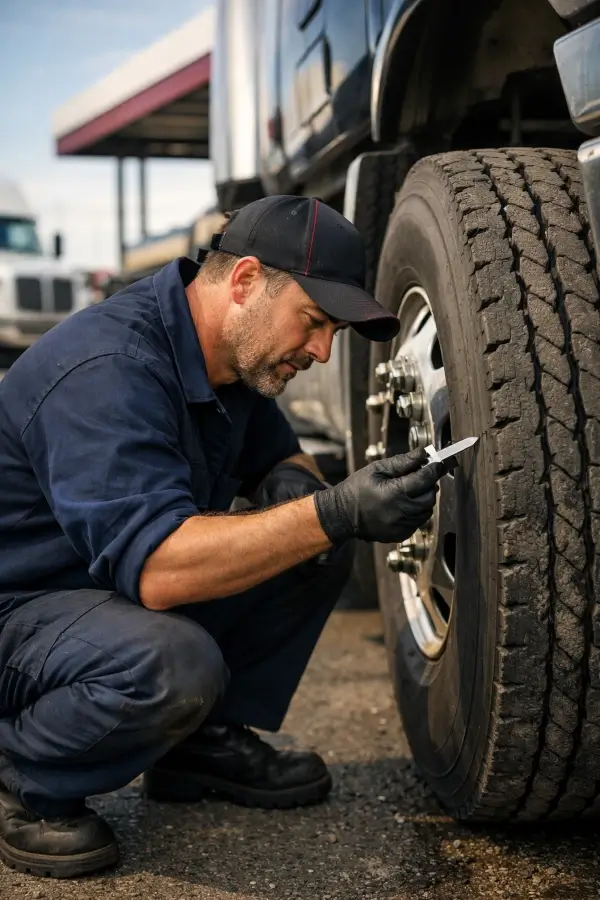
- Key Takeaways
- Why Uneven Truck Tire Wear Happens
- Decoding Wear Patterns
- Proactive Tire Maintenance
- The Ripple Effect of Bad Tires
- Advanced Tire Monitoring
- When to Seek Professional Help
- Seek professional heavy-duty truck diagnostics and repair services when irregular tire wear patterns persist despite routine maintenance.
- Request a comprehensive inspection of tires, wheels, and related vehicle components for accurate diagnosis.
- Trust qualified mechanics to recommend long-term solutions for chronic tire wear and underlying truck issues.
- Schedule regular visits to a trusted automotive repair provider to ensure ongoing tire performance and safety.
- Conclusion
- Frequently Asked Questions
- What causes uneven truck tire wear?
- How can I read tire wear patterns?
- How often should I rotate truck tires?
- Can tire pressure affect fuel efficiency?
- When should I get a professional alignment?
- What is the impact of bad tires on braking and stability?
- Are tire pressure monitoring systems (TPMS) enough?
Key Takeaways
- Uneven truck tire wear typically can be traced back to alignment, air pressure, worn parts, load distribution, and driving habits. Spot uneven wear early to diagnose the cause and avoid expensive repairs.
- Keep proper cold inflation pressure to prevent shoulder or center wear and to preserve fuel economy. Use a trusted gauge or TPMS and check pressures before every load.
- Wheel alignments should be performed periodically on steer, drive, and trailer axles to prevent edge wear and feathering as well as fast tread loss. Ask for alignment reports to check toe, camber, and caster settings.
- Inspect suspension, shocks, and wheel bearings at regular intervals to detect vibration, noise, and uneven tread depth. Replace worn parts without delay to stabilize handling and stretch tire life.
- Distribute loads uniformly over axles and record weights to avoid tire overload. Follow a rotation schedule and record tread depths to detect trends and rectify them early.
- Teach them to steer clear of hard braking, sharp corners and fast acceleration and to reduce speeds over rough roads. Pair driver coaching with telematics, TPMS and predictive analytics to optimize maintenance and minimize downtime.
Uneven truck tire wear is the abnormal loss of tread in patches or at odd angles on a truck tire’s surface that indicates problems with alignment, balance, load, or suspension. Typical patterns are cupping caused by worn shocks, feathering resulting from toe misalignment, heel-toe caused by underinflation, and inner-edge wear caused by negative camber. Fast shoulder wear is usually associated with hard cornering or low pressure. Overinflation leads to center wear, while incorrect size tires or out of rotation hasten uneven loss. To economize and enhance safety, fleets and owners monitor tread depth in millimeters, inflate to vehicle placard pressure, rotate every 8,000 to 12,000 kilometers, and align axles on schedule. The subsections cover causes, symptoms, diagnostics, and remedies with actionable steps and helpful tips.
Why Uneven Truck Tire Wear Happens
Uneven wear indicates issues with alignment, components, inflation, load or operation. Big trucks have long days, rough routes, and extreme weight, so minor imperfections accumulate quickly. Tread patterns are like diagnostics, and quick repairs save dollars and reduce hazard.
1. Misalignment
A leading culprit is wheel misalignment. It skews the tire’s angle to the road and scrubs rubber off in streaks. Camber wear appears as significant wear on one side of the tread, whereas toe mistakes generate feathering you can sense by feeling a hand across the tread. Steer tires tend to exhibit it initially, but trailer axles drift out and sculpt tires on extended journeys.
A misalignment can be a result of worn ball joints, control arms, or struts. Bad wheel alignment piles up with underinflation, exacerbating shoulder wear. If your truck pulls, requires continuous steering input, or exhibits unusual tread heat patterns, it’s probably in need of an alignment. Regular inspections by mileage or time assist in preserving tire wear and safety.
2. Air Pressure
While cold inflation to the maker’s spec for axle load. Underinflated tires flex too much and wear the outside shoulders faster than the center. Overinflation burns the center faster than the edges. Both shorten tread life and increase rolling resistance, so fuel consumption increases.
Use a calibrated gauge, not a glance. Inspect all positions, including inner duals. Under inflation reduces the contact patch or shifts it to the shoulders, which causes heat buildup, blowouts, and cupping and wandering on wet roads.
3. Component Wear
Suspension faults leave a signature on tread. Weak shocks cause hop and cupping. Loose wheel bearings create wobble and uneven shoulders. Worn steering links drag and scuff blocks in a saw-tooth line.
Listen for knocks, observe shake in the wheel, and measure tread depth across the width and around the tire. Swap out worn parts on time. Postponing repairs adds loss to the power of tire loss and it ruins ride stability.
4. Load Distribution
Uneven truck tire wear occurs due to uneven cargo load placement. Rear axles are the first thing to go when you overload them and outside shoulders can get ground down in tight turns. Slanted spots suggest weight is off-center.
- Weigh tractor and trailer by axle in kilograms.
- Place dense freight low and centered.
- Balance side-to-side and fore-aft.
- Recheck load after partial drops.
- Rotate tires on time to smooth wear.
5. Driving Habits
Hard braking, sharp turns and fast starts shear rubber and accelerate cupping and shoulder wear. Traveling fast on rough or gravel roads chips lugs and busts cracks. Smooth inputs, smooth lane changes and safe speeds keep the footprint even and temperatures down.
Set driver training on tire care: pressure checks, visual scans, and rotation intervals. Little habits increase tread life and reduce downtime.
Decoding Wear Patterns
Uneven wear is a sign. It indicates inflation mistakes, alignment, suspension or load, or driving habits. Decode wear early with visual inspections, finger tests, and tread depth records at inner, center, and outer locations on each tire. A one-sixteenth inch toe error can drag a tire sideways roughly 2.4 meters every kilometer, so minor setup missteps accumulate quickly. Watch for repeat diagonal flat spots, too. These tend to reverberate around the tire and indicate uneven wear related to balance or braking. About deciphering wear patterns.
| Pattern | What it looks like | Likely causes | What to check next |
|---|---|---|---|
| Shoulder wear | Outer/inner ribs thin | Underinflation, camber, hard cornering, bearings | Pressures, alignment, hub play |
| Center wear | Center rib thin | Overinflation, light loads, high speed | Pressures vs. load, gauge accuracy |
| One-sided wear | Inner or outer edge only | Toe/camber, axle skew, bushings | 3-axle alignment, suspension |
| Cupping/scallops | Dips every 5–10 cm | Shocks, balance, loose bearings | Shock bounce test, balance |
| Feathering | Ribs smooth one way, sharp the other | Toe error, scrub | Toe settings, steering play |
| Diagonal flats | Localized diagonal patches | Brake snatch, balance, runout | Drum/rotor, radial runout |
Shoulder Wear
Outside shoulder wear connects to under-inflation, misalignment or aggressive ramp and yard cornering. Underinflated tires run hot, waste 3 to 5 percent more fuel and can lose 15 percent tread life.
Watch for heavy shoulder scuff that suggests loose bearings or worn kingpins. Correct fast to preserve casing integrity and maintain steer feeling. Include shoulder checks with weekly walkarounds and service intervals for duty trucks.
Center Wear
Center wear indicates overinflation or loads lighter than the set pressure. The center bears the brunt with edges skimming.
Check with a calibrated gauge, a tire can be 20% low and look perfectly fine to the eye. Evenly applied pressure, axle load, and road heat are important factors. Expend more tires with deep center loss. Traction and wet grip decrease.
One-Sided Wear
If only the inner or outer edge is thin, suspect toe, camber, worn bushings, or axle parallelism. See which side and which axle. Inside edges on drive axles frequently trace axle skew.
Schedule a complete multi-axle alignment. De-mystifying wear patterns.
Cupping Wear
Cupping appears as small scallops across or around the tread. It is frequently accompanied by a hum or shake at speeds.
Check shocks first. Broken dampers cause tires to bounce. Balance, rotate, and repair loose bearings or joints. Put in shot suspension parts to break the cycle.
Feathering Wear
Run your hand across ribs: smooth one way, sharp the other signals toe error, common on steer positions. Even one-sixteenth inch toe drags over long hauls.
Decoding wear patterns Set toe to spec, check tie-rod end’s and steering box lash. Augment feathering feel checks to monthly inspections. About Decoding Wear Patterns Smooth driving can extend tire life by 15 to 25 percent.
Proactive Tire Maintenance
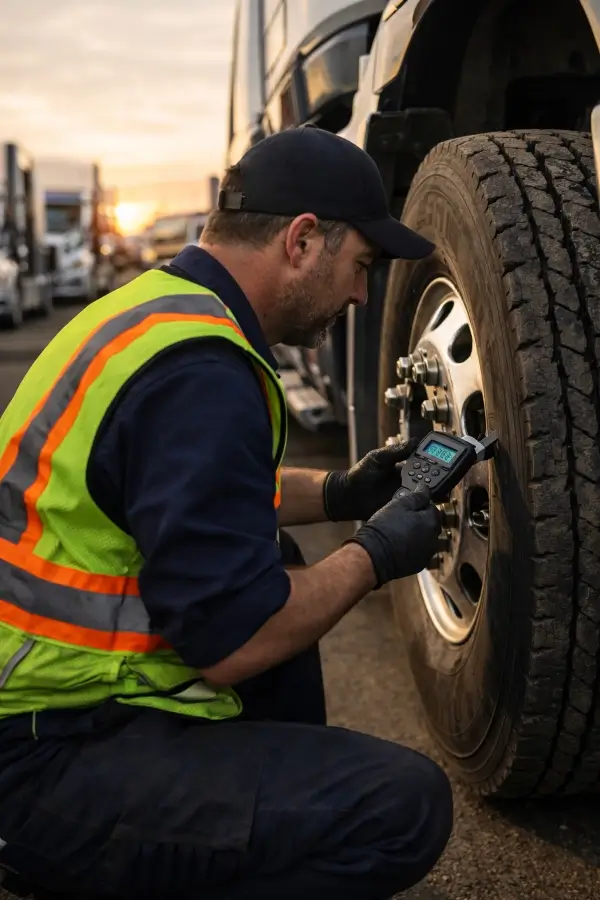
Proactive tire maintenance extends tire life and improves handling while reducing risk. Tires bear cargo and absorb road shock, so little problems become big ones quickly if neglected. With scheduled checks, pressure, rotation, and alignment, you reduce breakdowns and keep your cost-per-kilometer stable. Tires are about 1% of operating cost, so preventative maintenance pays.
Regular Inspections
We have daily walk-arounds by drivers that catch early wear and damage before a route. Check for cuts, bulges, trapped debris, cupping, shoulder scrub, and heat cracks. Uneven wear is usually a warning of suspension issues or misalignment which can make the truck drift to one side.
Take a tread gauge and a flashlight. Look out for camber wear, which is when one side is worn more, flat spots from hard braking, and abnormal patches caused by bent parts. Watch for any lines or cuts running 360 degrees around the tire. If the casing is sound, some can be repaired or retreaded.
Schedule professional inspections quarterly or semiannually. Techs can identify loose kingpins, worn bushings, damaged shocks and bent rims lurking in plain sight.
Record each inspection with tire ID, axle position, mm tread depth, and notes. Trend data lets you plan rotations and alignments or pull tires early for retread.
Pressure Management
Check cold inflation before each haul. Refer to the pressure to load table for the tire size and anticipated axle load in kPa. Underinflation generates heat and shoulder wear. Overinflation accelerates center wear and lessens grip.
Leverage TPMS for live alerts on leaks or heat build-up. It reduces reaction time and saves casings for retread down the line.
| Date | Axle | Position | Set kPa | TPMS Avg kPa | Notes |
|---|---|---|---|---|---|
| 2026-03-01 | Steer | Left | 790 | 780 | Slow leak |
| 2026-03-01 | Drive 1 | Right-Inner | 760 | 760 | Stable |
| 2026-03-01 | Trailer 2 | Left-Outer | 720 | 705 | Low at dock |
Smart pressure saves uneven wear and optimizes fuel consumption, particularly on cross-country hauls.
Consistent Rotations
Rotate on a fixed schedule, every 10,000 to 15,000 kilometers or by time for urban fleets. This distributes load and scrub so that all positions wear evenly.
Adhere to the tire manufacturer’s rotation for steer, drive, and trailer sets. Don’t cross tread patterns that the pattern doesn’t permit.
Record each move by serial and wheel end to identify rapid-wear locations. Combine rotation with balance checks to prevent vibrations that can develop into cupping.
Professional Alignment
Align steers and drives at specified intervals and after curb hits, suspension, or new tire sets. Misalignment causes swift shoulder wear and wander.
Request a complete report including toe, camber, and caster values and tolerances. Keep it to connect with wear maps.
Add to that trailer alignment. A skewed trailer can scrub tires and push the tractor off track.
Good alignment saves tires and keeps the ride firm even on bumpy roads.
- Set a preventive schedule with dates and km targets
- Train drivers on quick sight checks and TPMS use
- Use tread depth in mm for all records
- Match pressure to load tables; verify cold each morning
- Fix suspension faults at first sign of uneven wear
- Pull repairable casings early to save retread value
- Review cost-per-km monthly and adjust intervals
Train drivers and managers simultaneously. Quick toolbox talks, straightforward checklists, and common dashboards increase follow-through and reduce surprises.
The Ripple Effect of Bad Tires

Uneven truck tire wear is not just a line item on a budget sheet. It changes how the truck drives, how much fuel it consumes, and when other parts fail. Cupped spots, radial scallops, and 360-degree wear lines indicate root causes such as incorrect pressure, misalignment, or tired suspension. Left to their own devices, these patterns contribute to vibration, noise, extended braking distances, and a blowout waiting to happen.
Fuel Economy
It’s not just the condition of the tread that matters. The engine strains to spin cupped or radially worn tires and gas consumption surges on long hauls. Even minor pressure gaps, under-inflation by 0.3 bar (30 kPa or so), can shave km/l.
Maintain inflation on spec for load and axle, and align steer and drive axles per schedule. Rotation evens out wear, but it won’t cure casing damage or a bad geo problem. If your tread blocks are feathered or your tire has 360 wear lines, swap it out to reestablish baseline efficiency.
Track usage in liters per 100 km before and after correcting pressure, alignment, and replacing tires. A simple log or telematics report makes the gain stark and keeps costs honest.
Drivetrain Stress
Mismatched tread depths and patterns cause everything to absorb slack. Axles, u-joints, bearings, and suspension bushings experience additional stress, which accelerates wear and increases heat in those components.
Get that tire issue taken care of first so you’re not hiding a more serious problem. Then observe for shimmy, brutal vibration at some speeds, or clunks under load. These usually begin with bad tires but end in bearing or joint failures if unattended to.
Fold drivetrain checks into routine service: feel for play at the wheels, inspect seals for leaks, and measure tire radii side to side on the same axle to spot stress early.
Safety Risks
Uneven tread cuts hold on to wet or rough roads. Stopping distances increase and stability decreases during lane changes or on ramps. Blowout danger increases as heat accumulates in thin or cupped areas.
Measure tread depth across the entire width. Change any tire at or near the legal limit and sooner on steer axles. Fix wear the day you notice it, not following the next route.
- Do: Check pressure cold (kPa) weekly. Align on schedule. Rotate tires. Swap out shredded sidewalls.
- Don’t mix extreme tread depths on an axle. Don’t neglect vibration. Don’t run overstuffed. Don’t forget torque checks.
Unplanned Downtime
Tires that run to the cords or separate at worn spots let go without warning. That translates to roadside calls, missed slots, and lost revenue for a fleet.
A preventive plan cuts that risk. These include inflation audits, tread mapping, alignment after curb hits, and suspension checks after any hard impact.
Carry spares matched by size and load index, and tools: jack rated for the axle, torque wrench, valve cores, and repair kits.
- Audit pressures and tread depths on a fixed cadence.
- Set thresholds for pull‑and‑replace by position.
- Train drivers to flag noise, pull, or shake early.
- Track tire and fuel records to identify pattern changes quickly.
Advanced Tire Monitoring
Advanced tire monitoring provides real-time visibility into pressure, heat, and wear so fleets can catch minor problems before they escalate into uneven wear, blowouts, and excessive expense. It integrates sensor data with maintenance schedules and driver behavior to direct timely, precision repairs across geographies and paths.
Modern TPMS
A modern TPMS monitors pressure and temperature for each tire in real time, often taking samples every few seconds. This helps catch under-inflation, over-inflation, slow leaks, and heat from overloaded or misaligned axles. Some systems alert to mismatched tire size or pressure settings that accelerate uneven wear.
Set pressure and temperature thresholds with graded alerts. TireCheck’s 15 to 20 percent pressure drop warning causes you to stop safely and check your tires’ air, while its high-heat alert warns you of braking drag or bad bearings. These quick hints stop cupping and scalloping from running hot or vulnerable.
Compare TPMS trends across vehicles to locate recurring problems, such as a certain route that causes heel-toe wear from sudden turns or a tractor that typically operates 0.3 bar low on the right drive pair. This level view directs you toward alignment checks, load changes or driver coaching.
TPMS should be just one tool in a comprehensive plan that continues to include rotation, balance, and alignment at specific kilometer intervals. It’s the sensor data that adds context to when and where to service.
Telematics Data
Telematics systems are able to combine TPMS feeds with load estimates, wheel-speed variance, and brake events. This helps associate uneven wear with underinflation, aggressive braking, or worn suspension or steering components.
Run weekly heat maps and exception reports. Watch for outer-edge wear suggestive of under-inflation, feathering indicating toe problems, or accelerated wear on one axle indicative of overloading. Then schedule only what is needed: rotate a matched pair, balance two wheels, or adjust alignment on a single axle and cut waste.
Apply these insights in driver refresher. Demonstrate how tight turns, curb strikes or prolonged, hard stops increase temperature and scrub tread. Show how stable speeds and smooth inputs maintain even wear.
Predictive Analytics
Using pressure and temperature spikes, tread depth scans, and alignment results, predictive models know which tires will go irregular next and when.
Construct a maintenance calendar from risk scores, not dates, to extend life while preventing failures. Automate work orders and alerts for upcoming service windows based on kilometers, heat cycles, and drift in pressure retention.
A few of the more sophisticated equipment will even highlight early cupping or scalloping patterns from vibration signals, directing inspections of balance, shocks and bushings before tread loss increases.
When to Seek Professional Help
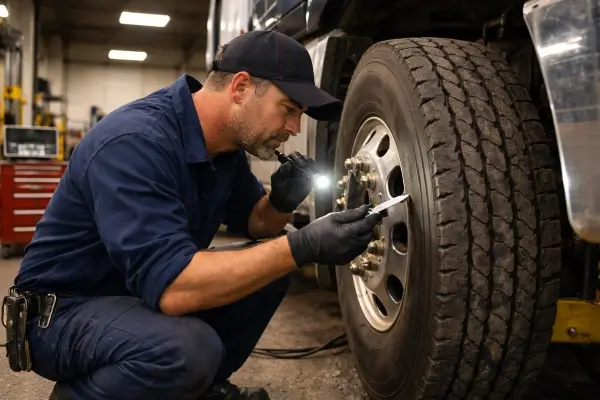
Seek professional heavy-duty truck diagnostics and repair services when irregular tire wear patterns persist despite routine maintenance.
If wear persists despite rotations, balance, and proper cold inflation determined by load, axle, and speed, a more serious defect is probable. Examples are cupping on steer tires, new shocks, feathering that remains after alignment, or inner shoulder wear on duals even with matched diameters. Chronic edge wear on one axle could track back to bent suspension pieces. Repeated river wear on drives can indicate a torsion problem or uneven torque over the axle. When patterns come back within a couple thousand kilometers of a fix, reserve diagnostics at a shop that services heavy trucks, not light vehicles.
Request a comprehensive inspection of tires, wheels, and related vehicle components for accurate diagnosis.
Request a complete workup addressing tread depth mapping across all positions, wheel runout, hub and rim flange inspections, valve and stem condition, and torque of wheel fasteners. Add suspension bushings, kingpins, tie rods, drag link ends, shock mounts, spring packs, and ride height. Have them measure alignment on all axles, not only steer: total toe, camber, caster, thrust angle, and axle parallelism. Add brake drag checks, hub bearing play, and frame rail straightness. For fleets with mixed loads, provide load ranges, share routes, and average speeds so we can evaluate heat and scrub risk. Ask for a report to be written with pictures and measurements in mm.
Trust qualified mechanics to recommend long-term solutions for chronic tire wear and underlying truck issues.
Experienced techs know how to set caster to reduce shimmy, true or replace out-of-round wheels, adjust ride height with new air springs, or realign a shifted tandem. They might recommend a transition to an alternative steer or trailer tread design, using matched tire diameters in duals within 3 mm, or make a move to hub-piloted wheels if stud-piloted runout is significant. They might demand bushing kits, kingpin rebuild, or brake balance work to halt hot spots.
Schedule regular visits to a trusted automotive repair provider to ensure ongoing tire performance and safety.
Set intervals by use: long-haul every 20,000 to 30,000 km, regional or urban every 10,000 to 15,000 km. Track tread wear rate per axle, rotation dates, and alignment specs. Check trends each quarter and tune pressures and rotations to duty cycles.
Conclusion
Uneven truck tire wear comes with obvious symptoms and solutions. Read the treads. Match the wear pattern to the cause. Act fast. Little steps conserve fuel, prevent shake, and reduce danger on the highway. For instance, a saw tooth edge indicates bad toe. A bald inner strip indicates low camber. A smooth cup patch can indicate a soft shock. Simple checks help: set cold pressure, rotate on a set plan, torque lugs, and keep loads in range.
To plot your next moves, begin with a tread check this week. Record pressure and wear by axle. Establish an 8,000 to 10,000 km rotate cycle. Schedule an align check if pull or shake appears. Weird pattern? Post a photo and truck specs, receive a swift read.
Frequently Asked Questions
What causes uneven truck tire wear?
Uneven wear can result from misalignment, improper inflation, worn suspension components, or unbalanced wheels. Driving with heavy loads or hard braking puts extra strain. Frequent inspections catch problems early and prolong tire lives.
How can I read tire wear patterns?
Center wear indicates overinflation. Edge wear indicates underinflation. Cupping is a sign of suspension or shock issues. Feathering indicates misalignment. Check tread across the tire and between all positions to detect patterns quickly.
How often should I rotate truck tires?
Rotate every 8,000 to 10,000 km, or as your manual suggests. Rotation smooths wear across axles and positions. It enhances traction, reduces tread wear, and promotes safer control.
Can tire pressure affect fuel efficiency?
Yes. Underinflated tires increase rolling resistance and fuel consumption. Maintain pressures at manufacturer specs (cold). Verify monthly and prior to long road trips. Proper inflation enhances braking and tread life.
When should I get a professional alignment?
Get an alignment after driving over potholes or curbs, or if you experience pulling, vibrating, or uneven tread wear. Inspect every 12 months or 15,000 to 20,000 km. Proper alignment makes you safer and saves you money on tires.
What is the impact of bad tires on braking and stability?
Worn or uneven tires diminish traction, extend stopping distances, and increase the potential for skidding. They wear out suspension components. Wear replacement or correction brings back traction and balance.
Are tire pressure monitoring systems (TPMS) enough?
TPMS assists, it’s not comprehensive. It might not alert you to slow leaks or mild under-inflation. Add TPMS to your monthly gauge checks, visual inspections, rotations and scheduled alignments for complete protection.
Still have questions about heavy-duty truck maintenance or repairs? Discover more expert insights from Get ‘R Done Heavy Truck Repair and keep your fleet running reliably.
Want to learn more about heavy-duty truck safety, tire maintenance, and commercial vehicle standards? Explore these trusted resources from transportation authorities and industry experts.